

Writer: Agadbumb, Karan Tejpal, Gauvra Dhingra
Director: Karan Tejpal
Karan Tejpal’s Stolen, screening at the BFI London Film Festival, is a film with multiple layers. Ostensibly a thriller about a snatched baby, it unfolds into a story about class, brotherhood, poverty and the ingrained social judgements about motherhood in an Indian town. It also becomes a story about the damaging power of social media, its lack of nuance and the incitement of vigilante justice that brings violent elements into a domestic drama. Stolen is a rather breathless 90-minutes but subverts the viewers expectations repeatedly.
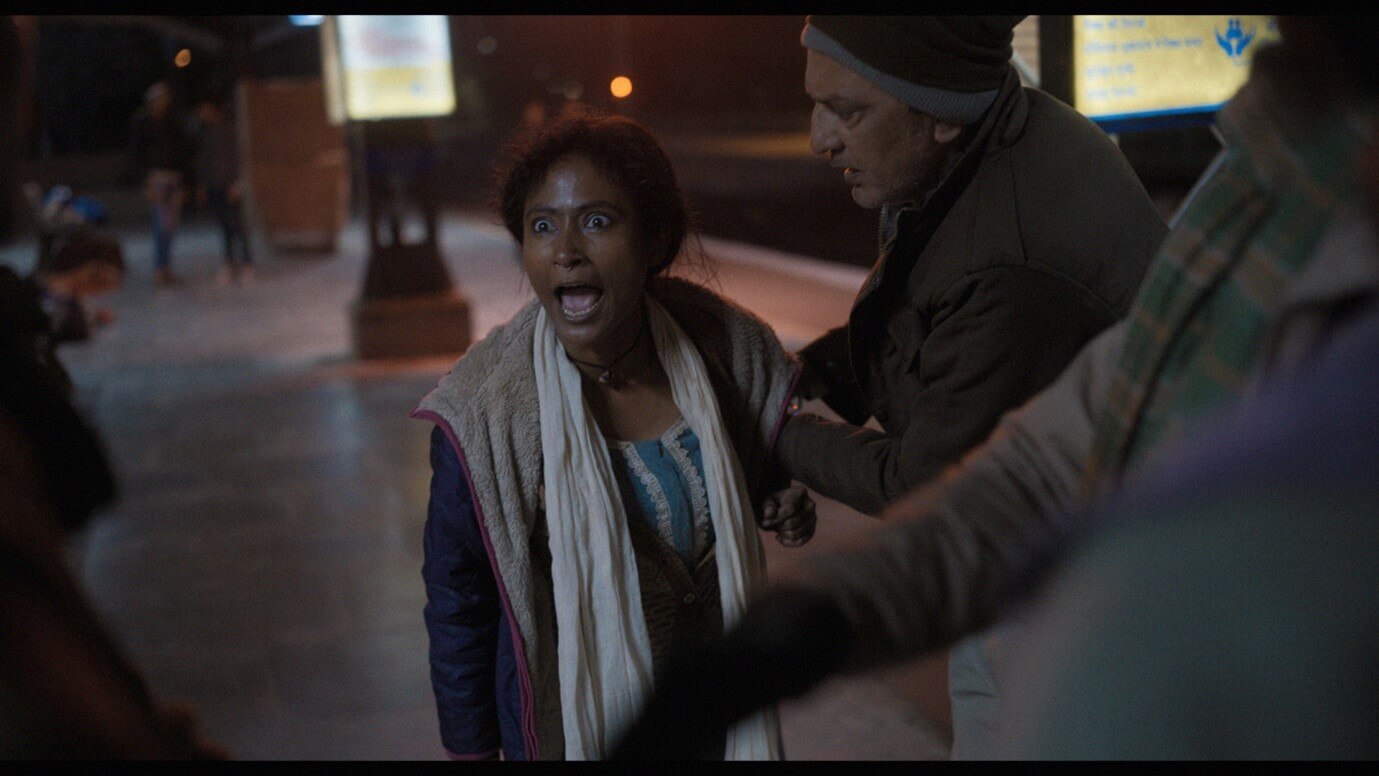
Returning home to attend his mother’s wedding, Raman is met at the train station by his brother Gautam, but they soon become embroiled in the kidnapping of a baby from the arms of her sleeping mother. When a wider crime is uncovered, the police take the brothers and mother Jhumpa to a possible location of the assailant but a video of events at the train station has gone viral in the meantime that makes them target of everyone’s hatred.
Tejpal’s film unfolds in waves, beginning with the early hysteria of a mother losing her baby and starting to look like a police procedural in which suspects are interviewed and evidence accumulated to lead the protagonists to their next location. The atmosphere of all of this is enhanced by the nighttime location and the semi-abandoned feel to many of the places the film visits, underscoring its narratives about forgotten people and extent to which class drives blanket expectations of guilt or innocence.
When Stolen moves into a lengthy car chase phase, Tejpal handles the fear and developing tension well, the sense of jeopardy growing as social media riles up baying mobs in various forms that take the characters into a different strand of justice movie – the wrongly accused trying to clear their name. Even here, Tejpal avoids over-simplification, recognising the motivation and implications for the townspeople that the central trio meet and the difficulties of unpicking truth from deception in the presentation of online videos.
Finally, Stolen has some useful reflections on motherhood and although Jhumpa is often pushed into the background, there is purpose in writers Agadbumb, Tejpal and Gauvra Dhingra’s approach, determining whether someone of her class “deserves” to lose her baby and the extent of her own dubiety, driven by poverty and power dynamics that she cannot control. There is much to say also about the gender dynamic, about the groups of men – official and unofficial -who takes charge of this story of maternal loss, either as policemen, the brothers who help her and even the men who chase her with intent to harm, as well as her own judgmental brother, all of whom create a culture of victim-blaming and the notions that Jhumpa was never an appropriate mother in the first place.
Performed by Mia Maelzer, and Shubham and Sahidur Rahaman as the brothers, the changing dynamic between the three central characters is well-managed, developing from compassion and loathing to much greater respect and even teamwork. This is by no means a buddy movie, never forgetting the differences between them, the troubles between two very different siblings and the separate relationship with the stranger that reluctantly help, yet Stolen builds credibility in their interactions.
It is less convincing in the wildfire spread of panic and physical violence, the speed of that transitions more of a plot convenience than a likely outcome of the viral video, so there is some suspension of disbelief required, but Stolen is an exciting film on a difficult topic that explores the consequences of abduction from a variety of angles.
Stolen is screening at the BFI London Film Festival 2023.
