

Writer and Director: Herman Yau
For those familiar with Hong Kong cinema after its golden age, Herman Yau is undoubtedly one of the industry’s most singular filmmakers. Trained in Cultural Studies, with both a Master and a PhD from Lingnan University, Yau is perhaps still best known in the West for cult films such as Ebola Syndrome (1996) and The Untold Story (1993). Yet this only captures one side of his career. He has also made films shaped by clear social concern, including Whispers and Moans (2007), based on Yeeshan Yang’s 2006 book of the same name about Hong Kong’s sex trade, and True Women for Sale (2008), which was likewise informed by Yang’s sociological and anthropological research on women in Hong Kong’s sex industry.
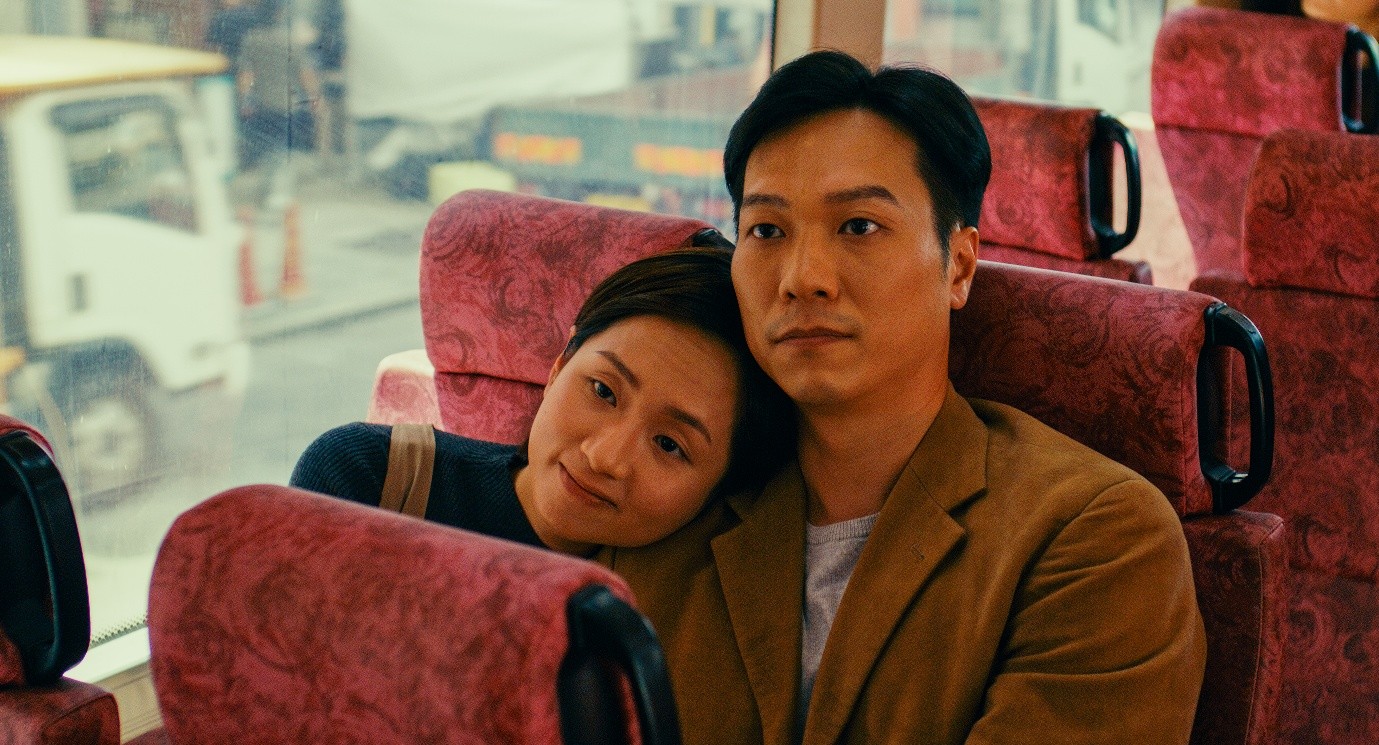
Yau’s new film We’re Nothing At All continues this line of social concern. Inspired by the 1998 Wuhan bus bombing, in which two men detonated a bomb on a bus in an apparent suicidal act on Valentine’s Day, Yau relocates the story to contemporary Hong Kong and adopts a dual narrative. One thread follows Lung Sir (Patrick Tam), a retired forensic expert called back to investigate the bombing. The other follows the bombers, Fai (Anson Kong) and Ike (Ansonbean), a gay couple from troubled backgrounds living on the margins of society. As both narratives develop, the film begins to draw unexpected parallels between the experiences of its three protagonists.
As in True Women for Sale, Yau places marginalised figures at the centre of the film, but he does not necessarily show deep interest in their identities as lived experience. Fai and Ike are a gay couple, yet the film gives little space to how they fall in love, how they understand their relationship, or why Valentine’s Day becomes the moment of their suicide. Their queerness is mostly visible through the homophobia and rejection directed at them. It becomes less a fully explored subject than a vessel through which the film observes social prejudice and institutional failure.
This limitation becomes more problematic near the end of the film, when Yau draws a surprising parallel between Fai, Ike and Lung Sir. The parallel suggests that despair may happen in a split second, and that under enough pressure anyone could move towards violence or self-destruction. By placing Fai and Ike’s act of self-destruction alongside Lung Sir’s crisis, and by highlighting the protective power of a typical middle-class family life and supportive wife, the film risks smoothing out the specific pressures of poverty, rejection, and queer love that have shaped the bombers’ lives. This broader humanist framing gives the film a more universal reach, but in doing so it softens the sharper edge of its social critique and loosens its grip on the intense pressure and extreme inequality of contemporary Hong Kong society.
Hong Kong cinema has long been known for its commercial genre films, but its tradition of socially engaged filmmaking is no less important. Films such as Ann Hui’s The Way We Are (2008), Ray Yeung’s Suk Suk (2019) and All Shall Be Well (2024), and Jun Li’s Queerpanorama (2025) demonstrate that Hong Kong filmmakers have developed distinct ways of depicting social reality and queer life. Against this background, Yau’s new film clearly shows his concern for current social issues in Hong Kong. Yet it also feels too detached from the concrete lives it wants to represent. It performs critique, but it does not fully ground that critique in queer experience. Its queerness is taken out of context, and its marginalised characters are left without enough flesh, blood or inner life.
We’re Nothing at All is released in cinemas on 29 May.
The Reviews Hub Star Rating
-
6
