

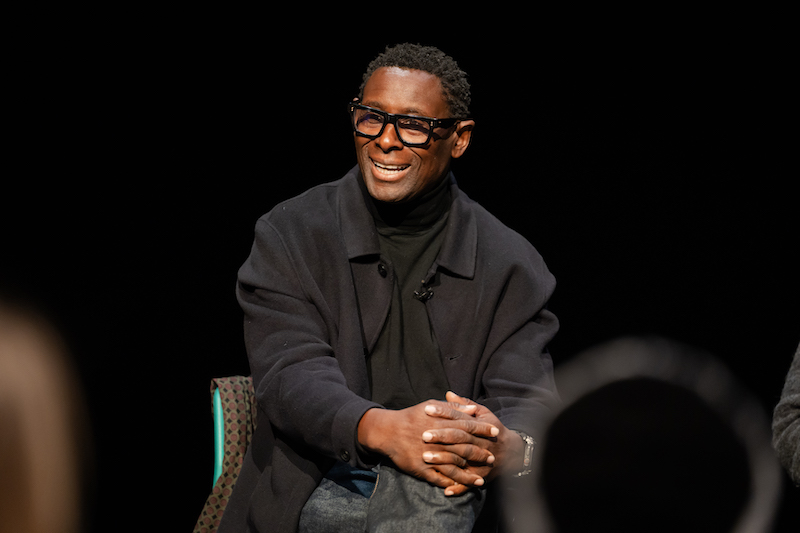
Theatre has the power to change lives, David Harewood explains in an introductory video to the first Mona Hammond Lecture series co-sponsored by RADA and Talawa Theatre Company. But what does it mean to build a creative career, and how can improving artist wellbeing support individuals in creating art? In a 20-minute talk entitled ‘Creative Lives in Changing Times: Wellbeing and the Artist,’ given to students and invited guests in RADA’s Jerwood Theatre space, Harewood opens up about the inherent contradictions in the creative experience, the need to be emotionally vulnerable but resilient, the requirement to be visible yet subsumed in their character and creating a rounded life when so much of your time is spent working and seeking work, offering advice but also posing a number of challenges that the event sponsors and the industry must answer.
Harewood’s career has been an eclectic one across film, television and theatre, with recent roles onstage including playing the right-wing American commentator William F. Buckley in James Graham’s Best of Enemies. But it is to Othello that Harewood returns again and again in this talk, opening the lecture with a quote from the start of the play in which the lead character apologises for his qualities as a public speaker. References to the role Harewood has played three times in his career, including only last year in the West End, recur throughout his talk, as he explores the enormous challenge of the role, his physical and emotional reactions to it and the support of a dramatherapist who worked with the recent company to build a supportive environment to explore the demands of being an actor subsumed in difficult characters.
It proves an interesting way into a conversation about how the industry has changed since he became the first Black actor to play the role at the National Theatre, shamefully recently in performance history (1997), expanding on the wellbeing theme that shapes this talk. Harewood, who has been the Drama School’s President since 2024, asked RADA to consider how they prepare students for the reality of working in the industry, not just as onstage creatives with a knowledge of writers, plays and techniques, but also the wellbeing and mental health challenges of the profession, especially when having a public identity is now “another piece of professional equipment.”
Harewood also speaks warmly of Mona Hammond, a widely respected creative, RADA graduate and co-founder of the Talawa Theatre Company, who created opportunities for subsequent generations of Black creatives to join the industry and understood the particular difficulties that they must overcome to sustain a career. The annual lecture is not a memorial, RADA Chair of Council Marcus Ryder explains, but a “celebration” of Hammond, the place to have a “living conversation” about the future of theatre and its responsibilities to all of the people who work in the industry.
“Representation without belonging is an incomplete achievement,” Harewood concludes and as he answers a number of student questions about how to approach roles, how to build communities of artists and the changing position of Black creatives, he appeals to the room to approach it as building a creative life rather than just a career, to ask for help when needed and, like Mona Hammond, to open the door for others to follow. As two nervous students ask for advice on playing Othello and understanding Shakespeare, Harewood may joke that he still doesn’t know what iambic pentameter is, but his openness and passion issue an invitation to the next generation of theatremakers to take care of their talent, find their voice and use it well.
The Mona Hammond Lecture was delivered on 2 September 2026
