

Writer: Eoin McAndrew
Director: Emma Jordan
The comedy is spread too thickly in Eoin McAndrew’s Verity Bargate Award-winning play, Little Brother, about a young Belfast man dealing with mental illness. However, the title is a bit of a misnomer as the action swerves Niall to focus on his elder sister, Brigid.
After setting his hand on fire, Niall goes to live with Brigid. She takes her new responsibility seriously and, following the hospital doctor’s instructions, has removed fire-making equipment such as lighters, matches and candles from her flat. The doctor is pleased that Brigid’s oven is electric rather than gas-powered. Eager to help Niall, Brigid is nonetheless a little high-minded in her duties and her tone, especially when she encourages him to write lists on Post-it notes, unfortunately, is condescending.
But she’s the only support he has, really. On what is, at times, an indictment of the underfunding of the NHS, the play clearly shows how Niall will have to wait for up to a year to receive any kind of counselling. All the hospital and the Community Support team can do in the meantime is prescribe him antidepressants. And Brigid has to ensure that he takes them each day.
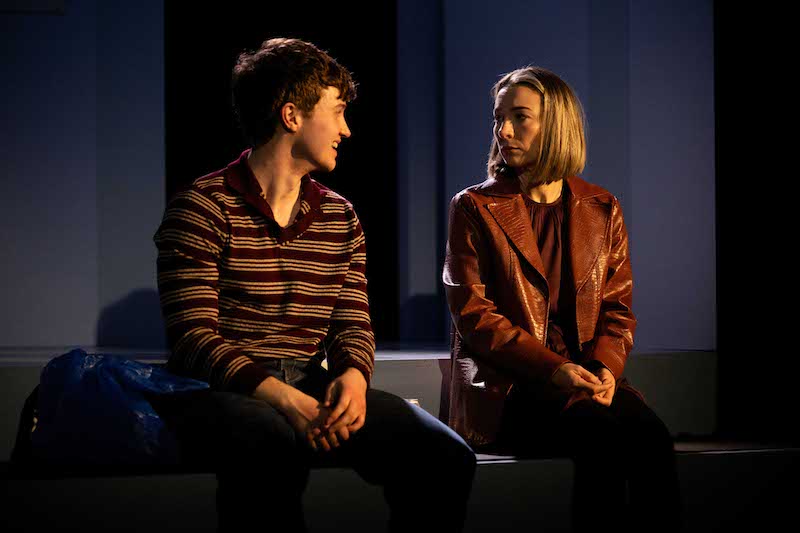
Brigid is also at the start of a new relationship with the odious Michael Doran, a jumped-up little man who works in outdoor advertising: billboards, in other words. Conor O’Donnell plays him well, but in no world that we know of would Brigid go out with him. Sure, Catherine Rees’ Brigid is brittle underneath her officious veneer, but she would be able to see through Michael Dolan’s salesman patter and controlling schemes.
As the narrative rolls towards the obvious conclusion of who she must choose between, the fate of Niall (a convincing Cormac McAlinden) goes untended. It is never explained to us why he self-harms or why he doesn’t want Brigid to tell their mother. Director Emma Jordan excises the part of the mother from McAndrew’s script completely. Instead, Jordan brings as much humour as she can from the text.
It works, most of the time, but there’s little sense that these people on Zoë Hurwitz’s stylish grey, three-roomed set have any depth to them. The comedy and pathos work against each other in this production, and what remains feels very traditional despite its flammable subject.
Runs until 22 November 2025
