

Writer: Peter Shaffer
Director: Caroline Steinbeis
It’s been quite a moment for Peter Shaffer. Michael Sheen is opening his Welsh National Theatre in Cardiff with a revival of Amadeus, the Menier Chocolate Factory is doing good business with a new production of Equus, and now the Orange Tree chips in with Black Comedy. For an almost forgotten stalwart of 1960s British theatre, it’s a big turnaround.
Black Comedy is the least heralded of Shaffer’s plays, a slighter, sprightlier offering, but a triumphant exercise in farce, in the mechanics of getting laughs, and the Orange Tree production achieves its comedic aims triumphantly.
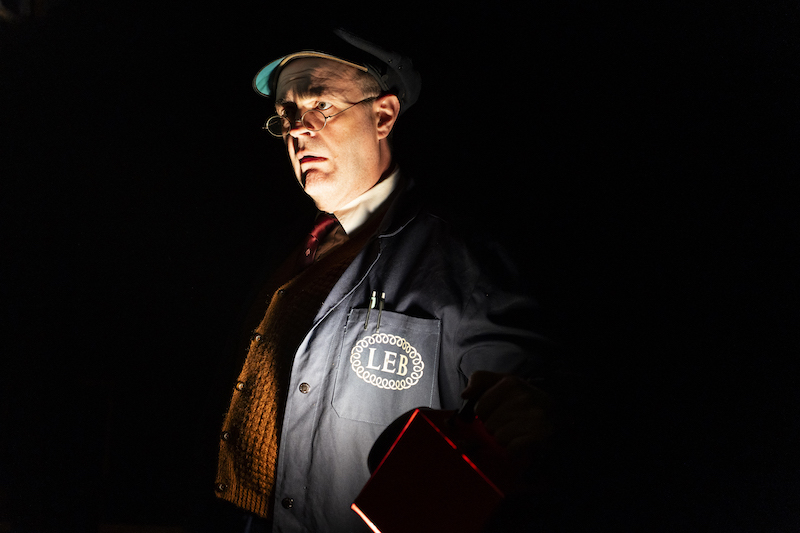
The pretext for the show is that a struggling artist has prepared his flat for the simultaneous visit of his fiancée’s father and a potential patron, he has raided his neighbour’s apartment for more impressive furniture, and his neighbour is staying in Manchester for the weekend. That’s the set-up, the coup de théâtre that elevates Black Comedy from other farces is that shenanigans ensue when a fuse blows and plunges the flat into total darkness. Shaffer had the inspired idea (apparently taken from a Chinese opera) of symbolically reversing the lighting conditions – when the stage is blacked out, the company can see fine but the audience can’t, when the fuse blows, the stage lights up like a Christmas tree, the audience can see perfectly, and the action on stage is carried out by people dealing with Stygian gloom. Hilarity ensues.
It’s a really simple idea. The instant dramatic irony – the audience knows exactly what’s going to happen, the actors have no idea, catastrophe is averted seemingly by chance – makes the simplest action fraught with difficulty and laden with possible laughter. It’s simple, it’s mechanical, and it works a treat. Mixing up drinks and confusing who they are sitting next to makes for sparkling comedy, and when the stakes are raised by the unexpected return of the neighbour and the incursion of the artist’s ex-girlfriend, the farce goes from vicarage tea party to madcap in a trice.
It is wickedly unfair to imply that any of this is easy. The writing is sharp, the playing requires inch-perfect blocking and immaculate timing, and everyone is on top of their game. It’s a joy to watch clockwork precision. It’s excellent entertainment watching an electrician open a trapdoor that someone is inevitably going to fall through, and then enjoy the ‘accidents’ that make that not happen. Expectations deferred as sight-gags are set up and avoided until the pay-off is many times better.
Does the play have anything to say about anything? Assuredly not. There’s a touch of daring in making one of the characters explicitly gay, which possibly turned heads at the play’s premiere in 1965, three years before the Theatres Act removed the censoring hand of the Lord Chamberlain. Historically, that’s quite a statement, but it speaks more quietly in 2026. Otherwise, soused spinsters, blustering fathers-in-law, and camp neighbours are the stuff of many farces. The light-is-dark and dark-is-light reversal makes this play unique. It’s fluff, but brilliant fluff.
Runs until 11 July 2026
