

Writer and Director: Carla Simón
Set in the Spanish resort of Vigo, Carla Simón’s Romería takes a while to come alive. Marina’s quest to have her name added as offspring to her father’s death certificate promises a bureaucratic film the likes of which we’ve seen too often before. But as the narrative switches to her father’s family and all its secrets, this well-made movie begins to grip with its examination of privilege and shame.
It’s 2004, and Marina needs her name on the death certificate if she is to go to university to study cinema. She must convince her paternal grandparents to meet with the local notary to make an oath that confirms Marina is their son’s daughter. However, she’s never even met her grandparents, and the uncles and aunts she encounters during her first few days on the Atlantic coast suggest that the official procedure may be more complex than she imagines due to her grandfather’s redoubtable manner.
Marina sleeps in the family yacht while, in the day, she is ferried around the town to be introduced to family members. Most have comfortable lives. Uncle Lois, with his trio of sons, seems the most decent, welcoming Marina into his family and organising all her visits. One aunt owns a wedding dress shop and moans about her clients when they can’t hear. It’s only Uncle Iago (Alberto Gracia) who’s fallen by the wayside. Drink and drugs have ravaged him, but this difference allows him to tell the truth when the rest of the family avoids it.
It’s Iago who confirms that her parents did once live in the tower block by the sea, and it’s Iago who takes Marina to the boat that her parents sailed in. Marina also discovers that her father died a few years later than she had previously been told and in a different location. Getting the truth from her newly-found family is like squeezing blood out of stone. Marina digs deeper.
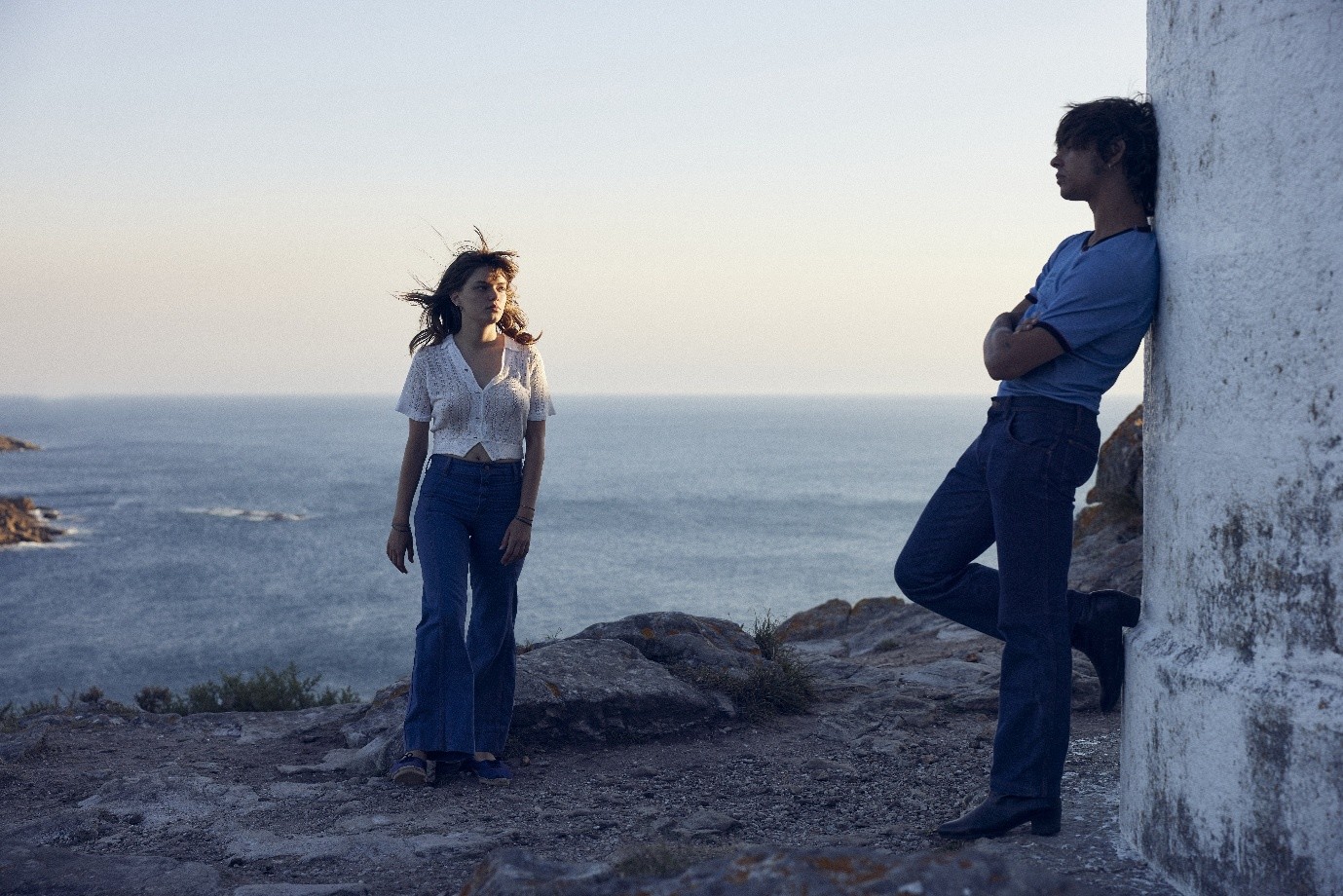
She’s brought her late mother’s diary with her, and Marina begins to daydream about her parents sunbathing on the roof of the tower block or taking drugs in their boat in the 1980s. One of these flashbacks is quite long, and the film’s print acquires a different texture. Llúcia Garcia plays both Marina and her mother in the film; the former anxious yet determined, the latter laidback and hedonistic. Garcia’s performance is remarkable, and one shot of the mother and daughter sitting on a seawall, with the tower block behind, is a haunting image of the collision between the past and the present.
In a strange and unsettling choice, Simón has the single-named actor Mitch play both Marina’s cousin Suso in the present and her father in the flashback, adding incestuous vibes to the romance between Marina’s parents, an echo of the glances Marina gives to Suso when they are swimming. Mitch is effortlessly cool and carefree with the luxury of privilege in both roles.
The English translation of romería is pilgrimage, and, in this film, Marina’s parents, despite their messiness and bohemian lifestyles, become modern-day saints. Full of reverence, Marina’s journey is beautifully and intelligently told.
Romería is screening at the BFI London Film Festival 2025 from 8 – 19 October.
