

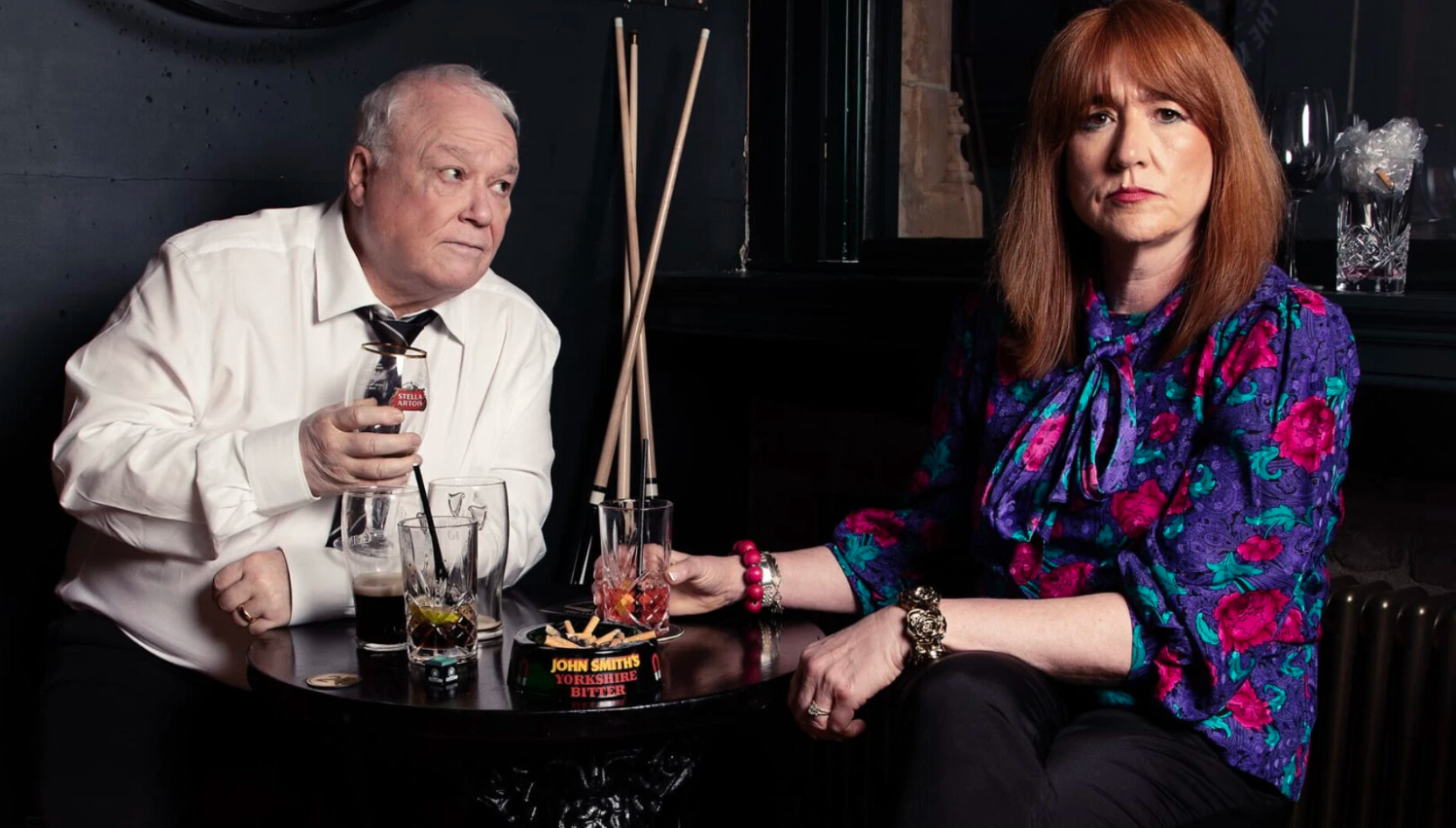
Writer: Jim Cartwright
Director: Lisa O’Neill-Rogan
Pubs are places where stories spill out as easily as the drinks, and in Two the regulars of a northern boozer reveal far more than what is in their glasses. At the intimate Shakespeare North Playhouse, Jim Cartwright’s celebrated two hander unfolds as a bittersweet portrait of working class life and pain, where humour and heartbreak sit side by side at the bar.
First staged in 1989 and often regarded as one of Cartwright’s most enduring works, Two centres on a landlord and landlady presiding over an evening in their pub while a parade of colourful regulars drift in and out. Each character brings their own small story with them, revealed through sharp dialogue and a series of striking monologues that gradually expose the loneliness, frustrations and quiet tragedies beneath the surface.
Due to the increasingly iconic theatre setting Director Lisa O’Neill-Rogan has to stage the production in the round, an approach that proves particularly effective. The audience surrounds the pub like regulars perched on stools, creating an intimacy that suits Cartwright’s writing. The set places the bar firmly at the centre of the action, allowing characters to circle the space naturally while keeping the audience constantly involved in the storytelling.
Familiar faces from 80’s TV soap Brookside, Michael Starke and Sarah White take on the formidable challenge of portraying every character between them. The pair move rapidly between roles, shifting accents, physicality and energy with impressive stamina. Both performers clearly relish the theatricality of the piece and the audience (many ex Brooksiders amongst them) responds warmly throughout.
Some portrayals lean a little heavily into caricature and a handful of scenes stretch longer than necessary, occasionally slowing the pace to accommodate costume changes. A moment featuring Starke in a mullet wig and shell suit circles the stage to comic effect but slightly outstays its welcome, while the opening business of setting up the pub, though amusing, feels more extended than required.
Where the production finds its real strength is in Cartwright’s monologues. The lonelier figures passing through the pub offer moments of genuine poignancy, reminding the audience that beneath the laughter lies a quiet undercurrent of sadness. These moments land particularly well and reveal the emotional depth that has kept the play resonating for decades.
The final exchange between the landlord and landlady provides the evening’s emotional centre. Starke and White strip away the broader comedy and deliver a scene that feels raw and authentic, allowing the audience to glimpse the deeper pain behind their characters’ relationship.
Technically the production is strong. The set works beautifully within the theatre’s circular space and reinforces the sense of being inside a living, breathing pub. The lighting design supports the storytelling effectively, isolating characters during key monologues while maintaining the atmosphere of a late night local. The music choices complement the action and the costumes are cleverly designed to allow the actors to transform quickly between characters, although consistency with the costume changes would have been helpful, the best ones were done onstage keeping the pace going.
A few additional touches could further immerse the audience in the environment. The clink of pint glasses, the sound of liquid being poured or the familiar clatter of a pub till might have helped bring the world of the play even more vividly to life.
Despite occasional pacing issues, the production captures much of the warmth and melancholy that make Two such a distinctive piece of writing. At its best, it reminds audiences that behind every bar stool sits a story waiting to be told.
It proves, ultimately, to be a good production of a great play which more than hits the mark in parts and leaves the audience laughing, shocked and quietly moved in equal measure.
Runs until Saturday 28 March
