

Writer: Frances Poet
Director: Jemima Levick
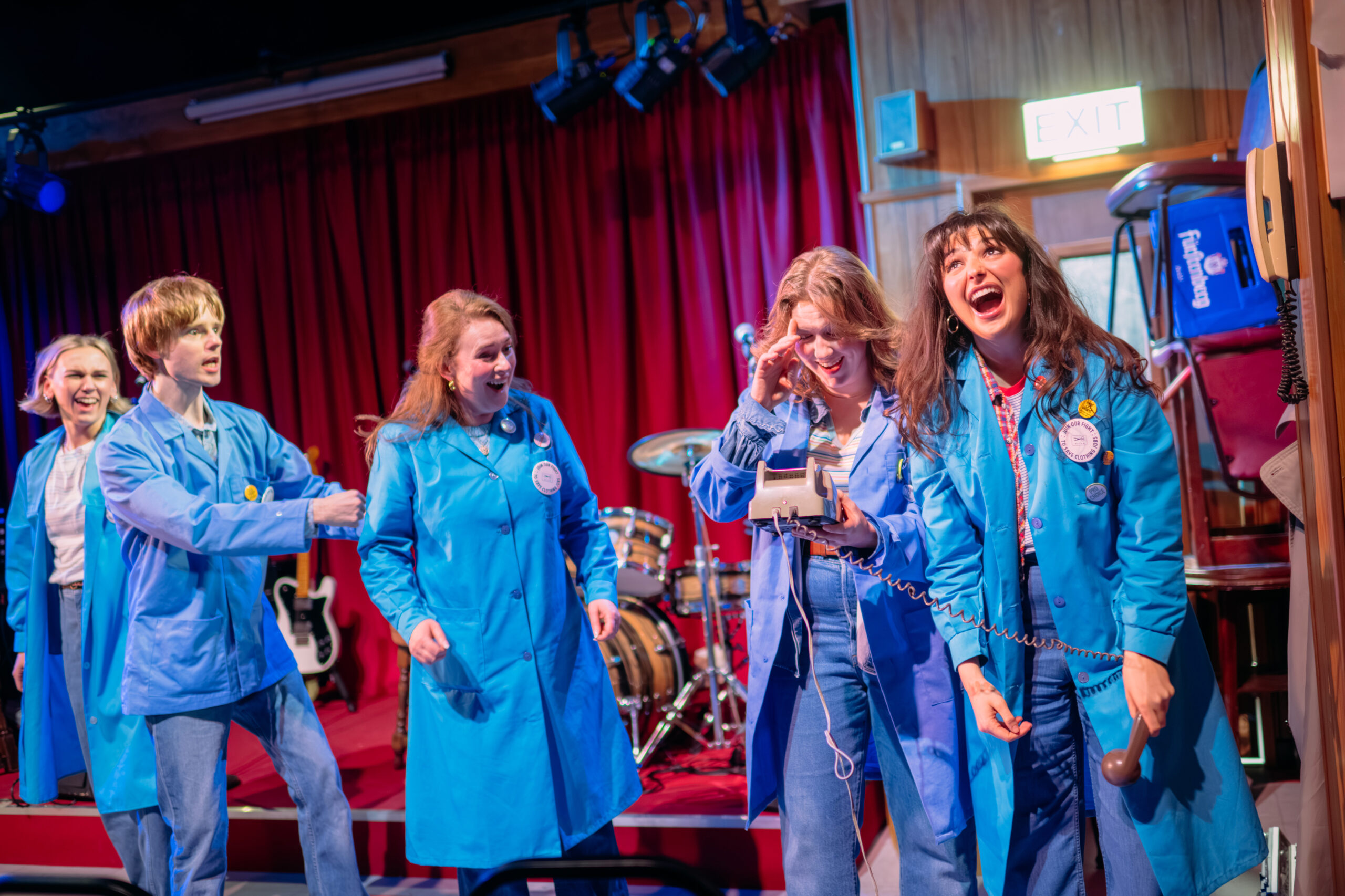
The 1981 Lee Jeans sit-in remains a landmark moment in Scottish industrial history—a David vs Goliath battle in which 140 workers occupied their Greenock factory for seven months to save their livelihoods. In Stand and Deliver, writer Frances Poet brings this defiance to the stage using a meta-theatrical storytelling device that invites the audience to reflect on the legacy of the struggle, even if the narrative takes some time to gain its full momentum.
Direction from Jemima Levick is assured, navigating an effective set that, paired with splendid lighting design, captures the grit and industrial claustrophobia of the era. However, the production initially struggles with its own momentum. While the first act introduces us to the workforce, we spend very little time getting to know these characters outside the factory setting. Without a clearer window into their lives or motivations beyond the workplace, it is difficult to build an early emotional investment in them as individuals. As a result, the audience is left waiting for a hook that justifies why these specific voices are leading the narrative.
The tide begins to turn as the first act reaches its conclusion. The cracks in the collective front start to show, and the pressure on shop steward Helen (Jo Freer) becomes palpable. Freer is excellent, anchoring the production with a performance that explores the agonising human cost of activism—not just the slogans, but the heavy question of whether the sacrifice is truly worth it.
The production leans into the inherent drama of the true story, offering moments that seem almost too wild for fiction, from scaling roofs for chips to being smoked out of the factory. These beats ground the play in a visceral reality, further elevated by a spectacular cast of actor-musicians. Chiara Sparkes is a standout as the 19-year-old Maggie; she perfectly captures a restless youth struggling with low expectations until the momentum of the sit-in forces her to rise.
The storytelling device ultimately pays off in the final act, providing a space for a poignant reflection on the lives led after the sit-in ended. The true emotional weight is felt when the characters look back on those no longer with us—notably Finlay. Hearing that he went on to manage factories globally, but did so with an integrity forged by this very struggle, grounds the play’s message. It suggests that while the sit-in was a moment in time, the lessons in dignity and fair treatment carried forward into the characters’ futures, offering a meaningful resolution to an otherwise gruelling journey.
Though the script takes time to find its rhythm, the cast never misses a beat, ensuring that the defiance of the Greenock 140 isn’t just a history lesson, but a living, breathing testament to industrial dignity. It is their collective energy that ultimately carries the day.
Runs until 9 May 2026 | Image: Mihaela Bodlovic
