

Writer: Susan Hill
Adaptor: Stephen Mallatratt
The Woman in Black at Grand Opera House York is still an effective and often tense piece of theatre, even if this touring production doesn’t fully live up to its reputation as a truly frightening experience.
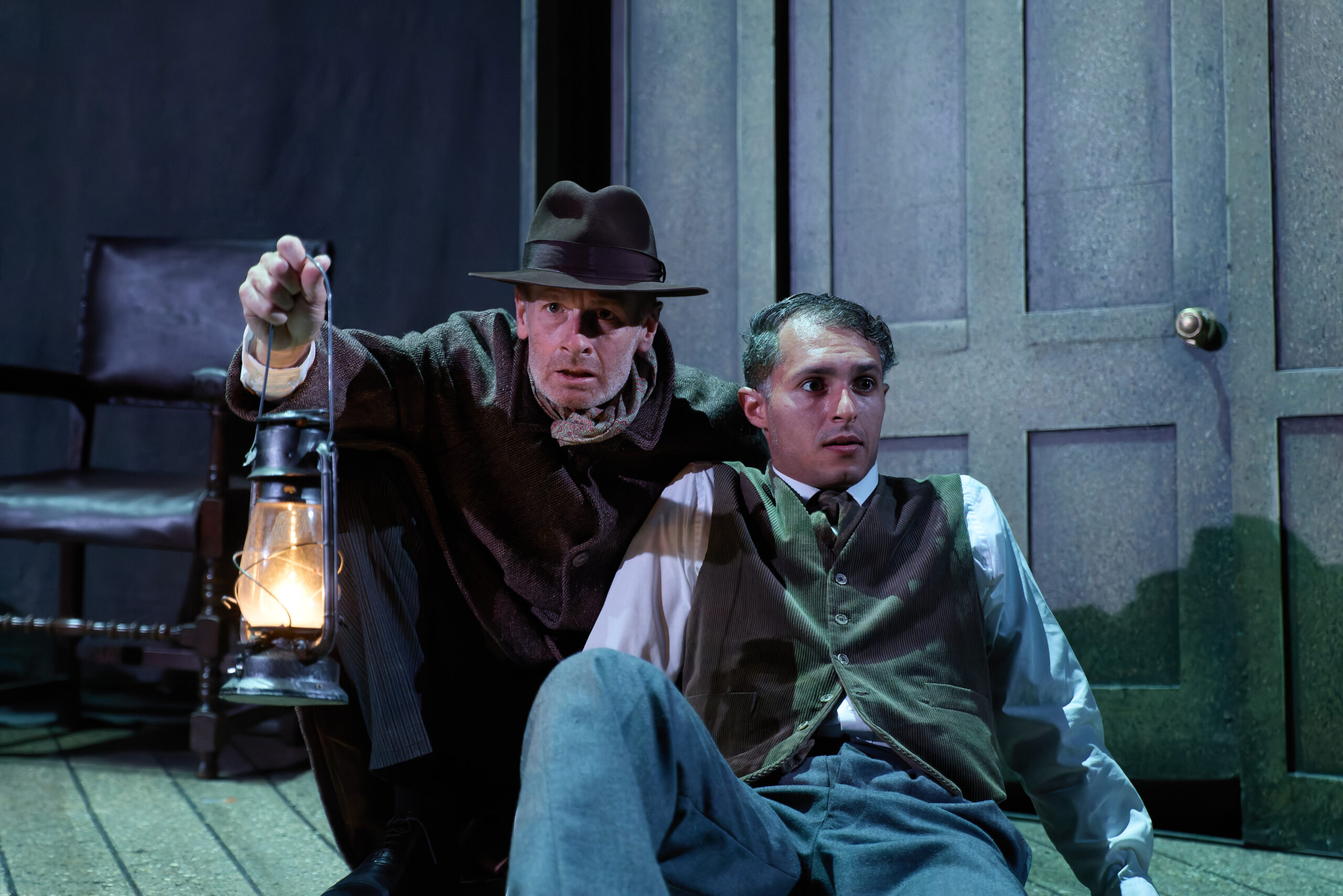
The play is framed around an older Arthur Kipps, revisiting a past event with the help of a professional actor. The opening section is deliberately staged as a rehearsal, which means the first part feels slightly slow as the scene is set and the play within a play narrative is made clear. The story he wishes to tell is of himself as a young solicitor sent to a remote English village to settle the affairs of a deceased woman. During his stay in her isolated house, he experiences disturbing events and learns that the ghostly figure known as the Woman in Black is tied to a tragic past and recurring child deaths. As Arthur investigates the origins of the haunting, the story builds tension around whether the curse can be understood or escaped. It requires patience to get to the ‘action’ of the play, but once the story properly shifts into the past and Kipps arrives in the isolated countryside, the pacing improves and the suspense becomes much more consistent.
John Mackay gives an impressively agile performance, shifting convincingly between characters through voice, posture, rhythm and accent. His lightness of touch and humour are well judged and help relax the audience just enough to make later shocks more effective. Daniel Burke works well alongside him, offering a steadier, initially more optimistic presence that contrasts nicely with Mackay’s shifts in tone.
Technically, the production is often very effective. Sound and lighting are used carefully, with creaks, distant cries and subtle light changes doing most of the work. These quieter moments are generally more successful than the louder jump scares, which sometimes feel obvious. When the show relies on suggestion rather than spectacle, it creates genuine tension. The only difficulty is the requirement for silence in the theatre. Too many coughs and sweet packets rustling can quickly take the tension away and this threatened to happen a number of times. This is not a play that requires sustenance to watch.
The central issue in this touring production lies not with the concept of the Woman in Black herself, but with how quickly and how clearly she is revealed. Her appearances are too frequent and too well-lit, making it immediately obvious that she is a corporeal figure rather than something uncanny and unknowable. By presenting her so plainly, and so early, much of the menace evaporates. Instead of feeling otherworldly, she risks seeming tangible and familiar, which undercuts the psychological horror the play is otherwise so good at building. More restraint — obscured views, fleeting silhouettes, or delayed reveals — would have preserved the sense of dread far more effectively.
Related to this, the scares often feel contained to the stage. Her appearances are clearly signposted and limited to expected areas, which reduces the feeling that the audience themselves are at risk. A more inventive use of space or less predictable staging could have made the experience more immersive. There are boxes, there are entrances and exits that could be used unseen, many places for the Woman in Black to appear that would have more of an effect on the audience.
Overall, this is an engaging production with strong performances and well-managed atmosphere. While the story, set and sound design do a lot right, the handling of the Woman in Black herself holds it back. It’s still worth seeing, but it falls just short of being genuinely frightening.
Runs until 17th January 2026, before continuing on tour
The Reviews Hub Star Rating
-
8
