

Writer and Director: Stephen Wallis
The title, The Martini Shot is a term used by filmmakers for the final camera setup of the day to indicate the next shot will be one of alcohol out of a glass. This is by no means the only cinematic reference and in-joke in Stephen Wallis’s film.
Like The Life of Chuck it is probable events in the film are taking place in a reality constructed by the mind of a dying man. Film director Steve (Matthew Modine) is given a terminal diagnosis and, upon advice from his therapist Dr Ehm (Morgana Robinson), decides to make one last movie despite having come to the conclusion there is no truth to be uncovered, there is only perception, so our actions are an attempt to find truths which do not exist. Steve sets about making his film in a far from conventional manner, casting a star Philip (Stuart Townsend) who has died from a drugs overdose and veteran actor Errol (Derek Jacobi) who has well and truly passed on and is now a ghost haunting ruins.
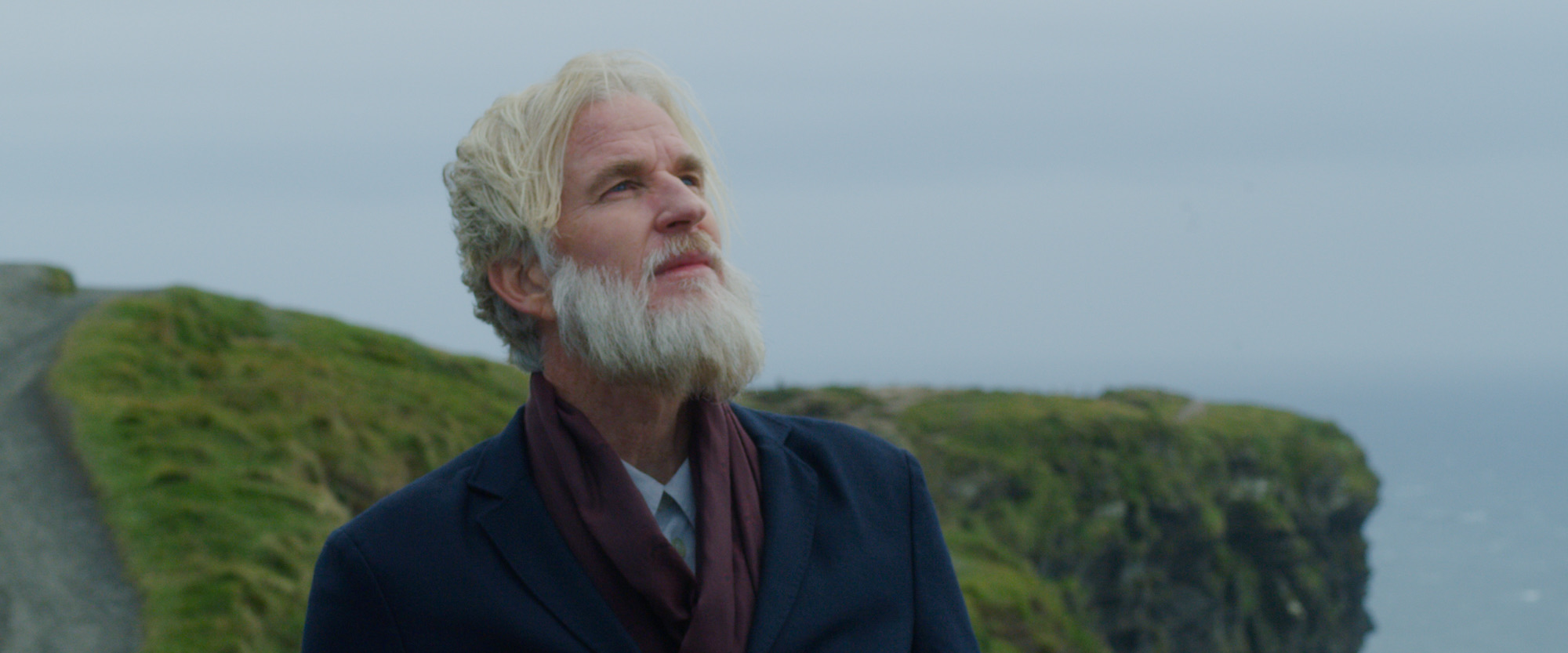
The Martini Shot is a divisive movie. Some viewers may applaud the audacity of the storytelling and find the tone life-affirming while others could find it self-indulgent and pretentious. The opening suggests a possible satire on films set in an idealised version of Ireland. Steve stands on the Cliffs of Moher taking in the breath-taking scenery and quotes Charlie Chaplin, about how empathy and irony differ when film frames a character from varying distances, while Alain Mayrand’s lush soundtrack swells in the background.
Rural Ireland becomes, therefore, a fairy-tale neverland in which Steve’s imagination can run riot and, apparently, his desires become real. Steve’s omnipotence allows him to cast characters, such as his therapist, in his real life as well as in his film. In the first indication of Steve’s unrepentant nature he casts Dr. Ehm based entirely upon her sexualised appearance and dresses her to titillate his fancy resulting in Morgana Robinson struggling to walk in the impractical high heel shoes. A rare suggestion of redemption for Steve is his that his attitude towards women matures to the extent he is later able to resist a come-on from a member of the film crew.
But Steve’s power to shape the world is administered in a childlike manner without regard for consequences. Unable to appreciate the grieving process is a means by which people can move on from a trauma he eases the loss experienced by a character by simply bringing the dead back to life. Mary (Fiona Glascott), a permanently frustrated assistant, is a maturing influence upon Steve; there is an unresolved sexual tension between the two of them as though Steve is aware Mary is out his class. Mary also has some of the best lines addressing the ridiculous nature of the situation by reminding Steve the trade unions object to the employment of dead actors and, as a genuine theatre ghost, Errol is entitled to a premium wage rate.
Writer/ director Stephen Wallis shares his character’s propensity for self-indulgence and on occasion the film feels like he wants to have his cake and eat it. The Martini Shot addresses deep existential issues but employs some clumsy metaphors such as art being like trees working together to make-up a forest. Just as Steve is able to cast anyone he likes Wallis gets John Cleese to make a rare appearance where he is actually funny, rather than complaining about society being Woke, and Derek Jacobi inevitably delivers a powerful speech.
The whimsical approach risks diminishing the emotional impact of the film, powerful points are made but in a casual manner. Only towards the conclusion does the film push emotional buttons as Steve is forced to confront how being all-powerful makes it hard to resist manipulating other people to suit one’s moods- Mary is ultimately carried off by technicians and discarded like a film prop.
Matthew Modine as Steve helps make the magic realism of the film work. Steve’s arrogance is based upon his belief in his own abilities and Modine takes the opportunity to pay tribute to the magic of movies- Steve astonishes the film crew by setting up a camera shot in just the right place to catch the rising sun. Being out of touch with real life Steve has a degree of innocence, a genuine belief his actions are helping other people.
The fragmented whimsical style of The Martini Shot limits the extent to which viewers can become emotionally involved in the film but it remains an intriguing and enjoyable way of exploring deep issues.
The Martini Shot is on UK digital 2 March from Miracle Media.
The Reviews Hub Star Rating
-
6
