

Writer: Anna Narinskaya
Director: Maxim Didenko
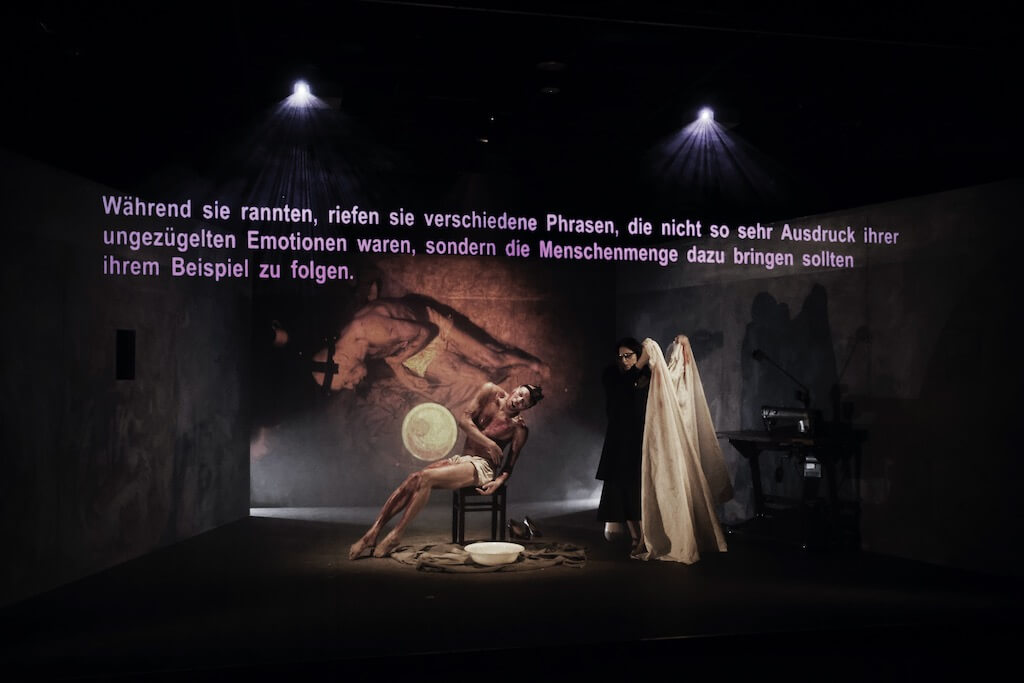
The Last Word, as the title suggests, presents the final statements of female political protesters in Russian court. This stylistically sophisticated production employs Katie Mitchell-esque live camera work, complemented by atmospheric lighting and ominous soundscapes to create a striking visual montage.
The opening words about the wish to speak about poetry or literature rather than politics set the tone. Structurally, the play is straightforward, featuring the testimonies of eight women in succession. While this repetition reinforces the endlessness of their plight, it unfortunately contributes to a lack of narrative shape. As a result, the audience struggles to connect with any of the women on a deeper level, diluting the emotional impact.
Visually, the piece evolves: starting with a solitary woman on stage and the introduction of a bloody male body, which gradually transforms into an authority figure before he disappears once more. These haunting and cinematic tableaux of images are elegantly composed, flowing seamlessly from one to the next. Yet, the lack of a deeper connection with the text undermines the potency of the words. Whilst style is blended with substance to unsettling effect the political message risks becoming secondary to the aesthetics.
Alisa Khazanova, the protagonist, delivers a powerful vocal performance, particularly during brief, poetic interludes of church-like songs. However, the lack of differentiation between the women’s performances makes it difficult for the audience to truly engage with their individual stories. We are left more with their words than with a sense of who these women are.
The Last Word paints a grim picture of life under Russian political oppression, capturing the bleak reality faced by these protesters. However, by focusing almost exclusively on their suffering, the production risks offering little new perspective nor any food for thought. Despite this, the verbatim dialogue serves as a crucial reminder of the harsh political realities these women endure, ensuring their voices, at least, are heard.
Runs until 21 September 2024
