

Writer: Christy Lefteri
Director: Anthony Almedia
In a social state that very much reflects the story being told at Storyhouse theatre in Chester, The Beekeeper of Aleppo shares the journey of a Syrian refugee couple who have suddenly been thrown out into the world after the war starts. This depiction invites you to sit in between the sheds of families who have escaped war, to feel the freezing waters of the ocean as you’re tipped from a lifeboat, and leaves your ears ringing.
From the very beginning, the production is an interactive experience. The auditorium lights remain on as the story begins, dissolving that invisible barrier between audience and performer. And later, in stark contrast, there are moments where all light disappears entirely, plunging the space into darkness. These sequences are devastating when worked alongside the music choices, and work in tandem with Anthony Almeida’s direction.
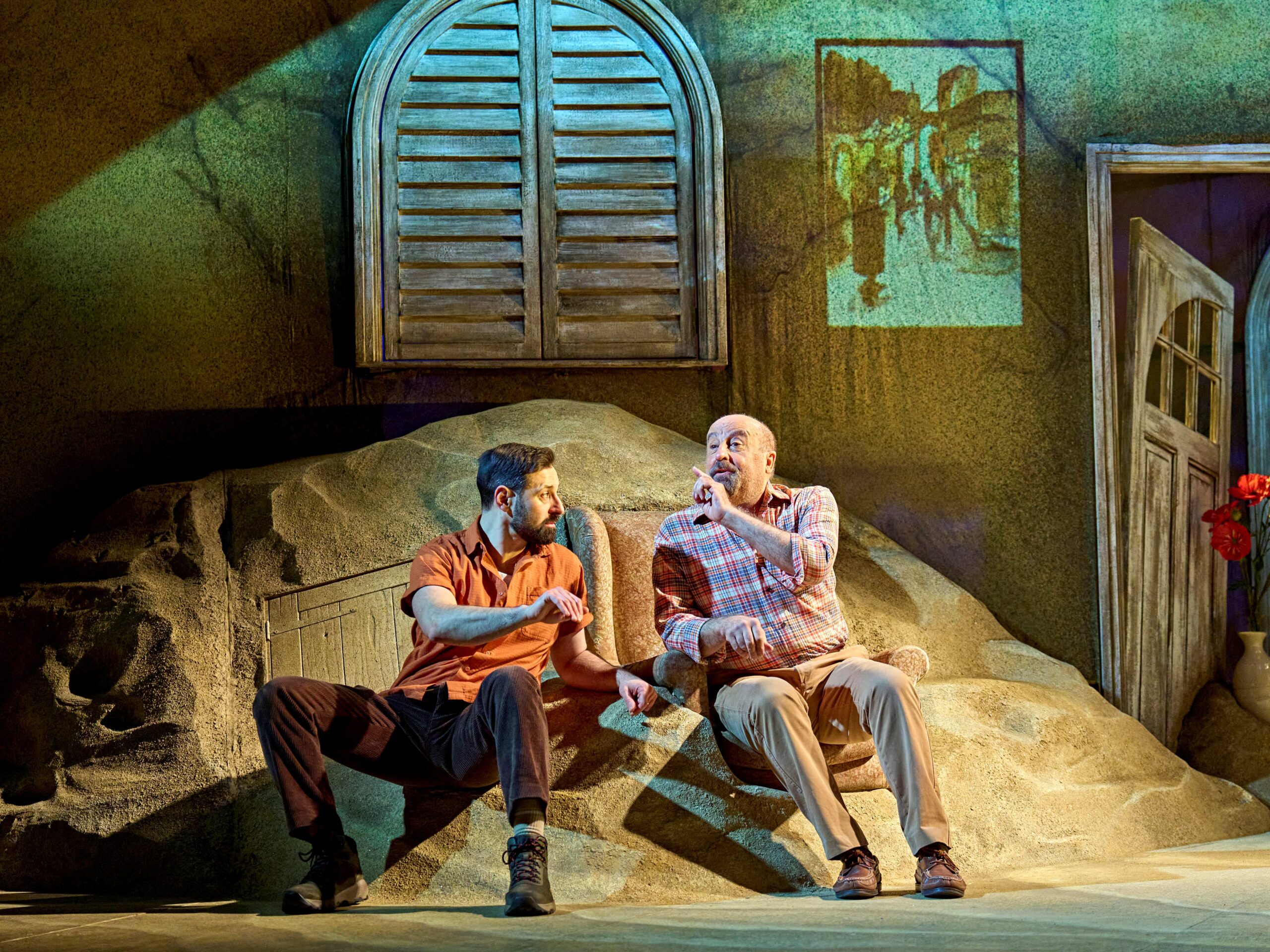
Ruby Pugh’s set design is deceptively simple, yet endlessly inventive. Sand and chairs are transformed again and again: into toilets, mountains, beds, and gardens. Windows become doors, then the front seats of trucks. There’s a fluidity to it that mirrors the instability of the characters’ journey, where nothing is fixed, everything is temporary, and it’s always shifting—a floating sense of feeling lost.
The cast’s use of multi-rolling adds to this sense of movement and disorientation. Adam Sina as Nuri delivers a standout performance, combining clear diction with a deeply emotional presence that anchors the production and gets your gut churning. Ultimately, he resembles humanity in all its honesty and the struggle of such displacement during a time which may feel barren to the typical British audience.
In contrast, Farah Saffari’s Afra is more distant and emotionally disconnected. For most of the production, it is hard to grasp her emotions, which causes issues during moments that call for intimacy. However, as the show goes on, it is clear this is an intentional and clever reflection of the character’s trauma, and the ending allows for emotions that otherwise were lacking in the beginning, and it is a beautiful surmise to the show.
A true highlight is Joseph Long, who shines in his roles as Mustafa and the Moroccan man. His ability to shift seamlessly between characters works in favour of the quick movement back and forth from past to present, and he brings even moments of humour to the stage, allowing for a bit of light in times that are otherwise dark.
This production is a powerful piece of theatre that uses minimalism to its advantage. It doesn’t rely on elaborate staging or spectacle; instead, it trusts its actors, its story, and its audience. It allows an insight into an experience which may not otherwise be imagined without this intense display, and it is, in the end, a reminder that we are all human.
Runs until 25 April 2026 and continues it’s UK Tour
