

Writer: Manjeet Mann
Director: Tessa Walker
Run, Rebel opens with a reminder that we all have a story to tell and that everyone deserves to have their  voices heard. Given the nature of the story that is about to be told and how rare it is for voices like this to be heard, this production is to be applauded for giving Amber a platform to share her life with people of her generation and beyond.
It is the story of a teenager with a flair for athletics but whose home life is blighted by alcoholism and domestic abuse as well as a restrictive parent who will not give his daughter the freedom she needs to be who she really is. Adapted by Manjeet Mann from her successful YA verse novel, it is a play aimed at younger theatregoers, and judging by the enthusiastic school parties in the auditorium, it resonates with that age group in an engaging way.
Much of that engagement is driven by Jessica Kaur’s charismatic central performance. She is on stage pretty much throughout the performance and brilliantly captures the complexity of Amber and her family life. She is well supported by the ensemble — Pushpinder Chani, Heather Forster, Simran Kular, Asha Kingsley, and Kiran Raywilliams, who play the other characters.
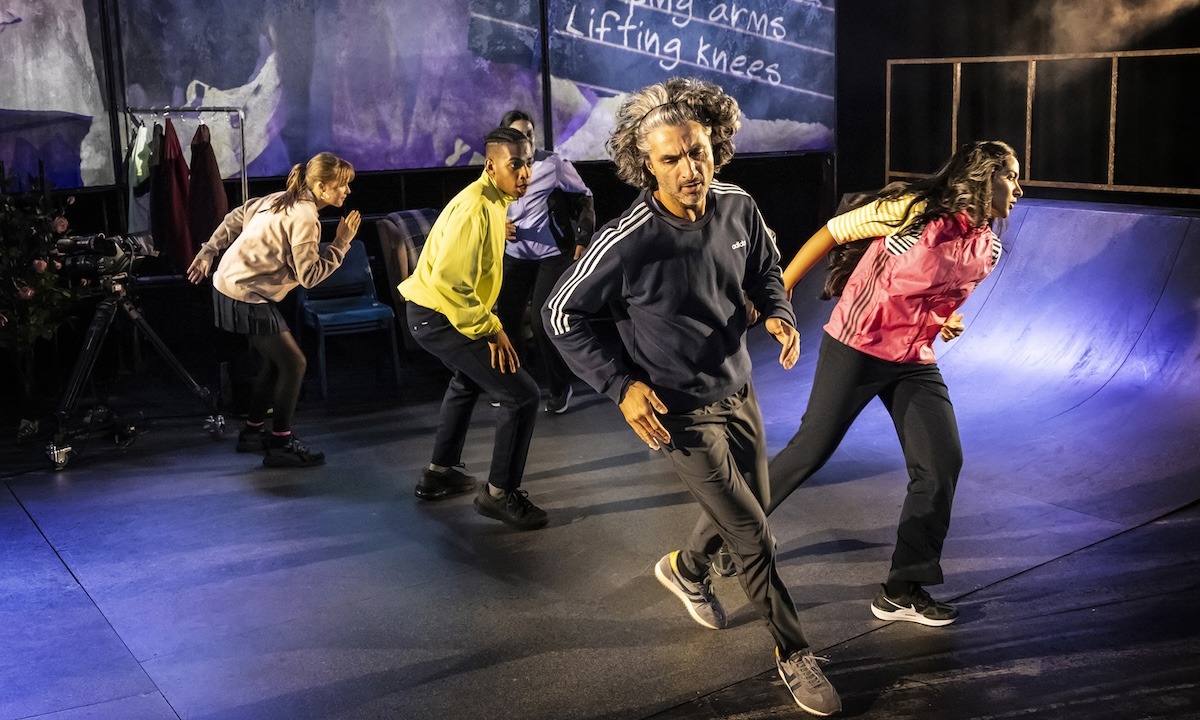
Visually, the many different characters are clearly delineated by effective costuming and overall the stage presentation captures each location effectively.
Some issues with the script and the production stop this from fully succeeding. Firstly, and probably most importantly, there is an overreliance in the text on telling the audience what is happening or how someone is feeling. This is a common issue with novel adaptations where the voice of the narrator is key to the telling of the story. The stage needs something more inherently dramatic. There are moments where the use of physical theatre moves things away from direct narration but the overall theatrical balance is not right.
Another key issue is with the use of stage space. It is difficult when touring to adapt to each and every venue, but the use of ramps that extend into the wings means that a significant portion of the Oxford audience will be unable to see key parts of the action. This also impacts on vocal projection meaning that, at times, dialogue is lost behind the proscenium arch.
Sound is also an issue when narration and dialogue are accompanied by music. This underscoring does tend to overwhelm the spoken word too frequently and so more work is necessary to balance the sound for each venue.
The previously mentioned enthusiastic reaction from the school parties in the audience shows that these technical issues do not impact on the ability for the play to reach out to fully engage teenagers and they, of course, are the audiences of the future.
The cast delivers performances full of commitment and passion. And it is important that stories like this are told and voices like those of Amber and her family are heard. So perhaps we can overlook a few issues when it does ultimately speak to the people the play is seeking to address.
Runs until 19 October 2024 and on tour
