

Directors: James Pearson and Lizzie Ball
Launching a weekly classical strand in a venue synonymous with jazz is an ambitious move, but Ronnie Scott’s Classical opens with confidence and a clear sense of purpose. This opening-night programme, devoted to Gershwin and the American canon, champions intimacy over grandeur and succeeds on its own terms.
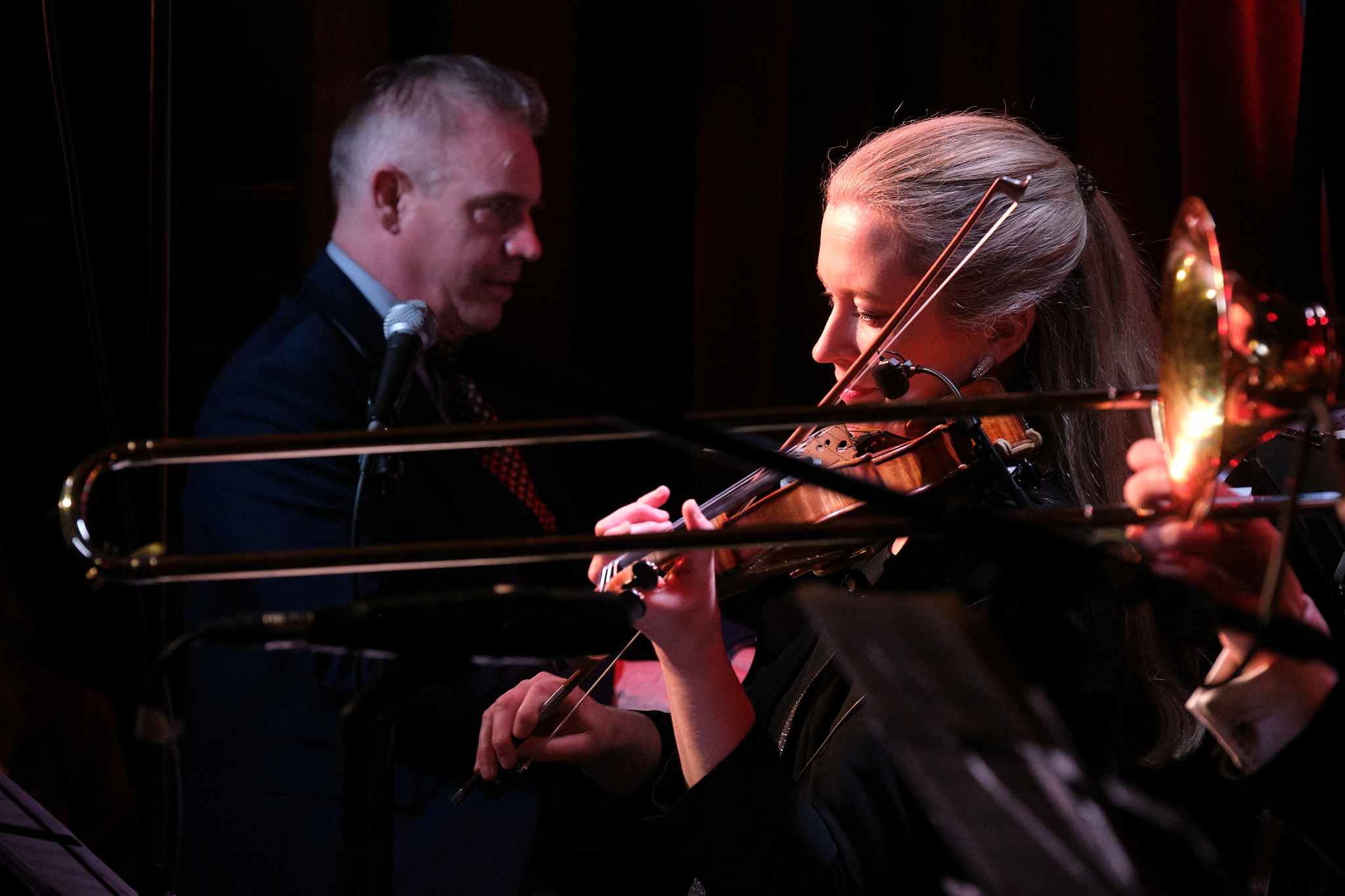
The recently renovated Upstairs at Ronnie Scott’s Jazz Club is an irresistibly atmospheric space. Warm wood panelling, red velvet and low amber lighting create the kind of close, enveloping setting regular Ronnie Scott’s audiences cherish. The listener sits in unusually close proximity to the musicians, and each other, in an almost impractically cosy atmosphere that nonetheless works in the music’s favour.
The programme opens with a not-so-classical Strike Up the Band, its brassy exuberance neatly scaled to a seven-piece ensemble, before easing into the nocturnal hush of Blue Lullaby. From there, the set moves fluidly between jazz-inflected lyricism and orchestral colour, including a toe-tapping rendition of I’m Coming, Virginia.
An American in Paris is handled with particular flair. Stripped of symphonic mass, its sense of movement and urban bustle remains intact, driven by bright percussion and an eerily accurate French car-horn impression via Jon Shenoy’s saxophone.
Selections from Porgy and Bess follow, before the mood is held in suspension by a slowed, clarinet-led reading of Oh, Lady Be Good!. The effect is quietly arresting, as unpredictable as it is assured.
The evening’s centrepiece arrives in a reimagining of Rhapsody in Blue, introduced as Rhapsody in “Light” Blue. While the reduction inevitably sacrifices weight, what emerges instead is clarity and ease. The programme closes with a condensed suite from West Side Story, compressed into roughly fifteen minutes without losing its dramatic arc. Here, Lizzie Ball’s violin proves especially potent, carrying the emotional weight of the score with a vocal intensity the equal of any voice.
This opening night does not aim for symphonic replication, nor should it. Instead, it offers a persuasive argument for classical music in a different guise: agile, and intimate. The musicianship is assured and the atmosphere undeniably compelling.
A promising beginning to a series that could genuinely broaden how and where classical music is experienced.
Reviewed on 9 February 2026 and then continues every Monday
