

Writer: William Shakespeare
Adaptor/Director: Thomas Frith
Shakespeare’s most famous lovers arrive at The Grange Theatre in a Romeo & Juliet that is certainly not afraid to do things differently.
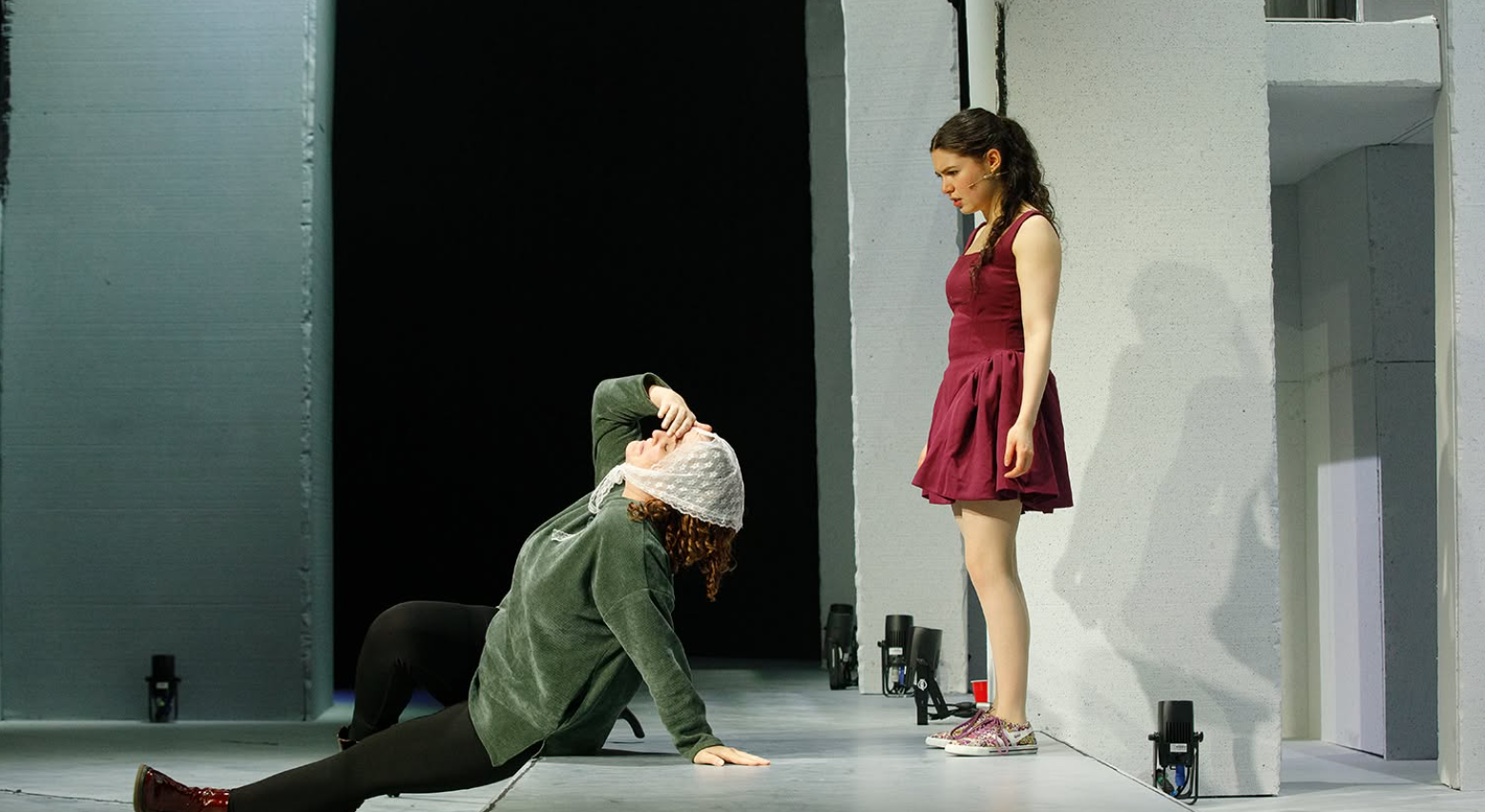
The plot remains familiar: Romeo Montague and Juliet Capulet fall deeply in love despite their families’ bitter feud, secretly marry, and become caught in a chain of violence, misunderstandings and tragedy. However, Thomas Frith’s direction leads the story into the modern day, adding iPhones, contemporary clothing and modern slang to the mix. With a stark, brutalist Verona and a young ensemble taking on multiple roles, this is a production that gives the familiar tragedy a distinctly contemporary edge.
The decision to expand the presence of Shakespeare’s women is particularly interesting. Lady Montague and Lady Capulet are given material that would traditionally belong to male characters, while the actors move between roles throughout the evening. It gives the women of Verona a little more room to make their mark, while the multi-roling creates a production that is constantly shifting beneath the audience’s feet.
Olly Rhodes’ Romeo is fresh-faced and starry-eyed, a young man caught in the intoxicating rush of falling in love. As the production unfolds, Rhodes plays with emotion, his initial displays of infatuation developing into something increasingly reckless, allowing Romeo’s emotions to steadily outrun his judgement. In opposition, Bea Clancy’s Juliet feels more grounded, providing a spirited and determined portrayal, a refreshing energy to a character who finds herself increasingly at odds with the world around her.
But it is Rachael Gill-Davies who makes the strongest impression. As Mercutio, she is exuberant and wild, a torrent of words and letters tumbling from her tongue as though they cannot escape quickly enough. Then comes the transformation into Lady Capulet: stoic, restrained and devastated by Tybalt’s death. Davies finds something particularly affecting in this grief, resisting melodrama and allowing the emotion to linger beneath the surface. The contrast between the two characters makes the switch all the more impressive.
The multi-roling extends throughout the cast. Ashley O’Brien moves between Tybalt and Friar Lawrence, Daneka Etchells plays both the Nurse and Lady Montague, while Joseph Edwards takes on Benvolio and Paris. Each performer is tasked with creating distinct characters, often through subtle changes in voice, movement and physicality. It is a theatrical device that keeps the production feeling lively and constantly in motion.
That energy, however, occasionally works against the language. Shakespeare’s blank verse demands a certain precision, and at times the speed of the delivery means diction gets swallowed in the rush. When words tumble over one another, it becomes challenging to keep pace, and some of the richness of Shakespeare’s language is inevitably lost. The production has plenty of momentum, but occasionally clarity has to fight to keep up.
There is no denying the ambition here. This is a Romeo & Juliet willing to take risks with a story that has been staged countless times before. The cast bring immense talent and energy to the production, with Davies’ remarkable double turn providing one of its most memorable performances.
Runs until 10 October 2026
The Reviews Hub Star Rating
-
8
