

Writer: William Shakespeare adapted by Daryl Chase
Director: Daryl Chase
Shakespeare’s Scottish play moves to London’s East End in Daryl Chase’s modern-day adaptation of Macbeth.
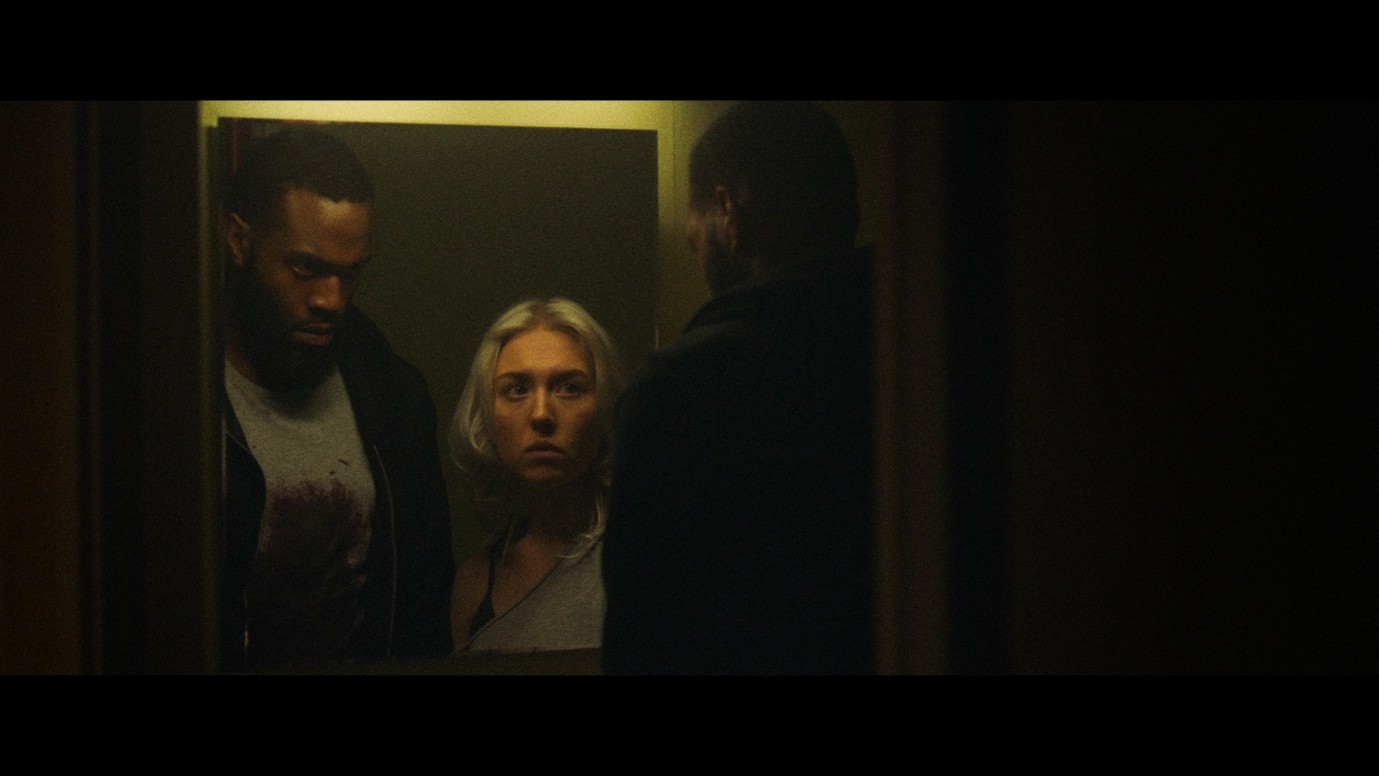
On an East End sink estate known as Scotland rival gangs battle for supremacy. Macbeth (Shaq B. Grant) with the assistance of his best friend Banquo (Harrison Collett) wins the territory for gang leader Duncan (Joe Sims) who promptly offers him promotion. However, Macbeth is not satisfied having had a supernatural promise he will replace Duncan- which his ambitious wife Lady Macbeth (Aoife Smyth) is determined should be fulfilled.
Director Daryl Chase does not simply record Shakespeare’s play but uses the film medium to full effect. The opening battle scenes and the murder of Banquo are filmed in overhead panoramic shots. Like many productions the film takes the viewpoint the Macbeths’ ambition is fuelled by an effort to fill the void left by a lost child and reflective surfaces in an empty nursery show spectral images of the child passing silent judgement upon their parents.
The adaptation edits rather than alters the source material. The comedic Porter scene is dropped and the Wyrd Sisters are a psychological rather than physical presence. The witches are glimpsed only through haze and become, therefore, more a vocal manipulation or possibly an articulation of Macbeth’s inner greed and ambition. Most tellingly subtle editing of the ‘’Tomorrow, tomorrow and tomorrow…’’ speech, and the decision of Grant to speak ruefully, makes the soliloquy more a fond admission of regret and articulation of loss than a bleak expression of the futility of existence.
The performances evolve as the film progresses. Grant’s Macbeth is initially soft-spoken and contemplative, he has to drive himself verbally into a fury to justify ordering the murder of his friend, Banquo. As the film moves to its conclusion Macbeth becomes fully self-deluding, striding around in a soiled vest barking out orders. Aoife Smyth’s Lady Macbeth takes the reverse approach opening as vibrant and sexual she becomes increasingly haunted and withdrawn as the plot progresses making her silent repentance entirely credible. The overall effect is a couple completely overwhelmed by the events they have started and are struggling to bring to a close.
Director Chase does not ignore the supernatural aspects of the story. The soundtrack by Rob Lewis is disconcerting, eerie high-pitched or bubbling noises echo around the housing estate. The Macbeths floating in a blue-washed limbo adds to the sense of them drowning in guilt.
The production is naturalistic with the verse spoken in East End accents rather than recited as poetry. It is a very physical production; a great deal of time is expended towards the conclusion building up the battle scenes and the murder of Duncan, usually unseen, is depicted in harrowing detail.
The present-day setting is achieved with gritty authenticity. Instead of disciplined soldiers Macbeth’s followers are shaven-headed louts. Rather than a crown Macbeth’s symbol of authority is a tattoo which, at a late stage in the film, is bloodily removed. The overall effect is a community in a permanent state of chaos; fearful not of supernatural intervention but of arbitrary outbursts of aggression. The film even ties up the loose end of Banquo’s son escaping assassination to potentially continue the cycle of violence.
Daryl Chase’s imaginative adaptation of Macbeth makes excellent use of a limited budget and talented cast to demonstrate the continuing relevance of a centuries-old drama to the present day.
Macbeth is screening at the Raindance Film Festival 2026 from 17-26 June.
The Reviews Hub Star Rating
-
8
