

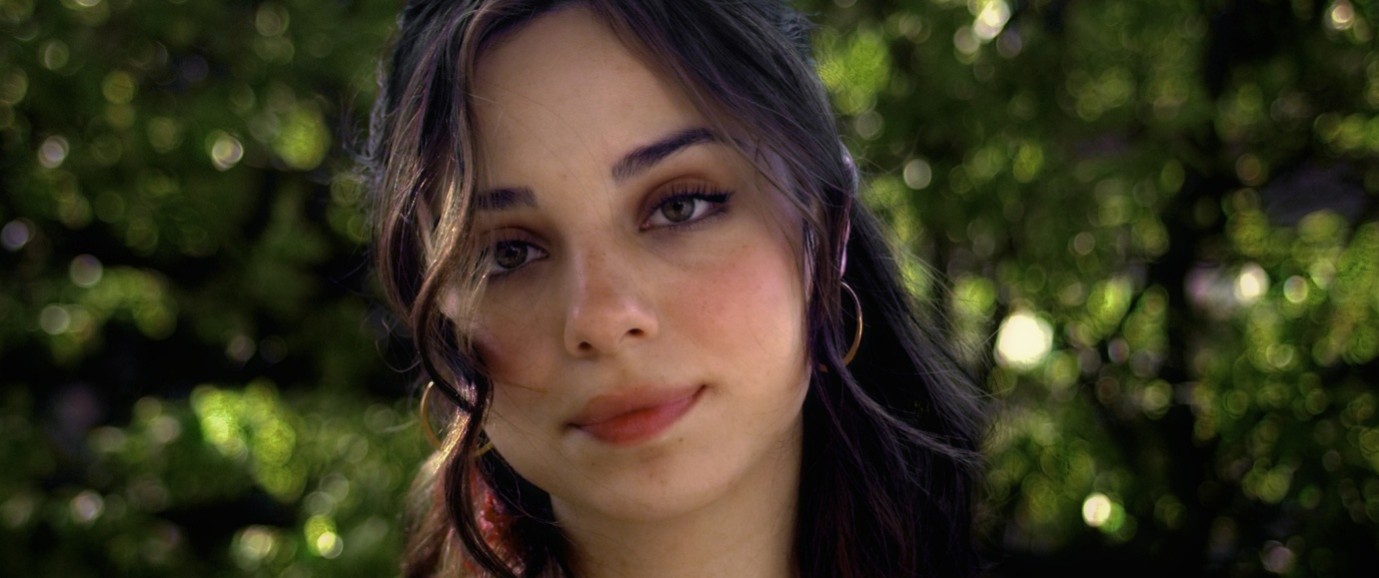
Writer and director: Álex Barragán and Diego Barragán
At a key point in Jardines del Bosque a character remarks how looking back on childhood brings to mind how much, and how little, Mexico has changed over the years. The remark plays over a newsreel montage of key events and, although the average viewer might recognise the Covid pandemic, the images are most likely to be best appreciated by people familiar with the country’s problems with gangland violence and history of political upheaval. But perhaps co-authors/directors Álex Barragán and Diego Barragán are making the point the influence of childhood can both last forever and end abruptly.
Jardines del Bosque is a holiday region of Guadalajara, where, in 2014, three thirteen year olds become close friends. Santos (Maximiliano Nájar Márquez) is a mischief-maker who enjoys chaos and, under his influence, the more sedate Lechuga (Beto Ramírez) joins in playing pranks on the tourists. Daniela (Daphne Méndez) also participates but with a different agenda- she is an aspiring photographic artist and hopes to document the pranks on camera. The trio also have active imaginations and are quick to develop conspiracy theories about odd events such as an animal’s tongue being nailed to a tree in their school.
New neighbour Arlette(Fiona Palomo) attracts the attention of the friends. Being older than them she represents a cool role model for Daniela and a fantasy object for the boys. When Arlette vanishes mysteriously the trio decide to investigate not appreciating this may expose them to danger.
TV series or films like Twin Peaks and Blue Velvet expose the corruption underlying apparently conventional communities but the co-directors are more interested in exploring the fragility of childhood innocence. As a result, although Jardines del Bosque features elements of a thriller, there is little suspense in the movie. Any tension comes from background details usually involving the adults. Arlette’s distressed mother having to borrow money to pay a lawyer implies the authorities cannot be trusted to trace the missing child. Daniela’s father scolds her for staying out late and reminds her that times are dangerous.
The story is narrated by the characters in the present day so the audience knows all of them survive to adulthood. The teenagers seem supernaturally calm. When their investigation leads to an extraordinarily well-stocked sex shop (even the dog wears a spiked collar) they are not embarrassed or scandalised by the products on offer nor do they giggle and make rude remarks but simply proceed with their analysis. They retain their cool even when kidnapped and physically threatened.
However, the Barragán brothers make clear the traumatic impact of the teenagers’ experiences becomes apparent after the events. Santos flinches whenever guns are fired in a movie, Daniela becomes extremely anxious walking home alone after dark and the placid Lechuga has never been happier than when he learns one of the kidnappers has met a brutal comeuppance.
A melancholy sense of an ending hangs over the movie. In a poignant conversation Lechuga and Arlette speculate about their likely adult lives and the former concludes it is probable in 20 years or so they will have forgotten events in Jardines del Bosque.
There are subtle suggestions the three friends have less in common than supposed and their relationship is not going to last even without the strain of the investigation. All of the characters show discrete changes as the movie progresses; Daniela starts wearing eye shadow and Santos, attracted to a classmate, makes new friends. When Daniela gives Lechuga a memory stick with a collection of her photographs, representing parts of childhood in a time capsule, he is touched by the gesture but has to admit he does not really understand the meaning of the images. Perhaps the co-creators are making the point that youthful enthusiasms and ideals are unlikely to survive cynical maturity.
There is a vagueness about Jardines del Bosque, the event which prompts the adult characters to review their childhood is not specified, making the film difficult to categorise. It remains, however, a bittersweet tribute to the period when childhood gains unwanted experience and moves reluctantly towards maturity.
Jardines del Bosque is screening at the Raindance Film Festival 2026 from 17-26 June.
The Reviews Hub Star Rating
-
7
