

Writer and Director: Park Joon-ho
The brief opening scene of two Korean men having sex suggests that this coming-of-age story will be a steamy affair, but the rest of Park Joon-ho’s debut feature is surprisingly chaste. Instead of the search for sex, 3670 centres on the search for friendship in Seoul, which, despite its circuit of gay bars and karaoke joints, is a lonely city, especially for North Korean defector Cheol-jun.
Supported by a church charity, Cheol-jun is trying to make Seoul his new home. He works in a convenience store while studying English and applying to a university. Every Sunday, he goes to church and joins in the prayers for North Korea. His friends are fellow defectors, one of whom is eager to bring his parents across the border, paying a broker, a kind of people smuggler, to facilitate their escape from the Communist country. Choel-jun doesn’t tell these friends that he’s gay and pretends that he’s visiting his aunt when really he is going to gay meet-ups in the city in a bid to find a queer community.
It’s at one of these meet-ups, a more mercenary form of speed-dating, that he falls into a group of gay men all born in 1997. In his smart clothes – indeed, one man asks if he has just come from a wedding – he stands out amongst the casually dressed men at the bar and his quiet, almost unapproachable manner distances him further as they banter and gossip. Nonetheless, the fact that Choel-jun is a defector gives him a sense of allure and danger, which means that the other men welcome him into their clique. Yeong-jun is particularly taken by the new arrival, taking Choel-jun under his wing.
As well as adjusting to the group’s rules and etiquette, Choel-jun has to adjust to the capitalist protocols of South Korea. His mentor at the church tells him that he has to sell himself at his university interview: Choel-jun bridles at having to “show off”. In a way, the 97 Group is a microcosm of capitalist tenets, with the young men always in search of someone better or a more masculine top, a way of life that confuses the meek Choel-jun.
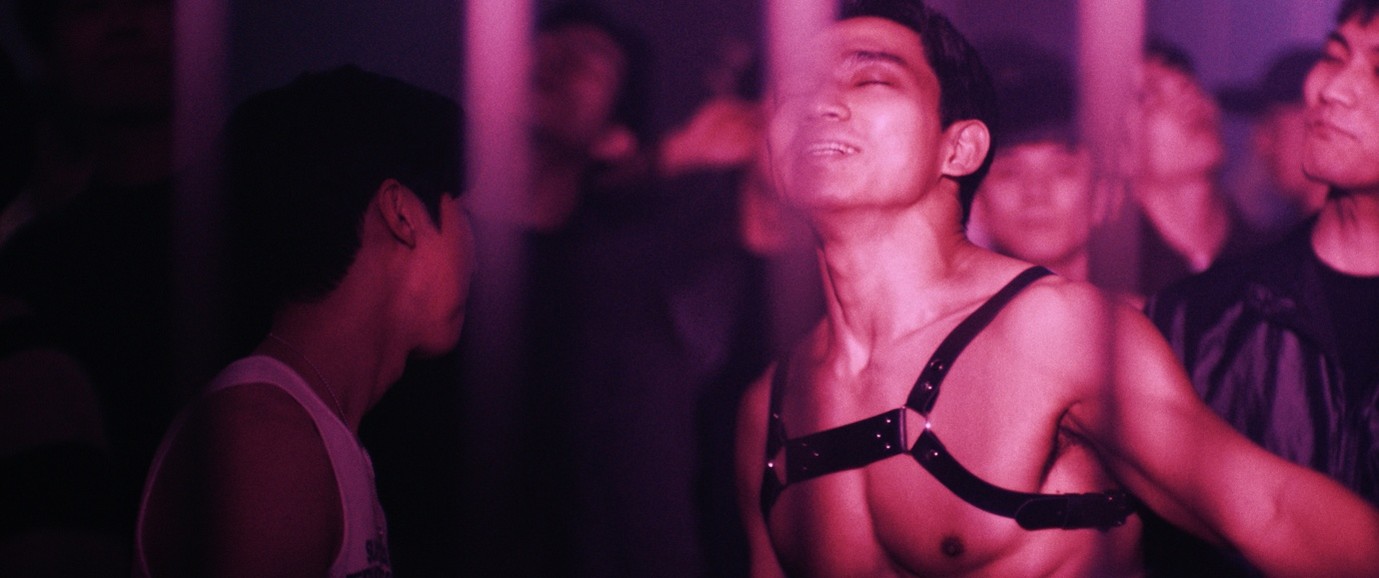
In his first film, Cho You-hyun is impressive in the lead role, giving Choel-jun an innocence that is hard to resist, and who doesn’t understand the worth of his good looks in such a competitive society. The sight of him wearing a leather harness, dancing awkwardly but finally content in a club, is one of the best scenes in the film. However, in such an opportunistic world, there must be losers.
And that loser is Yeong-jun, devastatingly played by Kim Hyeon-mok. Not as handsome or as clever as the rest, Yeong-jun relies on his wit to get by in the 97 Club, but as Cheol-jun begins to find his groove, Yeong-jun realises that his own position is less secure. Perhaps the character is a little too self-aware, but his sense of jealousy, hurt, and worthlessness is frighteningly familiar to any young person trying to fit in.
Park Joon-ho’s bittersweet examination of the Korean gay scene and its endless loop of karaoke and bingo is an unsentimental education for both Cheol-jun and Yeong-jun, signposted by its strange numerical title. In the 97 Club’s group chat, meet-ups are organised by numbers. The first number refers to a metro station, the second to its exit. The third number denotes the time. The final number indicates how many people will turn up. That 0 speaks volumes.
Queer East runs from 1 May to 6 June 2026.
