

Director: Sang-il Lee
Writers: Satoko Okudera and Shûichi Yoshida
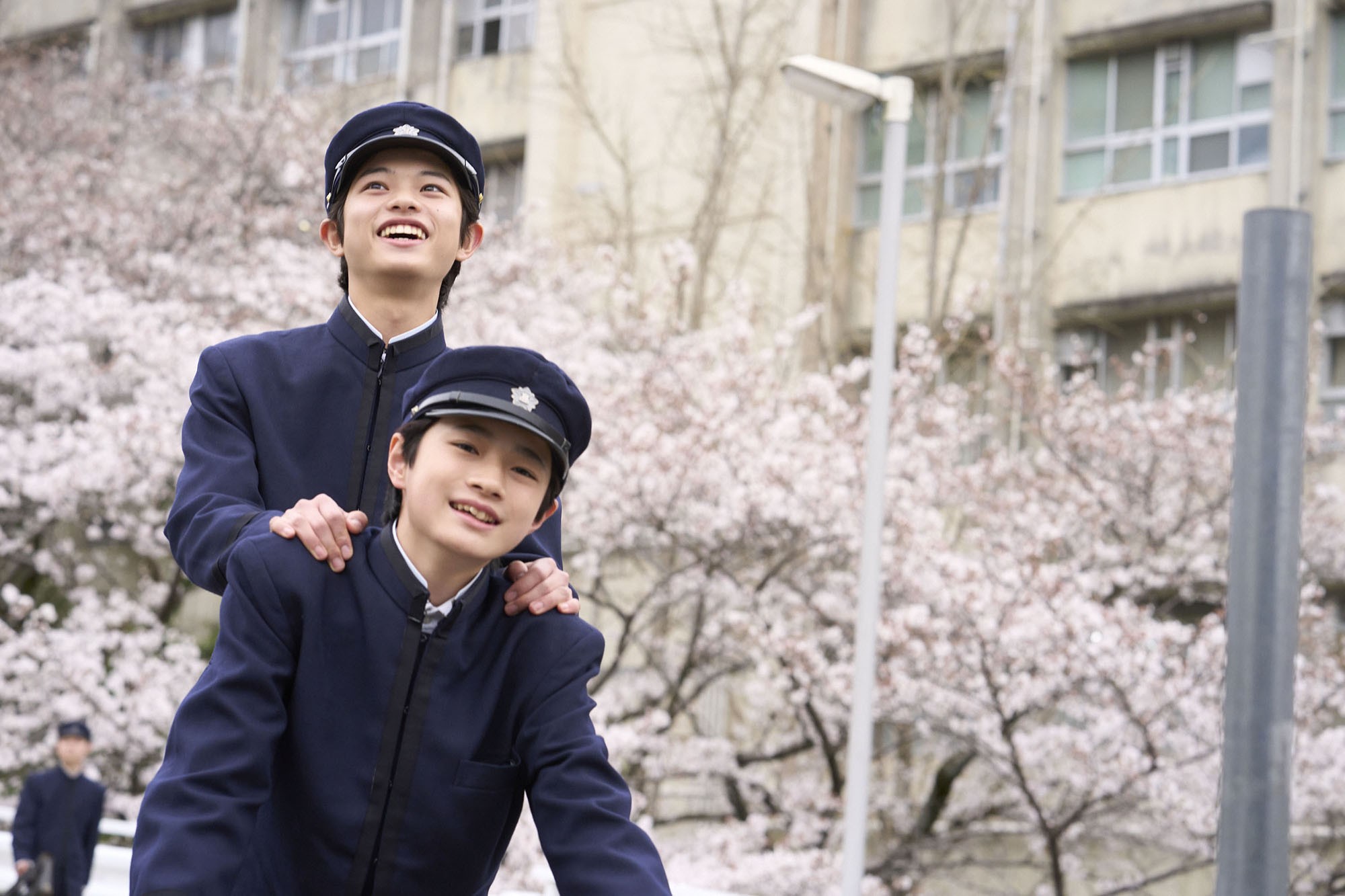
This nearly three-hour epic, based on the 2018 novel by Shûichi Yoshida, has been a huge hit in Japan. The title means ‘national treasure’. The film tells the story of two boys learning the art of kabuki theatre under the harsh tutelage of a master, Hanjiro Hanai (Ken Watanabe). Under the kabuki tradition, his son Shunsuke (Ryûsei Yokohama and when young, Keitatsu Koshiyama) is born to the trade, whereas protagonist Kikuo (Ryô Yoshizawa and Soya Kurokawa) has been specially taken in after his gangland father’s violent death.
The movie has a slight documentary feel as each of the lavish kabuki scenes opens with captions that give the title of the piece and a short synopsis. It’s explained to us that kabuki, like the Elizabethan stage in England, involves men playing women.
Beginning in the early 1960s, the story unspools in episodes over the decades, mostly concerning Kikuo and Shunsuke’s relationship to each other and to kabuki. What’s interesting about the story comes across clearly – the notion of suffering for your art, the specifics of kabuki, themes of family inheritance, fate and obsession – but what’s less clear is why we should care.
The movie depicts drama – both on and off stage – but there’s an issue when the action jumps forward in time. Key transitions in the lives and work of the two men are dealt with only in passing, having happened off-camera. Maybe the shock value of this has been mistakenly assumed to hold emotional resonance for the viewer.
For instance, Kikuo’s sweetheart Harue (Mitsuki Takahata) at some point transfers her affections to Shunsuke. But because we don’t witness these events or get any detailed sense of either relationship this stunted sub-story provokes only indifference. Kikuo suddenly being shown as having fathered an illegitimate child is another bewildering fait accompli. Being shown that something has happened doesn’t necessarily make you feel involved or invested in it.
The film is certainly watchable and the kabuki scenes are brilliantly rendered – ironically, we’re shown how the ritualised gestures and dialogue are designed to tug at the heartstrings – but overall it’s less than the sum of its parts. It seems that the epic sweep of the tale has resulted in a curiously aloof and emotionally abbreviated form of storytelling that doesn’t add up to all that much.
Kokuho is in cinemas from 8 May.
