

Music: Roman GianArthur
Writer: Steven Knight CBE
Director and choreographer: Benoit Swan Pouffer
The Peaky Blinders are back in Birmingham – and it is, they say, your last chance to see this production. It’s  been around for three years now, kicking off at almost the same time as the TV show ended its final series, but judging by the size of the audience at Birmingham Hippodrome on press night, its popularity remains undiminished.
This is not a retelling of the TV show, but part prequel, part reimagining of familiar storylines and characters. Created by Peaky Blinders writer Stephen Knight and Rambert artistic director Benoit Swan Pouffer, this is not so much a ballet but rather a piece of dance theatre – and it’s pretty spectacular.
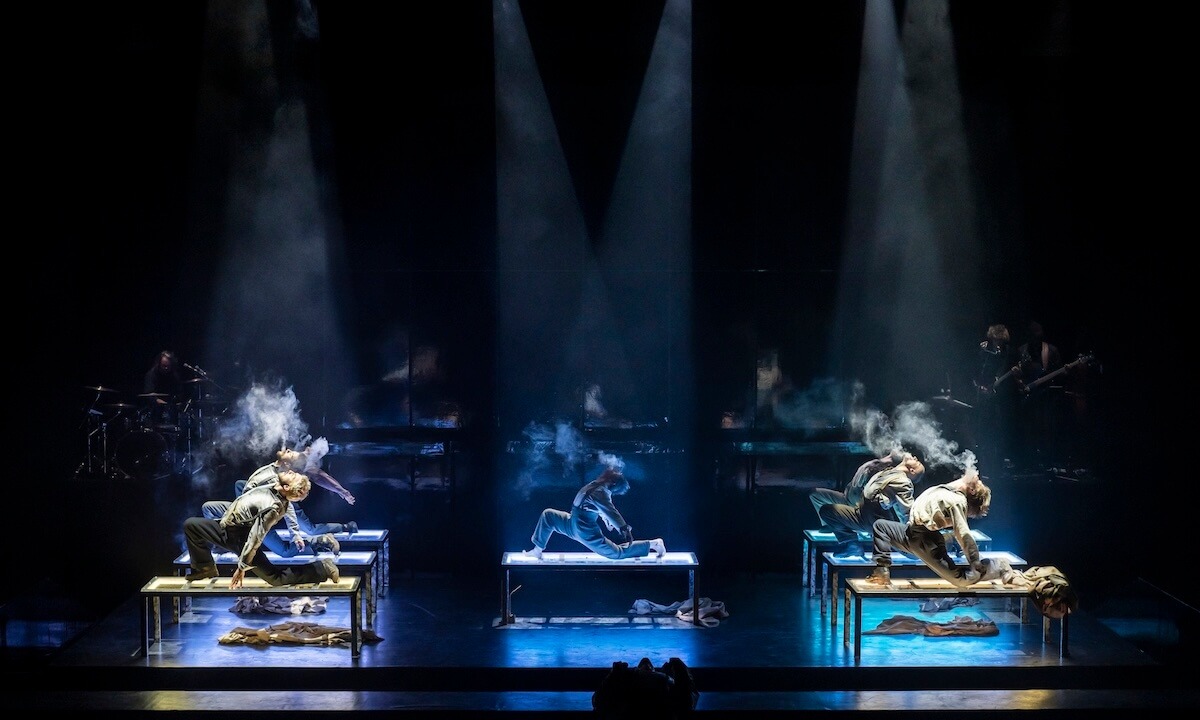
The power of the piece hits you from the start, opening in the trenches of Flanders where Tommy and his gang of tunnellers emerge from the hell below ground into a different hell on the battlefield above. The wonderfully flexible set by Moi Tran comes into its own immediately as the broken men emerge like creatures from the underworld, becoming upright and marching forward with determination. It all sets the feel for what is to come next, as those who survive return to the Birmingham factories, a different vision of hell with welding sparks replacing gunfire and the workers becoming almost robotic in their movement. Out of the war and into the peace, it’s as though nothing has changed, people have become dead inside – and the narration by the late Benjamin Zephaniah tells us that Tommy is made to feel devoid of any moral responsibility.
So the story unfolds with the first act focusing on storytelling, taking us through events as the Peaky Blinders come together, and Tommy meets a beautiful stranger and falls in love. It’s a compelling narrative, and one that is accessible for everyone, whether a fan of the TV show or coming to it completely fresh.
It’s one of those pieces where everything fuses to create the effect. This is dance at its grittiest, Pouffer’s choreography ranging from the robotic to the violent, from threatening to beautiful, with the pas de deux between Tommy and Grace a particular highlight. It’s athletic and visually dazzling and serves to convey the feel of the drama well. It’s set to a soundtrack curated by Roman GianArthur, which combines a mixture of original music and many of the familiar and iconic pieces – it wouldn’t be Peaky Blinders without Nick Cave’s Red Right Hand after all, and hearing it sends the same frisson down the spine is always. It’s performed by a live band on stage, and it gives everything a dirty, earthy feeling. It combines with a lighting design by Natasha Chivers that works almost as another performer, so integral is it to the piece. Between them, they have created an underlying sense of danger that runs throughout.
The dance company is, as always, stunning, everyone working together to add their piece to the story. Particular mention must go to Connor Kerrigan, dancing Tommy at this performance, who does an admirable job of portraying a complex character. Seren Williams is an elegant Grace, and Simone Damberg Wurtz gives us an instantly recognisable Polly.
After the drama of Act One, things do seem to lose their way a little as the second half of the performance focuses more on Tommy’s thoughts and feelings than action. It starts with a scene in an opium den – one of a number of memorable moments in the dance, as he tries to smother his grief but ends up creating visions that he can’t escape instead. It’s entertaining but maybe a little overlong for the running time of the piece. After all the action of Act One, it’s as though the brakes have been applied, and although there are some beautiful moments, it’s lacking momentum.
Creating a piece of dance from a well-known and very popular TV programme is a good way to introduce new people to the art form, and it’s been approached pretty well. The challenge is to find a way of conveying the subtleties of character and relationships, things that have developed across six series of TV programmes, into two 50 minute acts, and despite the best efforts of the dancers, at times the storyline that they have to work with doesn’t give space for the nuances to come across. For example, Tommy and Grace’s wedding seems to come too quickly without the relationship developing, and, this being essentially Tommy’s story, other characters don’t always get the space – it would have been nice to see more of the relationship between Arthur and Tommy, for example. Nonetheless, this is a remarkable piece of theatre, and if this really is the last ever tour, you should make an effort to catch it before it finishes.
Runs until 14 June 2025 and on tour
