

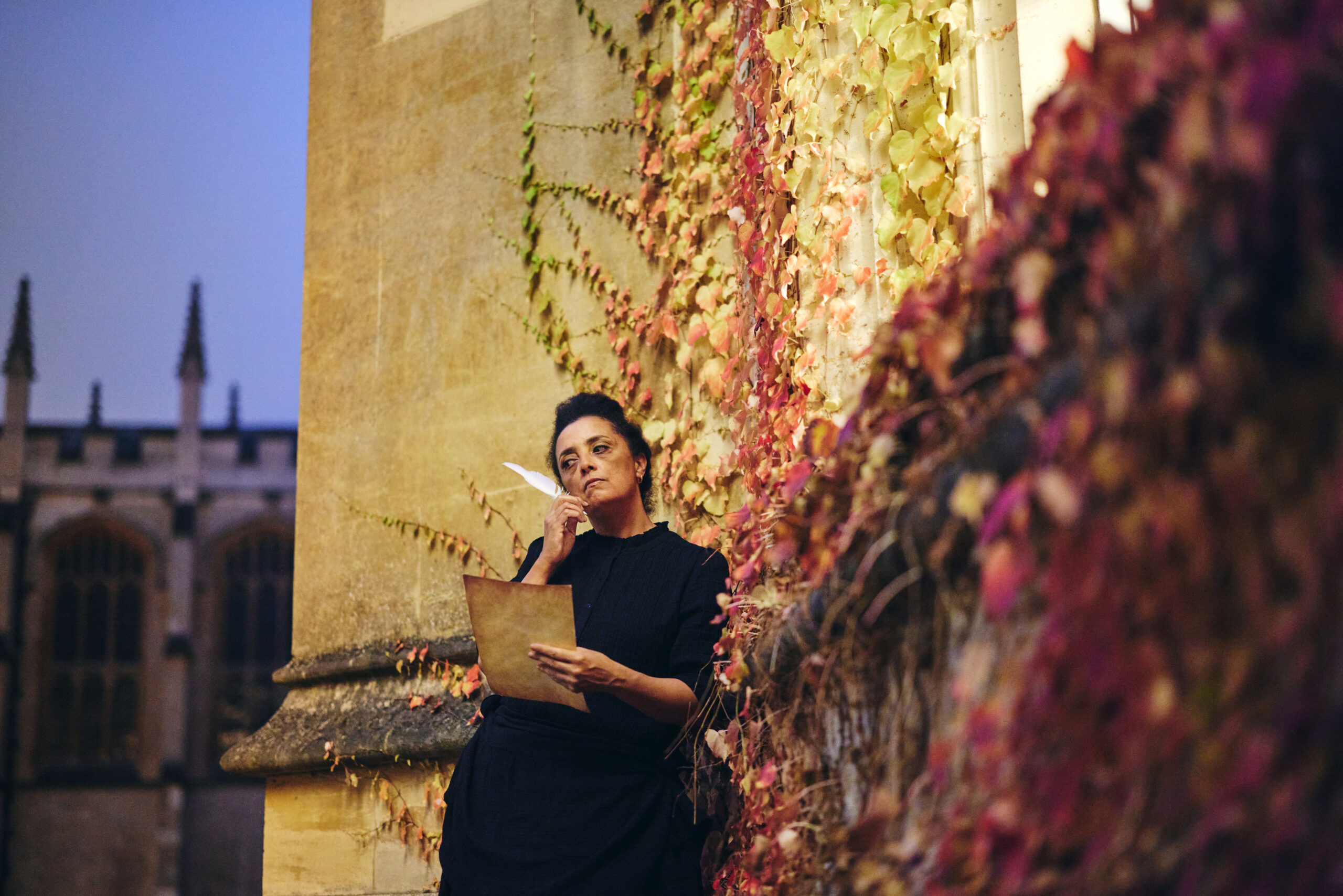
Writer/Performer: Desiree Baptiste
The Ripon Theatre Festival, now in its fifth year, covers a wide range of styles – from comedy to poetry to The Three Musketeers – over an eight day period with the help of an army of volunteers. Incidents in the Life of an Anglican Slave proved relevant to Ripon in an unexpected way.
Writer and researcher Desiree Baptiste merged two stories to make a narrative which spanned the period from the late 17th century to the present day. A 1723 letter from an anonymous enslaved Virginian to the Archbishop of London proved her starting point. The ghost of this woman narrates her story: up to the age of 19 she was a house slave, living in relative comfort, until the family re-located to London. The sexual exploitation of female slaves by their owners is brought out by the fact that she lived alongside her white brother in the Big House.
The new owners relegated her to field work at which point she wrote to the archbishop. The letter was intercepted and she was sold to Barbados, eventually ending up in London. In a forceful rhyming narrative Baptiste tells of the by now familiar abuses of slavery, but with one difference. She points to the shocking complicity of the church in all this, describing the use of a branding iron at an Anglican missionary plantation in Barbados. She preserves a 21st century viewpoint by references to such things as The Shawshank Redemption and health and safety, not to mention the words we are not supposed to use now (such as Negro), as if the abstention from a word clears our conscience.
The message really hits home in the second story. The Porteus family moved to Virginia in the late 17th century and their son, Edward, would have been of an age to be the brother in the narrative, so Baptiste cleverly deploys a “What if?” technique. What if the anonymous slave had been the half-sister of Edward: all the dates fit, including the family’s return to England. In London years later the anonymous narrator sees the family rising in the Church – and this is true of the Porteus family which ended up producing a distinguished Bishop of Ripon and, ultimately, via marriage to the Bowes-Lyons, the Queen and now the King.
Baptiste managed her text with burning sincerity and an occasional shaft of humour, but in many ways the meat of the evening came in the question and answer session where Baptiste explained the two historical stories she had used: the letter writer and the Porteus family who grew rich on Virginian slave labour. What reparations do we owe, sitting in an Anglican cathedral and ruled over by the descendant of slave owners? Baptiste thinks education is the key: after all, it was permissible to teach slaves in Virginia to read, but not to write. As one audience member remarked, we seem to be getting off lightly. But what of Ripon and Bishop Porteus? The final question asked about the Houses at Ripon Grammar School. One is called Porteus – should that be changed? Desiree Baptiste thinks not – the past should be preserved.
Reviewed on 7 July 2026
The Reviews Hub Star Rating
-
7
