

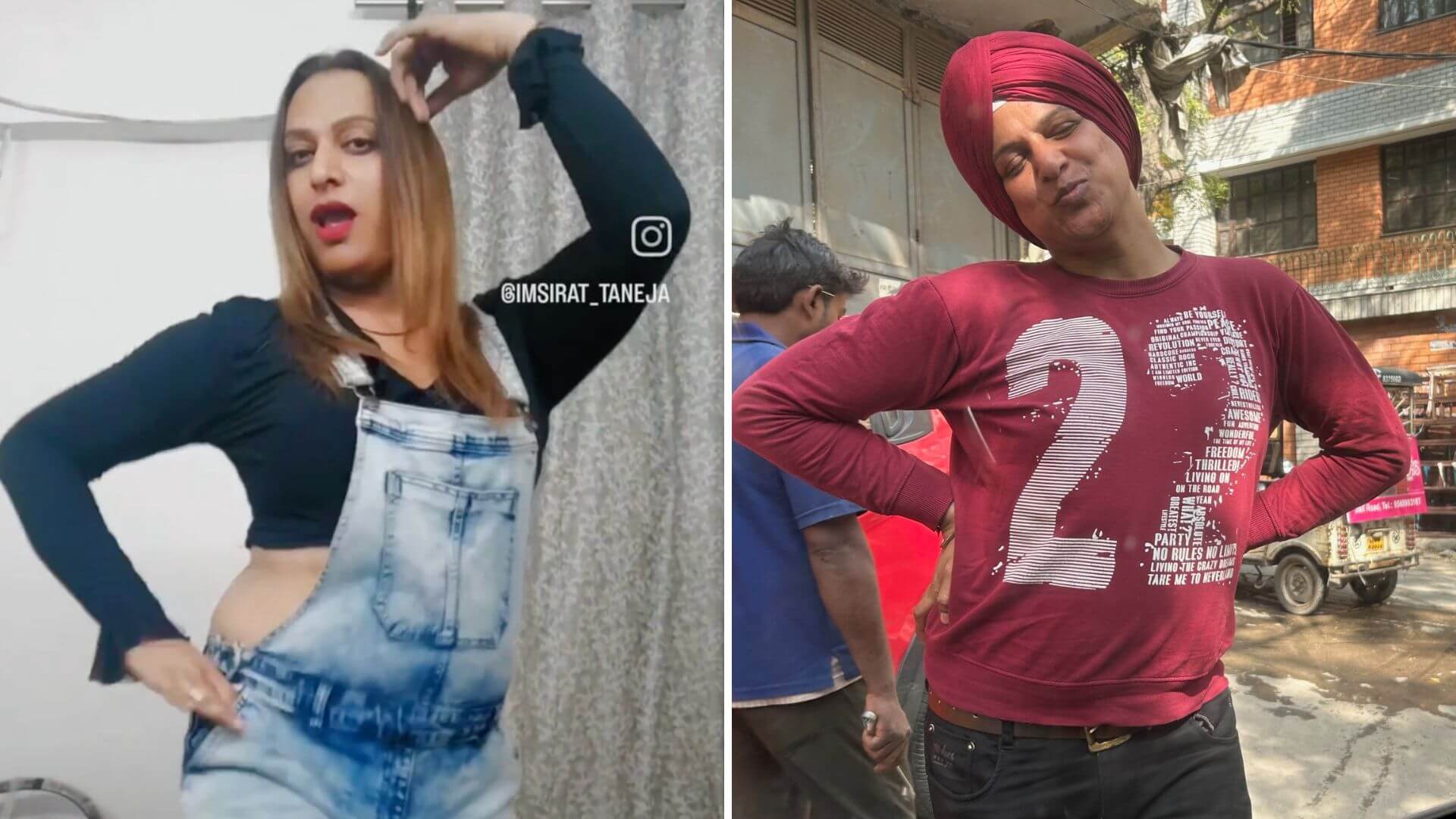
Directors: Deepa Mehta and Sirat Taneja
This fascinating documentary from India about a trans woman is all filmed on mobile phones. Sirat films her shots in portrait while co-director Deepa Mehta and others record their footage in landscape mode. Mobile phones are an appropriate way to film lives which are simultaneously hidden and for all to see on social media.
Sirat Taneja has a double life. At work and in public Sirat is a proud trans woman and is accepted by her friends and colleagues. In the evening, however, she is her mother’s son. Sirat rents a room nearby in which she changes her clothes; trackies and sweatshirts are discarded in exchange for dresses and saris in the morning when she goes to work in a government office. In the evening, the transformation is reversed.
It’s never made clear what Sirat’s mother thinks the mobile phones are for: some other kind of documentary? And will Sirat’s secret be too public to conceal once the film is released? Sirat already has a big presence on Instagram where she uploads reels of her lip-syncing and dancing to Indian pop songs. These reels give her followers for sure, but more importantly, they provide her with a sense of freedom and authenticity. At one point, under pressure from her married sister, Sirat removed the reels. But later, she realised that she didn’t particularly care if her sister’s new family would be outraged so started making the videos again.
When Sirat receives her official transgender identity card which allows her to change her gender on government documentation it may seem that India is ahead of the game when it comes to trans rights; certainly, better than those in Britain at the moment. However, Sirat will continue to suffer verbal and physical abuse, but these attacks are not shown as her film is a celebration of trans lives, foregrounding positivity.
Indeed, the only hostility mentioned in the film comes from the hijra community. The hijras, often referred to as the third gender, are a group of trans people who are hired to dance at weddings or christenings, work which is called toli. Their presence at these social rituals is seen as a sign of good luck. However, the community that Sirat once belonged to asked her to put the hijras first, before her family. When Sirat refused, she was dropped from the community. Apart from this story, Sirat is always optimistic about the future, looking forward to the surgery that will give her breasts. She introduces us to her friends at the shopping mall. Even dressed as a man at home with her mother she is cheerful and wry.
Delhi looks vibrant through the lens of the mobile phones, often filming in places that larger cameras wouldn’t be able to access discreetly. The city is alive with mopeds and street dogs; rubbish is piled up colourfully in the rubble behind Sirat’s apartment. The city is hot, busy and noisy, and yet there is a tenderness in the city that almost welcomes Sirat with open arms.
I Am Sirat is screening at the BFI London Film Festival 2023.
