

Writers: Matthew Kraus, John MacConnell and Sam Shahid
Director: Sam Shahid
Asked to name an iconic queer photographer one would probably say Robert Mapplethorpe or Peter Hujar or even, if one is from another generation, Wolfgang Tillmans. Would one ever say George Platt Lynes? Possibly not, but Lynes was the most famous photographer in America in the interwar period, photographing everyone from Jean Cocteau to Katherine Hepburn. His fashion images appeared in magazines and he was the official photographer of the New York City Ballet. So why he is almost forgotten, his photos stored unseen in archives across the States? Perhaps, this astute documentary suggests, it’s because of his male nudes.
Going to Paris in 1925 at the age of 18 changed Lynes’s life. It was there he met expat Gertrude Stein who warmed to him quickly, calling him ‘Baby’ in their correspondence. Through Stein, he was welcomed into her queer salon and it wasn’t long before he was back living in New York with museum curator Monroe Wheeler and writer Glenway Westcott in a ménage à trois. When looking at his photos, it was these two lovers who proposed he pursue a career with his camera.
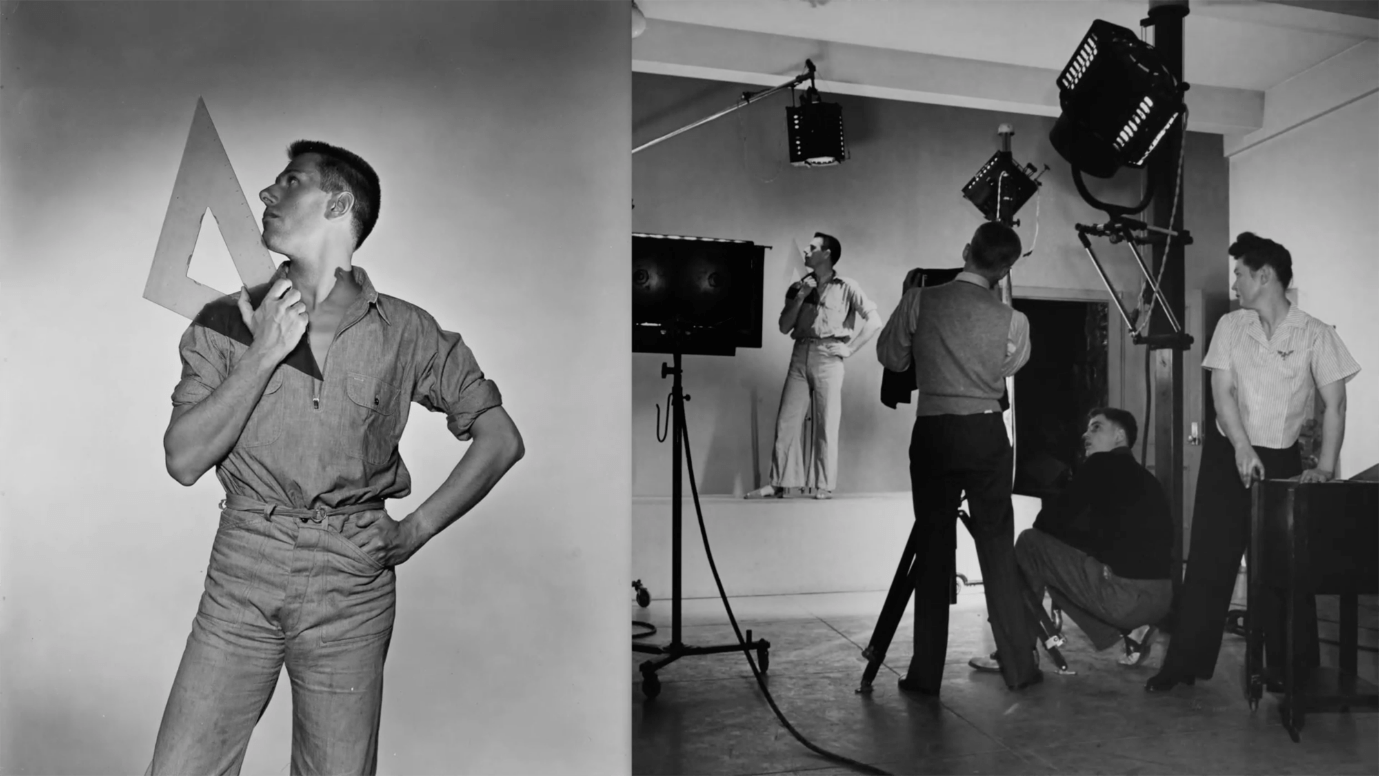
Lynes excelled in his new vocation although he had no formal training. His slightly surreal fashion shots and celebrity portraits made him a celebrity too, working bare-chested in the stifling heat of his New York studio. When the ‘official’ models left, he shot his male nudes; dancers from the ballet, fellow artists and sailors on leave. Lynes’s charm was impossible to resist. Don Bachardy recalls that even he was seduced by Lyne’s request to take off his trousers even though he’d promised himself that he wouldn’t pose naked.
The photos are beautiful; sharply defined, sexy and yet artistic. The ones in which he appears, fully clothed while the models are naked are especially haunting. He stares out at us with a sense of ownership, of arrogance, and confidence. He’s an aesthete like Oscar Wilde, but unlike Oscar, Lynes is beautiful too. Lynes kept these nude images to himself; they were reserved for only a select few.
Surprisingly, one of the select few was sexologist Alfred Kinsey who used them for research in his studies of same-sex desire. At parties, held by Lynes, the inventor of the Kinsey Scale would sit in a corner taking notes on how queer men behaved. But Lynes was more than a case study and the two men became friends. When Lynes was wrapping up his life, bankrupt and riddled with cancer, he sent the sexologist his homoerotic photos along with a mysterious box which no one was to ever see.
The Kinsey Institute holds these photos still while others have turned up in the collection of Frederick R. Koch. Hidden Master’s director, Sam Shahid, was one of the first to view the latter’s collection, meticulously organised but hidden in a storeroom. As the film, sensibly chronological, draws to a close, its makers appeal to museums to create a show based entirely on Lynes’s nudes, at least in Europe where images of naked men do not shock as they do in some parts of America.
Always fascinating and with dozens of striking black-and-white photographs, Hidden Master lives up to its title. With the help of this film, George Platt Lynes will, hopefully, be a name familiar as Mapplethorpe and Tilmans.
Hidden Master: The Legacy of George Platt Lynes is screening at BFI Flare 2024 from 13-24 March.
