

Director: Gabin Rivoire
The name of Laurent Garnier means nothing to most people in Britain, but the French DJ is a superstar in the Rave world; indeed he could be considered one of the first superstar DJs of the whole dance movement, which started off in the mid-1980s. Considering Garnier got his big break at Manchester’s legendary Hacienda in 1987, it’s a surprise that his influence on the scene is not more recognised in the UK. This documentary about Garnier and the Rave subculture in general gets the record straight.
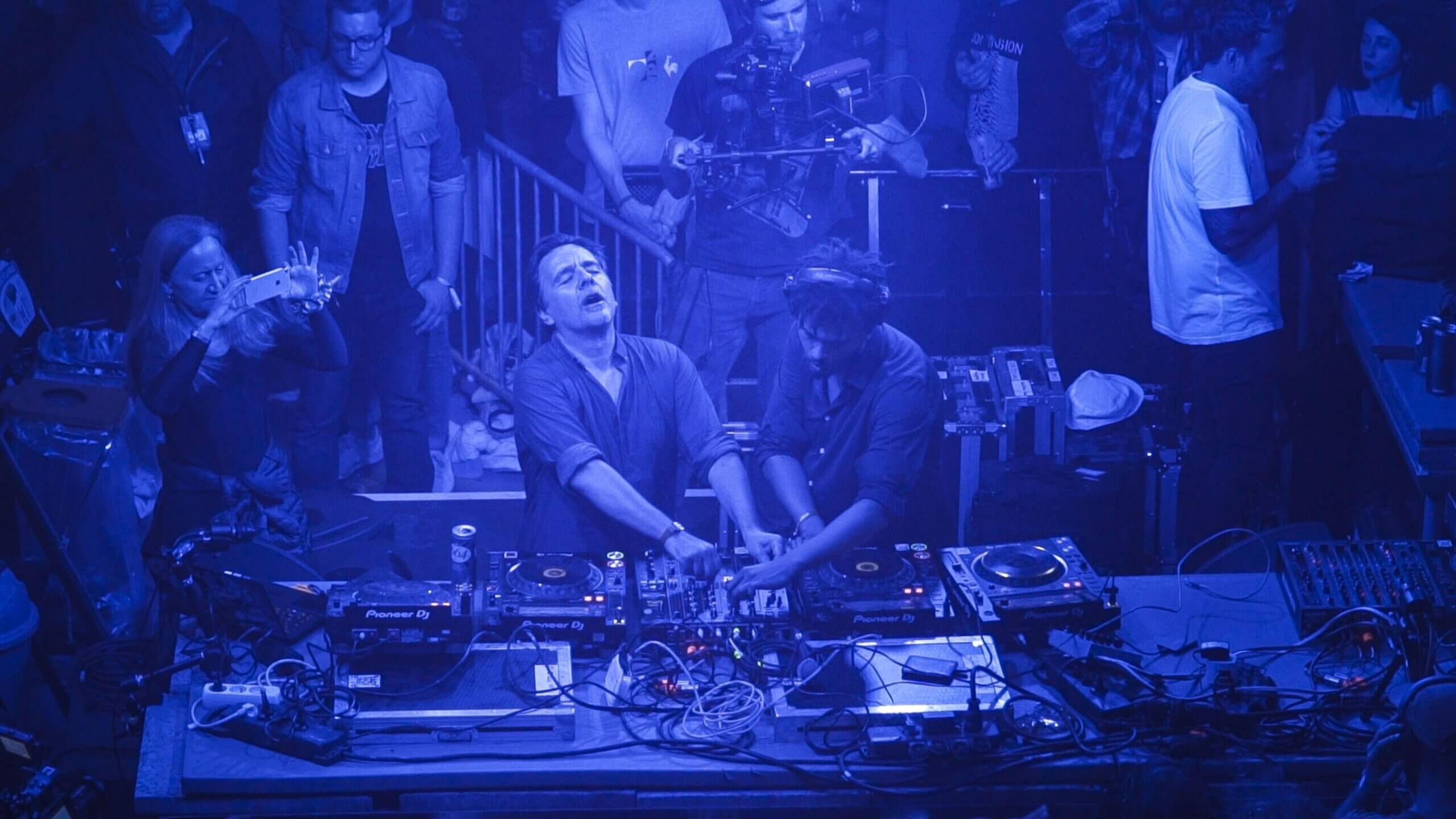
In a film that is littered with talking heads – other DJs, record producers and even a politician – it’s easy to see that he is revered. One calls him a techno star, the opposite of a rock ‘n’ roll star, while another calls him the Pope of techno. When Garnier plays now hoards of revellers, mobile phones in their hands, throng the stage – DJ booths are relics of the past – and film every move he makes. He puts needles on records, yes, but he dances too, raising his hands like his congregation to share in the euphoria he produces.
These sights seem a long way from the 1980s when Garnier arrived in London to work as a waiter in the French embassy. With a stolen key to the wine cellar and then nights out to parties organised by icons such as Leigh Bowery and Philip Sallon, Garnier had a good time in the city. Things got better when he moved to Manchester; here he was given a night at the Hacienda after he was heard deejaying at a party. His music choices were eclectic, and seemed a fit with the Manchester club in the early days of Rave.
But ironically Garnier didn’t witness the UK’s Second Summer of Love at the end of the decade because he was ordered back to France to fulfil his military duties. Stationed at Versailles, and working in the catering corps Garnier surprisingly managed to continue his music career, playing in Parisian clubs like The Rex before catching the first train back in the morning in order to serve breakfast to his fellow soldiers. At one point during his stint in the army, Garnier is deejaying five nights a week.
He never looks back. But rather than focussing purely on Garnier’s career, Gabin Rivoire’s film also looks at some of the people who were responsible for making the music and not just the the ones who were playing it. Most of the people who were making the records that Garnier spun were black and from Detroit, and Garnier is keen to defend himself against any claims of cultural appropriation. Old photos and interviews with Detroit greats such as Derrick May – the man behind the perennial Rave classic Strings of Life – suggest that Garnier was a collaborator rather than an appropriator.
Other histories of Rave point towards Chicago and House Music as its main influence, but Garnier and the various talking heads make a strong case for Detroit, especially when it comes to techno. The repetitive beats and the industrial sound played on a 909 drum machine reflected the mechanical sound of Detroit’s manufacturing industry, its origins in the assembly lines of Ford and General Motors. In a way the music couldn’t have come from anywhere else, and it’s a shame that we hear so little of it.
It’s a fascinating digression, and Rivoire includes other histories, too, such as that of the French Government’s crackdown on Rave, very similar to events in the UK. But strangely, and perhaps too responsibly, the film is virtually silent on the subject of ecstasy. Without its consumption, the history of dance music would be very different.
That Garnier is now part of the French establishment is proved by his concerts at the Salle Pleyel and the Philharmonie de Paris. The equivalent would be Danny Rampling playing at The Royal Festival Hall, but Rampling, one of the DJs who brought Rave to Britain, has long retired. Garnier, at the age of 56, is still going, however: still playing, still raving.
Laurent Garnier: Off the Record opens in cinemas and on demand via Doc N’ Roll TV from 15 July.
