

Writer: Peter Shaffer
Director: Lindsay Posner
Some plays live long in the memory; the quality of the writing that intrigues and engrosses the audience; the performances of the cast that create spellbinding dramatic moments; the magic of the lighting and sound design that simply and effectively create gripping scenes that transport us into another world. Peter Shaffer’s iconic play Equus, which we first saw in 1976 at the Albery Theatre, is certainly one of those plays. The Menier Chocolate Factory’s reimagining by Lindsay Posner will create lasting memories for another generation of theatre goers.
The original version brilliantly created the six horses that become the obsession of 17-year-old Alan Strang with wire-frame heads and heavy hooves that stomped and twitched long before War Horse puppetry created these powerful animals on stage. Posner reimagines them using six performers with a dance background (Ed Mitchell, Luke Hodkinson, Aristide Lyons, Zach Parkin, Tommi Sutton and Moses Ward) with bare muscular chests and unshod feet, relying on their physical balletic movement to create the impression of these proud majestic creatures. They sit motionless, watching the psychological examination of Strang by Dysart until called on to reenact and reveal his relationship with these godlike horses. The rest of the cast looks on, too, from the front row of the audience as Dysart delves into what causes Strang to blind these animals with a metal hoof spike.
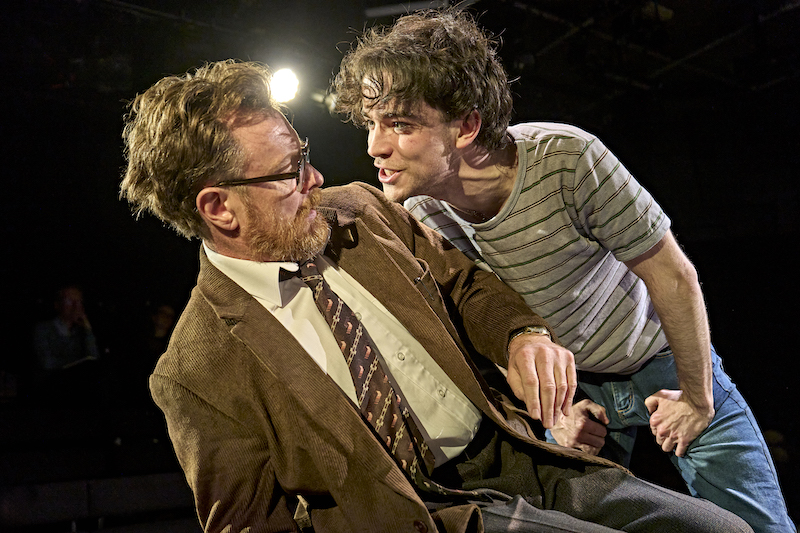
The intimacy of the venue, with the audience on three sides, draws us into the narrative as observers, hanging on every word as Dysart painstakingly slowly draws out of Strang the motivations for his actions. It is as if we are being directly addressed as students of a difficult case. Toby Stephens is magnificent as Dysart, speaking with clarity and precision, painfully revealing his own hidden secrets as he unpacks the layers that Strang has put up.
Noah Valentine as Strang captures the tormented soul of the young man, reluctantly at first succumbing to Dysart’s probing and questioning. We can see the erotic pleasure he derives from being close to the animals, we can feel the antagonism towards his father (Colin Mace) and sense his uncertain responses to the sexual approach of the stable girl, Jill (Bella Aubin). It is a remarkable verbal duel, as they circle each other, prodding and teasing for responses.
The whole battle of wills is enhanced by an exquisite sound and lighting design by Adam Cork and Paul Pyant, respectively, that picks out areas of the bare stage to create focus and impact before building to an extraordinary climactic conclusion when the whole auditorium vibrates as the strobes reveal the shocking events at the heart of the drama.
50 years after it was first staged, this production feels fresh and relevant in a world where mental health is on everyone’s mind. There may be dated references to the TV ads of the Seventies that Strang initially uses to deflect Dysart’s questions, but the sheer quality of the writing, the performances and the lighting create a totally absorbing tour de force performance that deserves to be seen by a wider audience in the West End and beyond.
Runs until 4 July 2026 and then at Theatre Royal Bath 14-25 July 2026
