

Writers: Dave Florez and Christian Cooke
Director: Christian Cooke
Movies frequently require audiences to suspend disbelief and accept concepts which might normally seem incredible. Embers does not necessitate acceptance of, say, dinosaurs being cloned but rather a humane approach to the treatment of mental health and rehabilitation of offenders which is not in accord with current intolerant and punitive attitudes.
Embers may be set in an alternate reality, there is no use made of the internet and the term ‘sexual surrogate’ seems to have a different meaning than in our society. Surrogates are accepted as substitutes often bearing children on behalf of infertile couples. In Embers the role is more therapeutic, helping people overcome intimacy issues by way of physical contact. The service is very intimate – an early scene features the surrogate, Amy (Ruth Bradley), helping a client achieve an erection.
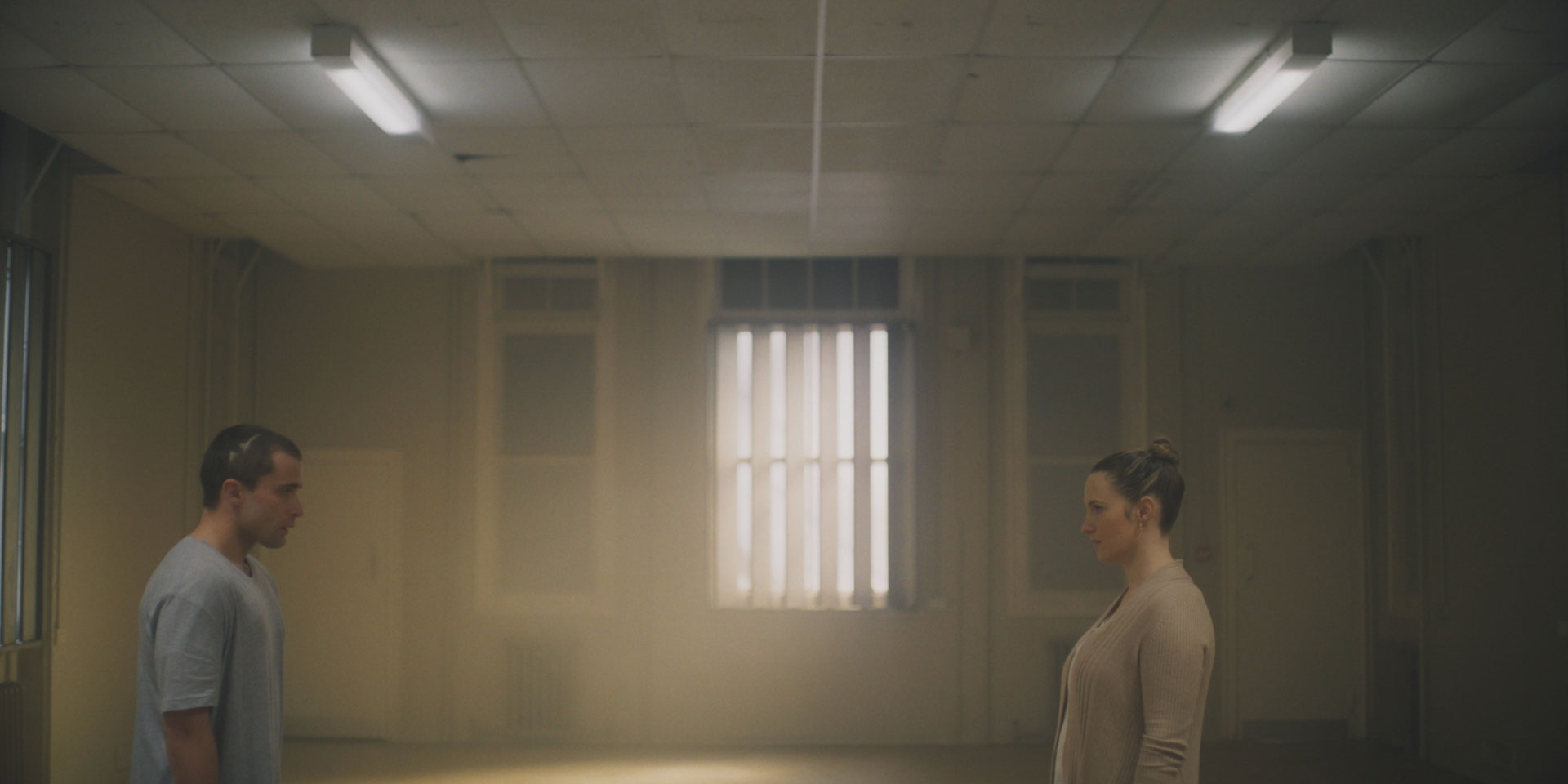
It is implied Amy is a recovering addict and so highly motivated to move forward in her chosen profession. She is offered the chance of partnership in her firm if she can help Dan (Christian Cooke who also directed and co-wrote the film) overcome his intimacy issues. However, Amy faces a considerable challenge as Dan has not only been incarcerated in a high-security psychiatric facility for 18 years he is so traumatised by his past behaviour he has ceased to speak.
Director Cooke takes a very compassionate approach to the characters and a positive view of society. Clichéd storytelling shortcuts, say, a sadistic prison guard or a bureaucrat who disapprove of and set out to undermine the treatment, are avoided. All of the characters are broadminded and sympathetic, Amy’s boyfriend objects to her developing a friendship with Dan but not to her profession.
Such an enlightened attitude makes it unlikely events in the film are occurring in present-day UK where tabloid newspapers and vote-chasing politicians would not tolerate the approach. Only towards the end of the film does anyone express the reservation that the project amounts to taxpayers paying people to have sex.
The possible alternate reality occasionally comes close to wishful thinking. Although Amy is given a panic button, she is not only allowed to meet with Dan in private without any barriers between them she successfully arranges for him to visit her at home without any kind of supervision. Prisoners released from gaol are able to gain employment with ease.
The complexity of the situation is conveyed in a pair of very strong performances. Ruth Bradley tackles the moral ambiguity of Amy’s situation. Bradley, silently weeping when leaving her appointment with Dan, suggests Amy’s loss of objectivity is motivated by deep compassion rather than arousal even when the relationship becomes physical. Christian Cooke takes a completely sympathetic approach to Dan, physically inhibited, hunched and unable to make eye contact as well as verbally uncommunicative he plays the character as a trauma victim rather than a violent offender.
Embers is not atmospheric. The absence of any viewpoint dissenting from the positive central message limits suspense and makes the film more of a lecture than a debate. Director Cooke sets a neutral tone, despite being in an institution the room in which Amy and Dan meet is not claustrophobic and there is nothing to inhibit contact between the characters. There is little tension in the movie, the possibility of physical danger never really arises instead the director concentrates on the emotional impact of developments.
The enlightened attitudes in Embers, while refreshing, strain credibility although a pair of fine performances ensure audience interest is retained.
Embers is screening at the Raindance Film Festival 2023.
