

Writer and Director: Olive Nwosu
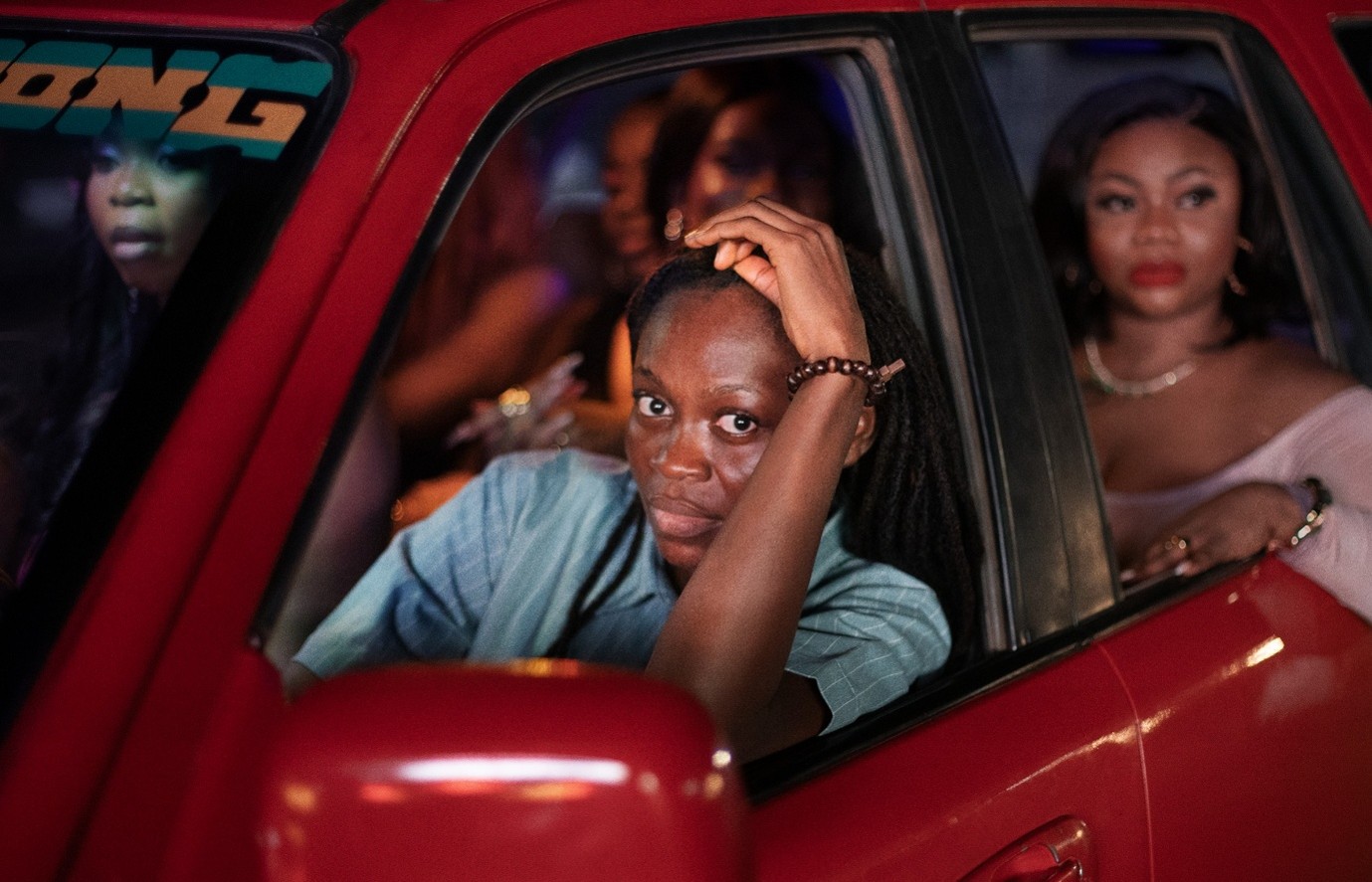
According to her friend Sugar, taxi-driver Lady “hustles harder than anyone else in Lagos”. It’s true; she’s very busy, too busy, in fact, to join the protests against the government when the subsidies on petrol are removed. Her fellow drivers, all male, berate her for not making a stand against the rising fuel prices. Lady is even busier when she gets a job in the evening on top of her day shifts: driving sex workers to clients’ houses.
Olive Nwosu, with her debut feature, joins an emerging, talented group of Nigerian directors, including the brothers Arie and Chuko Esiri, whose Clarissa also plays at this year’s BFI London Film Festival and Akinola Davies Jr., who directed one of the best films of the year with his My Father’s Shadow. Produced by the BFI, Film Four and Screen Scotland, Lady is an engaging study of female friendship, but it’s not without its clichés.
One of the reasons that Lady works so hard is that she’s trying to save up enough money to go to Sierra Leone’s Freetown, where her mother, now dead, was born. For Lady, the city conjures up a sense of freedom from a life of drudgery. Pasted onto the wall of her home are pictures of Freetown, seemingly torn out of tourists’ magazines, promising paradise. She hides her money made from escorting the sex workers to their jobs behind one of these posters.
Even so, she knows that she’s not the worst off in Nigeria. At traffic jams – and there are many in Lagos – women sell nuts to the stationary drivers. Lady argues with these women about the prices they charge for their snacks, but she still has enough compassion to give them more than what they ask for. Lady also believes that she is better off than the sex workers she takes to parties.
However, as she gets to know them, her ideas are challenged. The women are, on the whole, happy, with a few of them enjoying the sex that they are paid to have. They are bright, funny and exuberant. On the other hand, Lady is grave, censorious and wary. But she is curious, too, sneaking into one of the clients’ houses to watch the women having sex with their customers. The sex workers discover that Lady is a virgin and find it hilarious that “a virgin is driving prostitutes” through the Lagos streets. Only one of the women suggests that Lady could be a voyeur.
Darkness creeps in when Lady realises that the sex workers’ lives are not so easy; that their happiness is only a veneer covering an underworld of abuse and murder. Lady must add to the Freetown fund quickly. As Lady, Jessica Garbriel’s Ujah is eminently watchable, her face oftentimes disdainful while, at other times, it is inscrutable. She observes the couples having sex with wide-eyed fascination and cares for an old neighbour with eyes full of weary benevolence.
And yet, despite Ujah’s fine performance, the film’s conclusion doesn’t feel earned. It’s absolutely the right end, but Lady hasn’t learnt how collective energy has the power to change things. She has witnessed how the community of sex workers make the best of a life where they are nonetheless ‘owned’ by their pimp, but there is no struggle for better rights in their line of business or any attempt to be their own bosses. Perhaps Lady learns how to act precisely because these women lack agency, or more likely have had their agency removed, but Lady’s sudden choice to put up a fight seems too sudden.
Lady is screening at the BFI London Film Festival 2026 from 7-18 October.
