

Writer: James Graham
Director: Danny Boyle
A perfect stage to screen transfer, Danny Boyle captures the energy and swagger of Ink, the story of how Larry Lamb and Rupert Murdoch transformed The Sun newspaper in one year in 1969, unleashing a populist wave that shaped our national conversation today, a tabloid newspaper that reinvented what news is and who it was for. Based on James Graham’s play, the film is an underdog story driven by the increasingly outrageous methods used to improve circulation and push for innovation in an industry dominated by the Establishment. But as Lamb’s confidence grows, so too do the ambiguous forces he unleashes, releasing not only a monster within himself but the British public who demand more.
Personally selected to run his new acquisition, Larry Lamb has one year to turn the fortunes of the ailing The Sun newspaper around, encouraged to hire anyone desperate enough to work for him. Plagued by his former editor and nemesis at The Mirror, Lamb decides to reinvent the daily newspaper and write about the things that people are interested in, but when a story breaks that’s too close to home, Lamb crosses a line and just keeps on going.
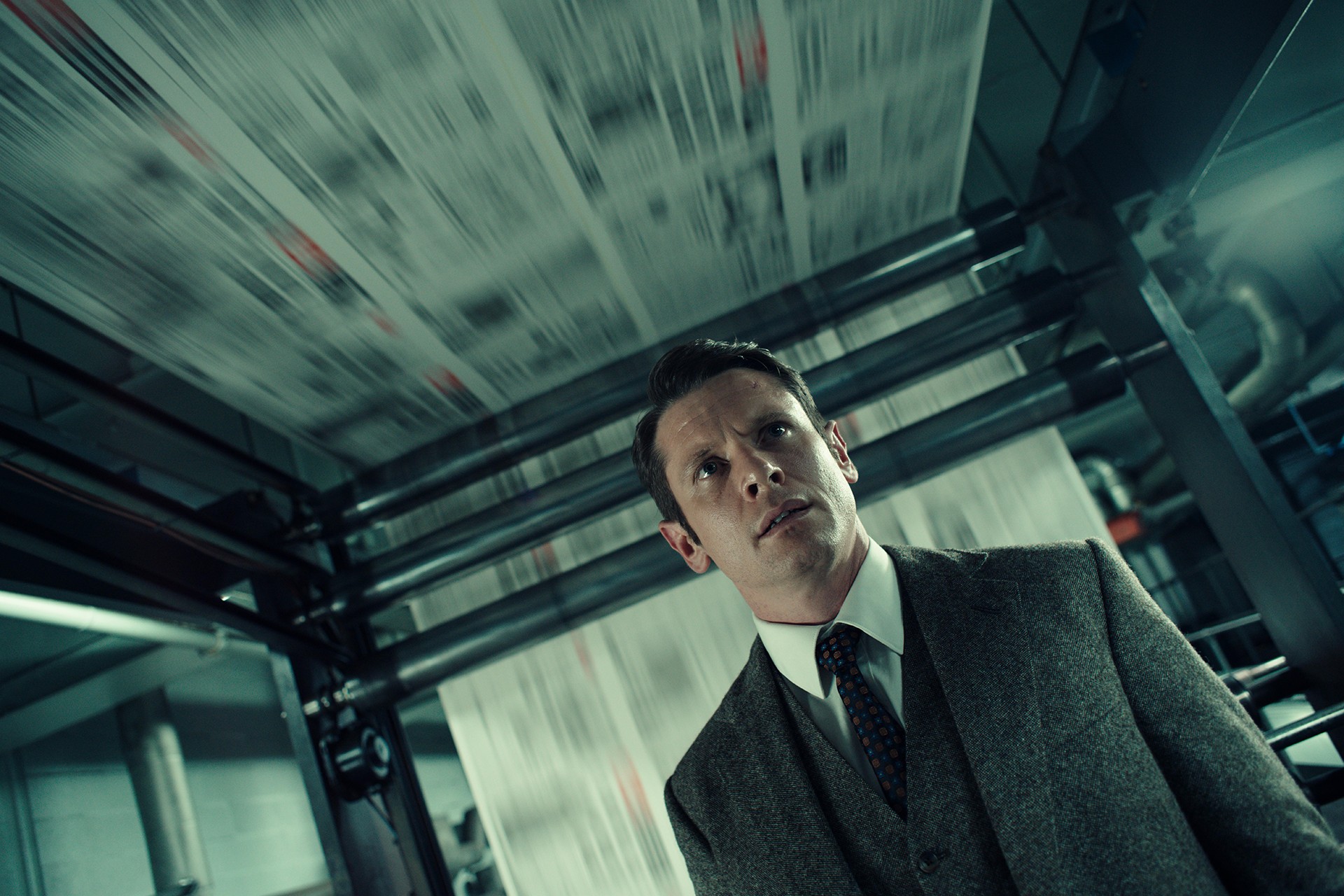
Ink is arguably the finest of Graham’s plays, a moment when the writer moved beyond the political subjects that had defined his early career and began to explore the bigger influences on contemporary society, the unassumed powerhouses that determine what the public interest might be regardless of their non-democratic status, and the original production was thrilling. Boyle has transferred all of that to the screen, a creative also interested in the nature of contemporary culture and the places where politics, art and life intersect across class boundaries in the post-war period. Boyle is also adept at bringing the world of the story into its visual style as he did with the tech industry and design aesthetic of Steve Jobs, doing the same for the print newspaper, meaning Ink has a fervent energy on film that merges that historic industrial setting, the nature of the British ruling class and the insatiable demands for gossip, scandal, celebrity and working class-focused stories that the arrival of The Sun fed and fed.
As well as its numbers game formula, watching the sales figures rise on a chart in Lamb’s office, it is also a character study about the absolute corruption of absolute power, told through Lamb’s character arc, a Celebrity-Protagonist whose rise and fall is intricately tied to the appetites he unleashes in the nation – depicted by Boyle as a calm Underground journey with Murdoch that rapidly becomes a runaway train. Jack O’Connell charts those tracks well as Lamb, a character you start to root for but soon becomes too in love with his power, too careless of others and what he’s creating, with the infamous crime at the centre of the story a real tipping point. And there is a stronger sense here than in the play of Lamb’s accountability and desire to be seen as the architect of this new world of news.
There is a slightly expanded role for Murdoch too, Graham and Boyle tying them even more closely together than the play where, over time, Murdoch becomes a far more remote figure. Guy Pearce offers a very subtle performance, a man like Lamb resenting the assumptions made about him based on his non-Establishment background but determined to innovate the business of news even if the more distasteful aspects of Lamb’s plan causes difficulty between them, and that tension is well played as the film unfolds.
So read all about it, Ink is headline news at the BFI London Film Festival!
Ink is screening at the BFI London Film Festival 2026 from 7-18 October.
