

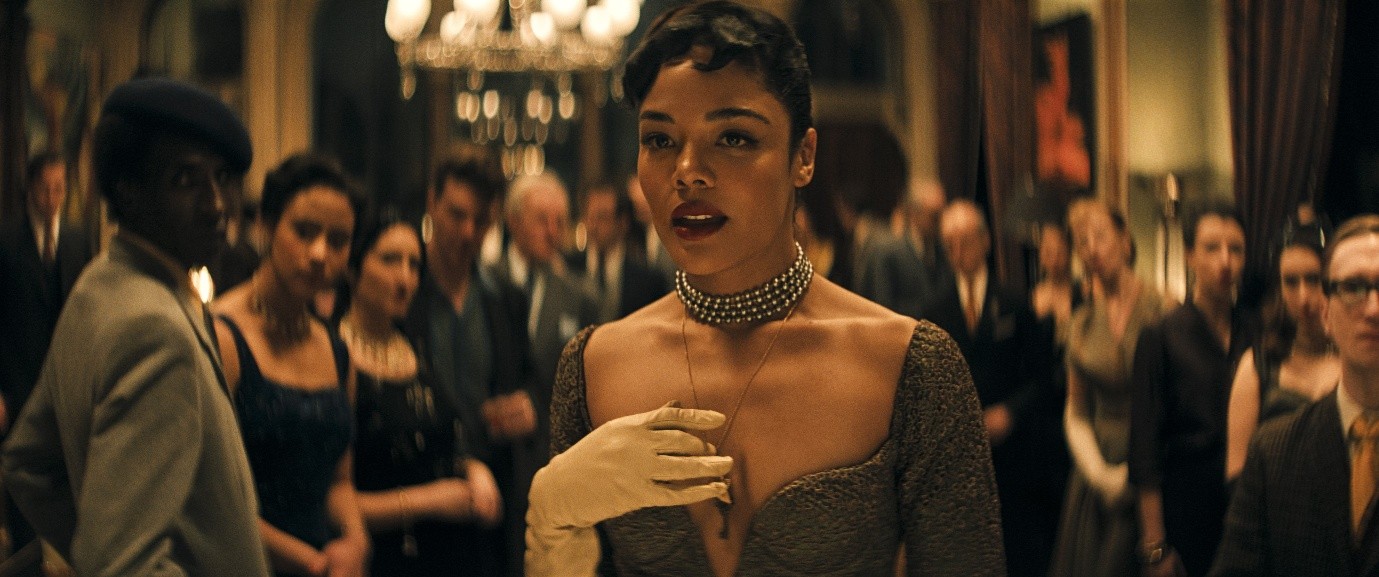
Writer and Director: Nia DaCosta
There are adaptations of Ibsen and adaptations of Ibsen, and where Simon Stone’s theatre production of The Lady from the Sea currently at the Bridge Theatre sunk without substance or subtext, Nia DaCosta’s new film treatment of Hedda Gabler screening in the Official Competition at the BFI London Film Festival is smart and hugely stylish reworking of Ibsen’s play. The story of a hedonistic woman who made all the wrong choices and toying with others for entertainment and to detract from her own existential crisis is compressed into a single night, a biting drama about the misery inflicted on others to defer the heroine’s own feelings of suffocation.
Returned from honeymoon with her dull but devoted academic husband George Tesman and living in a vast country house they cannot afford, his wife Hedda throws an elaborate party blending his colleagues with her wilder friends. Up for promotion at the university, Tesman is troubled when old rival Ada Lovborg appears with a new book that might win her the job instead, but Ada has history with Hedda too and the new Mrs Tesman is determined to raise a little hell before the night is over.
DaCosta’s Hedda makes a very confident transition to the screen and the intimacy of her cameras in a big location filled with people suits the psychological claustrophobia of Ibsen’s text – which DaCosta has adapted with care and attention to its core themes and currents, understanding in this carefully ratcheted drama that events once set in motion take on a momentum of their own, spiralling out of control but to the exact degree that Hedda’s appetite for destruction demands. And there is a deliciousness in how DaCosta has written the character, cool and aloof in part but thoroughly enjoying the mischief she creates and actually nihilistic about the ultimate price everyone else will pay.
The film looks gorgeous; Sean Bobbitt’s cinematography and Cara Brower’s production design leans into a 1950s aesthetic, although the period setting is a little more ambiguous, but the costumes look poised and form fitting – most notably a vivid figure-hugging red dress and monster hills that Hedda wears to survey the preparations for the party as she strides through the house and grounds in command. That all of this is as empty as Hedda’s soul is very pointed and there is a desire for death and destruction that runs through her character, subtly noted as stones drop from her pockets in the opening scene while she returns to the lake for the final Act.
Tessa Thompson eats up the screen as Hedda, deliberately controlling her voice and mannerisms to present a picture of herself to the world. Hedda enjoys inspiring desire in others as a substitute for real power and she looks perfect always. Yet, as her schemes play out, the stabs of envy start to prick around the edges of her self-control, while in the conclusion Thompson shows just how fragile Hedda’s equanimity really is when things get ugly.
With a strong supporting cast including an excellent Tom Bateman as her deeply inadequate husband who has no idea what he’s up against, Nina Hoss as the gender swapped Lovborg and Nicholas Pinnock as the insistently persistent Judge Brack, DaCosta’s ensemble find all of the suffering that Ibsen’s characters inflict on one another and the very dangerous choices of a woman without a purpose who craves absolute control.
Hedda is screening at the BFI London Film Festival 2025 from 8-19 October.
