

Writers: Michael J. Long and Tom Sidney
Director: Michael J. Long
After a series of festival screenings including best debut film at The Oldenburg International Film Festival, Michael J. Long and Tom Sidney’s film Baby Brother is released online. Exploring inherited male violence and the dwindling of opportunity that prevents successive generations from escaping the limited circumstances in which they grew up, Baby Brother is often a difficult film to watch, laced with unreasonable and excessive violence emerging from a central character unable to regulate his impulses even around his family and it paints a stark if relentless impressions on a life with no alternative outlets.
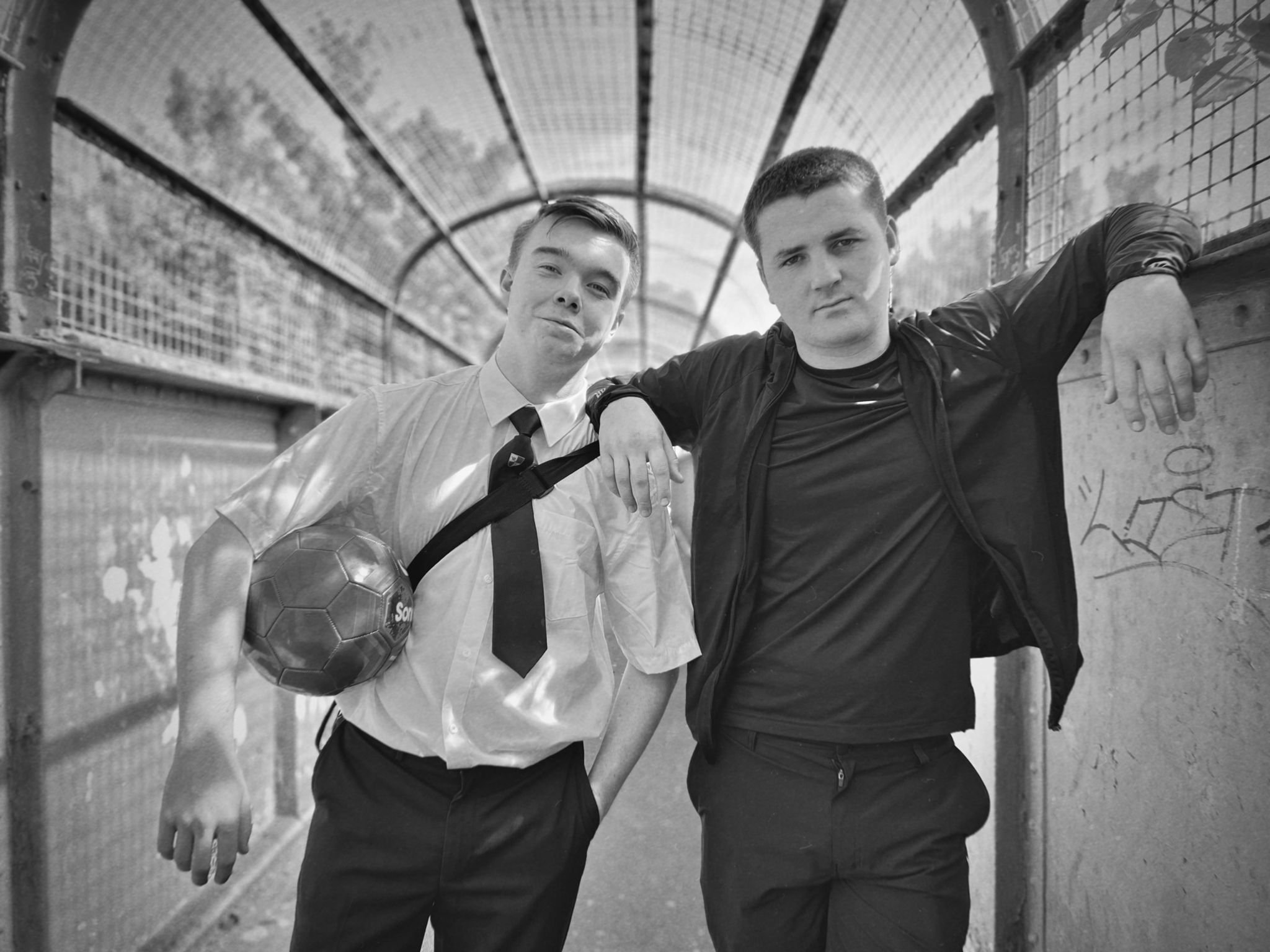
Escaped from prison following a murder conviction, Adam travels back to Liverpool to visit his baby brother Liam who once relied on his only major male role model. Cutting back to the events leading up to Adan’s conviction, the boys experienced a traumatic childhood filled with aggression and neglect as their mother focused on a series of boyfriends. But in the present, Adam is quickly carried away by the physical threat he poses, especially when he returns to find his brother now considerably more independent.
There are tones of the psychodramas of the 1960s in Long’s filming style as director creates a movie that simmers with menace and a repressed violence that eventually explodes. But the possibility is there throughout, and the escalation is well managed from petty thefts and intimidation to far more serious acts of physical harm and uncontrolled rage. There are also plenty of references to the films of the early 2010s exploring working class male violence and its social origins in films like The Football Factory, certainly in the character-led feeling of loss and purposelessness that emerges in young men actively looking for confrontation. Gerard Johnson’s Muscle from 2019 is also an interesting comparison, and although Baby Brother isn’t stylised in the same way, Long’s use of black and white for the scenes set in the past as well as the sense that the audience is being drawn into a hypermasculine world in which the ordinary rules don’t apply is equally strong.
This is not the kind of film where anyone is likeable so investing in the characters or even feeling particularly sorry for them isn’t really possible and that doesn’t feel like Long’s intention. Characters here often make their own lives far whose than they need to be through their unconsidered actions, and the writer-director’s approach is almost documentary-like in its presentation of a violent man inflicting further violence on those around him as situations veer quickly out of his control. The various family connections, the history of maternal disinterest and targeting as well as the fairly one-sided brotherly relationship in the present-day sections is the context for Adam’s trajectory but never the excuse. So, while the firm may be unremitting, it is refreshing in its honest assessment of a flawed man unable to reconcile his demons.
Paddy Rowan gives a committed performance of a scarred young man whose warped love for his brother fails to see the younger character as he really is. Unable to manage those impulses for violence and frequently stimulated by drugs and alcohol, Long and Sidney paint a wretched portrait of escalating chaos. His brother Liam played by Brian Comer is a contrast, once devoted but now happily finding his own way, there is a strong alternative life planned with his pregnant girlfriend and the pressure from his brother to keep his freedom adds to the drama, while the much smaller role of their mother gives a flavour of consistent indifference across their lives.
Baby Brother is not an easy film and its immersive approach to experiencing the characters’ perspective is often gruelling so while some may find it overly explicit, its commentary on a system that fails working-class men is compelling.
Baby Brother is on digital download from 12 September.
