

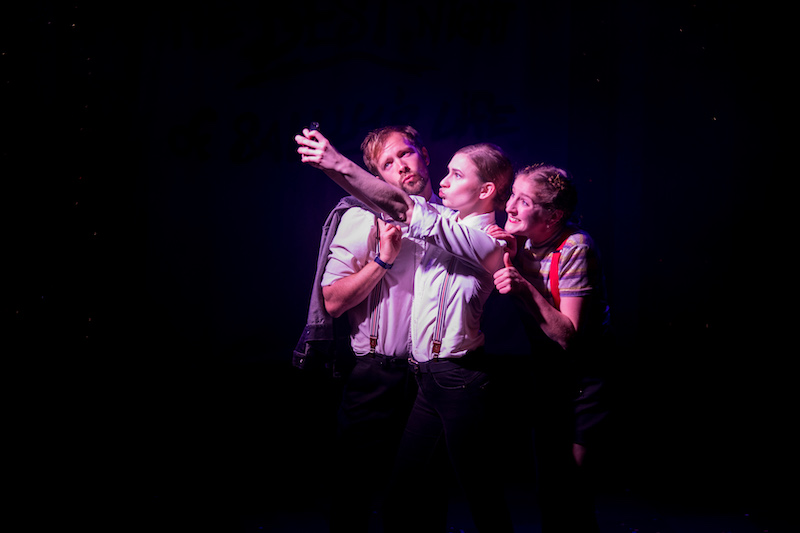
Writer: Jon Brittain
Director: Alex Mitchell
Who knew the secret to happiness was a combination of Meatloaf and Winnie the Pooh, but for Sally they help her find an equilibrium after a period of depression. Revived at the Young Vic as part of its “Shedinburgh” season, Jon Brittain’s A Super Happy Story (About Feeling Sad) first appeared a decade ago but has lost none of its inclusive charm or power to move the room. “This is a happy show,” Sally insists at the start, and so it proves, although as she rightly points out, that all depends on where you end it.
Aged 16, Sally attends a concert by her favourite band, which she pointedly refuses to name, but standing next to her best friend and the long-term crush who has just approached her, something about this moment feels off. When happiness is replaced with despair at different points across her late teens and 20s, Sally struggles to accept what’s happening to her, refusing help and wanting to be left alone, until friends, strangers and an unexpected intervention from Meatloaf pull her back.
Brittain’s story is divided into six chapters told across a tightly managed 60-minute show. In that time, it covers a huge amount of ground: a decade in Sally’s life, a couple of major depressive episodes that shape her early life in significant ways, big highs at Disneyland Paris and at a reunion concert for the now older boy band, and the darkest night of her life. Yet, in that sweep of coming-of-age changes, emotional and chemical flips in her body, there is a heartfelt intimacy in the writing that keeps this small and personal, as though being told to a single person rather than the 100 or so in the Young Vic’s Maria space.
And while the emphasis is on a happiness – Sally and the cast first appear in sequinned tailcoats and top hats – Brittain’s work is never afraid to head to those hard places and to describe what they really feel like as well as the continued work that people like Sally and those around her have to do to manage the cycles of depression that just keep coming. “It’s never over,” she says multiple times, refusing to even accept that the word “depression” applies to her, and these moments are as vivid and affecting as the brighter scenes.
Surrounding Sally, Brittain creates a cast of fantastically sketched but brightly drawn characters, including her absent mother who comes through in the end, an attendee at one of the support groups that changes her perspective and her best friend Tash who wants Sally to snap out of it, all played with comic zeal by Sophie Clay. Ed Yelland as the annoying neighbour’s child who becomes a key supporter in adult life is equally good as Toby, while Matthew Floyd Jones provides a musical score that takes Sally from the isolation of her bedroom to fireworks near Thunder Mountain and dull first jobs.
It all holds firm around Madeleine MacMohon’s Sally, the support network her character needs and the architecture for the actor to play Brittain’s quick changes of direction, the emotional turns that happen quickly, adding layers of poignancy to this work. At the end, Sally is ok and you really want her to be happy, with or without Meatloaf in her life.
Reviewed on 3 October 2026
