

Writers: Tommy Baron, Rafiki Fariala and Boris Lojkine
Director: Rafiki Fariala
Narratives about teenagers entering talent competitions aren’t exactly a rarity, but none have been set in the Central African Republic, where armed militias wage war against the army. As guns fire at night and as trucks of rebels roll through Bangui, a singing contest might surely be the last thing on anyone’s mind. But life goes on, even during war.
Teenager Robert wants to be a singer, but with his parents in prison, he now has to look after his two younger sisters and younger brother. All four of them are servants in an army colonel’s compound. They appear to work in exchange for board. They are refugees in CAR and come from the nearby Democratic Republic of the Congo. It’s never explained why Robert’s parents are in prison. Perhaps for being refugees.
Robert visits his parents, locked up in separate jails, often and brings them food. His mother is sick and says little, while his father insists that Robert study hard at school so that he can become a doctor. But Robert’s hardly going to school and doesn’t have enough money to pay for his exams. He washes cabs without being asked in the hope that the drivers will throw him some francs. It seems incredible that he has enough time to pursue a music career as well.
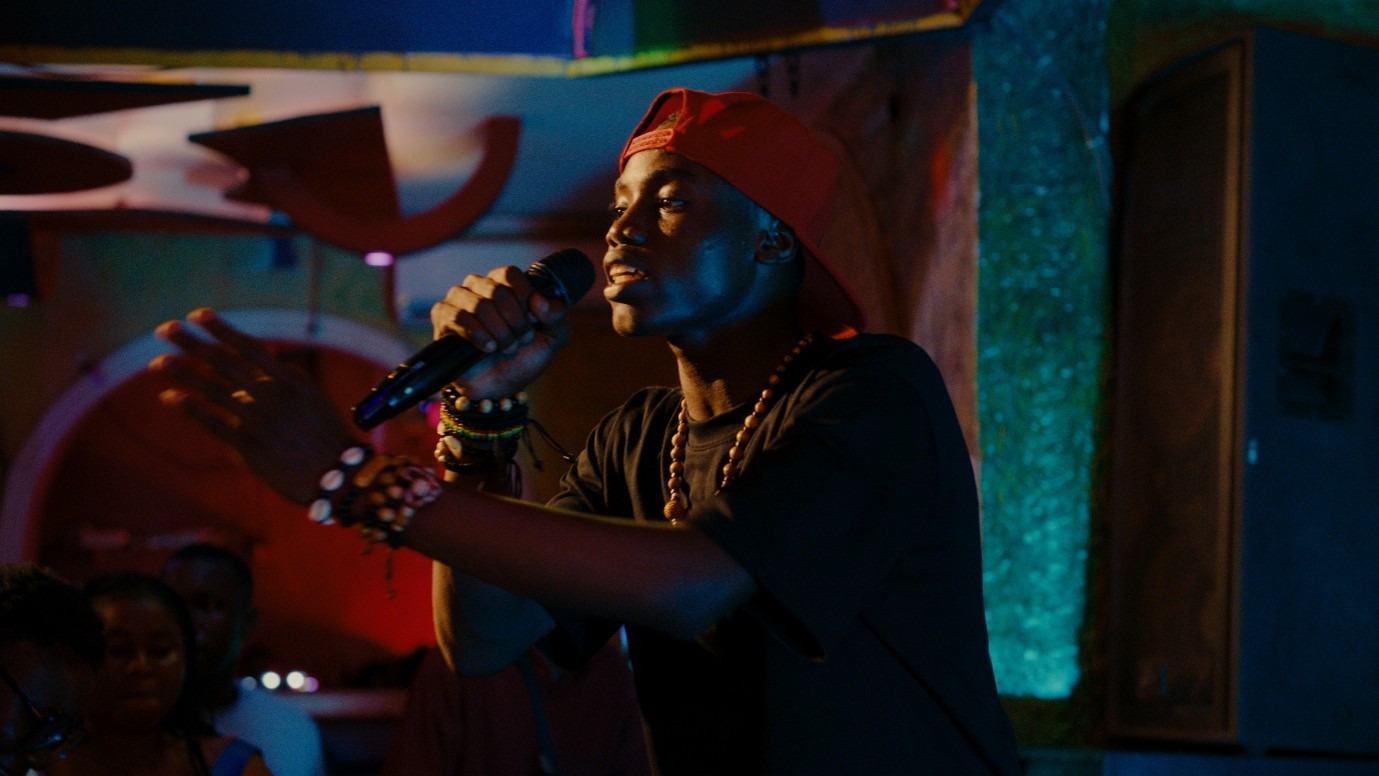
But after stealing a rapper’s spot in a club when a power shortage interrupts the flow of the evening, Robert manages to get a few gigs singing at events like wedding parties. He’s awkward at first but soon gains confidence and has the audience joining his call-and-response songs. And he sings beautifully.
However, the rebels are gaining ground, and the colonel flees to the countryside, leaving Robert in charge of the compound. In a lovely scene, Robert and his family celebrate their temporary freedom with water, turning hoses on each other. They then collect the water in plastic bags, which Robert sells at the market the next day, with the money he earns going to pay for his exams. But these liberated days are short-lived, as one evening the rebels storm the compound.
It’s no surprise that Bradley Fiomona Dembeasset won Best Actor at Cannes in the Un Certain Regard category. He’s totally convincing as the young man who hides his Congolese nationality from his friends. Sometimes Dembeasset looks older than his years when his character is weighed down with adult responsibilities, his face caught in the shadows of moonlight. But when he sings, his eyes light up, and he smiles with childlike joy mixed with masculine bravado: not quite a boy, not quite a man.
To find delight, even if it is momentary, in such a violent world ensures that Rafiki Fariala’s autobiographical film is ultimately a feel-good movie. Like Robert, Fariala is of Congolese descent, and he too entered a talent show in CAR organised by UNICEF. Congo Boy shows a paranoid Europe that there are refugees in Africa too, escaping war-torn countries. And with plans for a sequel, Robert’s story is not finished yet.
Congo Boy is screening at the BFI London Film Festival 2026 from 7-18 October.
