

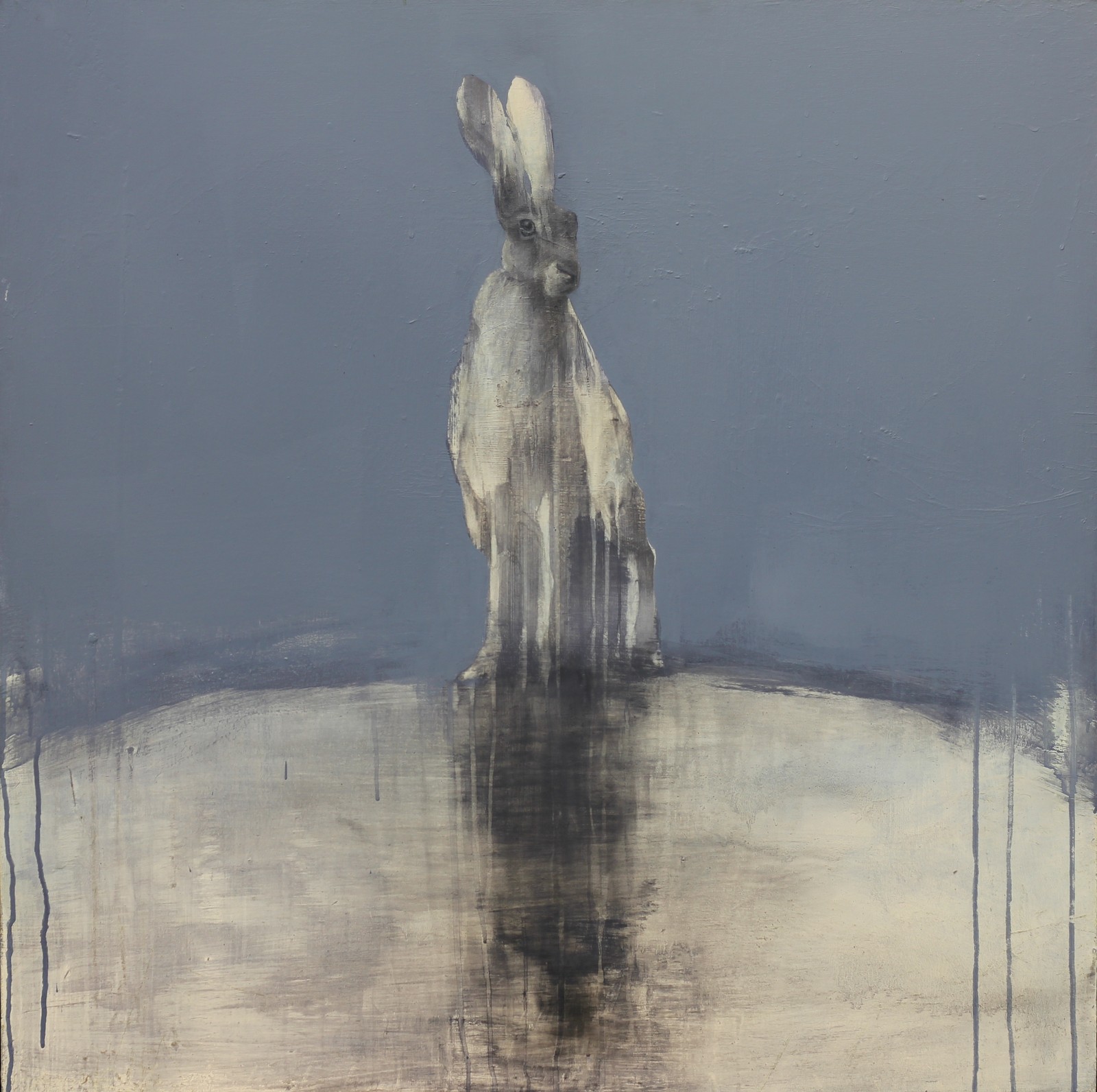
Writer & Director: Maria Tivnan
Druid’s Mick Lally Theatre in the heart of Galway city is an intimate space, with the audience arranged in a semicircle around the small area that comprises the stage. Those in the front seats could reach out and touch the actors at some points in the performance and this intimacy and simplicity is perfectly suited to Fregoli Theatre Company’s new play, Hill of the Hares. Maria Tivnan, playwright and director of the piece, has written an understated but beautifully paced script which allows for moments of reflection while facilitating the story’s poignant and at times disturbing narrative. In a genuinely touching addition to the conventional elements of the performance a dancer (Hannah Rogerson), wearing a wonderfully made hare’s head mask (Lisa Sweeney), bookends the play with movement evocative of the animal, twitching and stretching and challenging the audience with its otherworldly stare.
Tivnan’s play resembles a short story of the literary kind. It is under an hour in length but never feels rushed and the storyline is revealed subtly without obvious exposition of any sort. Kate Murray is completely believable as Cass, now a doctor in her hometown in rural Ireland. Cass has retained emotions of hurt and anger over the nine years since she last saw Michael but the defensive walls she has erected are slowly eroded over the course of the performance. Cass is played sensitively and understatedly by Murray as she propels Michael to unburden his pain and reveal why he abandoned her on a night nine years earlier when various events culminated in his departure. Jarlath Tivnan’s Michael is also hurt and angry but his pain is directed not at Cass but at his ‘mad’ parents, whom he loved but felt betrayed by. Tivnan is measured and thoughtful in his portrayal of Michael but allows an undercurrent of suppressed anger rise to the fore as his narrative develops.
Both Tivnan and Murray harmonise their performances with the subtleties of Tivnan’s script, though at times it felt as if these characters could be mined for more perspective or background. The production never overdramatises the issues it raises, foregrounding a sense of loss and missed opportunities rather than raging regret. The mystical elements and mysterious appearances by hares or other creatures are not overarching here and Michael is allowed to express scepticism as to their impact; the nurturing but at times visceral relationship between farmer and animal is explored also, as the play is rooted in Ireland’s rural community. Humour, generally pertaining to the peculiarities of Irish mothers and fathers, provides reassuring reality to the characters and there is a naturalness to the story’s unfolding which never feels forced. The ending is quiet but beautifully enacted. It is no surprise to see Michael’s eyes fill with tears as he listens to Cass reimagine and remake the beauty of their surroundings.
Runs Until 4th Sept 2026.
