

Writer: Khawla Ibraheem
Director: Oliver Butler
A Knock on the Roof offers a compelling portrayal of life in Gaza through the eyes of Mariam, a young mother living under the constant threat of airstrikes. Written and performed by Khawla Ibraheem, the play delves into the psychological impact of “roof knocking,” an Israeli military tactic where a non-lethal bomb serves as a warning for imminent destruction, granting residents a five-minute window to evacuate. Mariam’s obsessive rehearsals for this potential reality—packing essentials, timing her escape, and considering various scenarios—form the crux of this poignant narrative.
Ibraheem’s script masterfully intertwines the mundanity of daily life with the looming terror of war. Moments of dark humour are used skilfully as Mariam contemplates everyday concerns amidst the chaos. It is an ever-important reminder that even when living under such oppressive circumstances relatable banality persists. We live in a dystopia where our TV screens and phones are filled constantly with the abject horrors of global genocides and A Knock on The Roof is a stark and domestic reminder of the everyday lives that make up news bulletins.
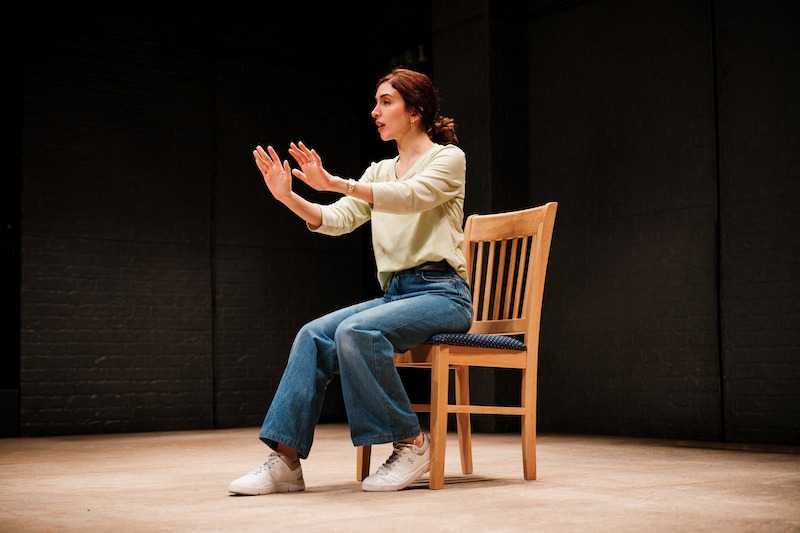
Ibraheem’s performance is undeniably engaging—agile, charismatic, and deeply attuned to the rhythm of the piece. She moves effortlessly between Mariam’s anxieties and humour, making her an instantly compelling presence on stage. While she does not strive to fully embody the other characters in the story, she offers a confident, rough sketch of them meaning the helm of the narrative is always hers, maybe the only property Mariam truly has. While Ibraheem’s performance shines in lighter scenes, bringing warmth and relatability to Mariam’s character, the transition to more intense emotional moments occasionally lacks the same vibrancy.
The minimalist set design by Frank J Oliva—a bare stage with a single chair against a brick wall—effectively symbolises the confinement and desolation of Mariam’s world. Oona Curley’s lighting design and Hana S Kim’s projections enhance the atmosphere, subtly shifting to reflect Mariam’s mental state and the encroaching dread of impending danger.
However, the narrative’s climactic twist feels somewhat unconvincing, detracting from the play’s overall impact. It is a disappointing reminder that even the most human theatre is still theatre, something that sits uncomfortably amongst the context of the reality in Gaza.
A Knock on the Roof excels in shedding light on the personal dimensions of a large-scale tragedy. It emphasises the intimate struggles and relentless uncertainties faced by individuals amidst harrowing conflicts. A Knock on the Roof succeeds in humanising a complex issue, offering audiences a window into the resilience and fortitude of those living under siege.
Runs until 8 March 2025
