

Writer: Justin Butcher
Director: Matilda Reith
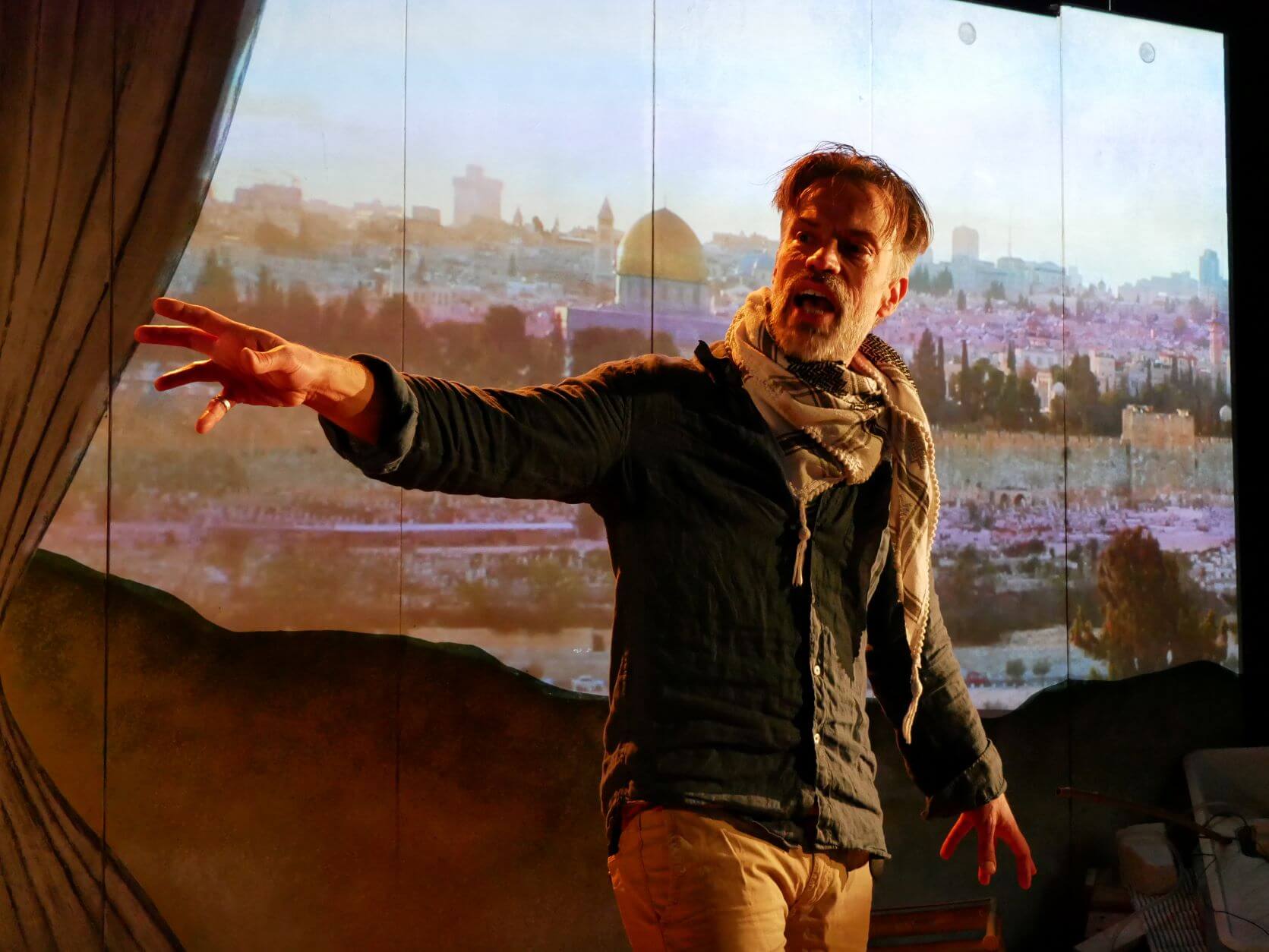
Justin Butcher’s 3000km walk from London to Jerusalem in 2017 is the subject of both a 2018 memoir and a 2019 theatre production which premiered in Dublin and now transfers to London for a short run at the Amnesty International headquarters. A protest event to mark the centenary of the Balfour Declaration and support Palestinian rights becomes part Phileas Fogg travelogue and part impassioned plea for political and social reparation.
Gathering an age-defying group of walkers, one minute Butcher is making a rousing opening speech on the steps of St Martin-in-the-Fields, the next the White Cliffs of Dover are receding into the distance. Across five months, eleven countries and vastly different landscapes, the group meets friends and supporters across continental Europe and eventually in Jordan and Palestine where they witness the effects of Israeli occupation first hand.
Butcher’s dramatised story distils the activity of those many months into a 130-minute show filled with colourful characters, fascinating places and dramatic encounters. The first 70-minutes focuses on the 100 or so days it takes to travel from the wire meshes of the Calais ferry terminal to a homophobic taxi driver who takes them across the border to Turkey. Along the way there are budget hotels, tributes to Roman engineering, snoring roommates described with a Shakespearean exactitude and plenty of memories which are joyfully recreated with linguistic flair.
Butcher intersperses this section with plenty of tales of loss and trauma, in fact, Walking to Jerusalem is rather anchored by tragedy, be it tracking down First World War memorials to a family member in Arras, recalling the deaths of close family members as a child or learning from his wife about the attack on the Finsbury Park mosque. The tone occasionally jumps too quickly from these deeper reflections to lighter subjects – the number of days, another country, another view – but they add a personal angle to the production that, while never explicit, helps to make sense of this pilgrimage.
The interval seems to break the spell a little and the energy flags as Butcher’s tour moves from Jericho to refugee camps in Bethlehem to Gaza and eventually to Jerusalem. In each place, the narrative pauses to recreate conversations and exchanges with local people descrying the name Balfour and underscoring how an all-but-forgotten figure in the UK has made a lasting impression in Palestine. The mood shifts from the wonder of travel and other lands to a more consistent polemic. It is the reason for telling this story of course, but it feels less dramatically satisfying.
Butcher only occasionally reflects on the practicalities of the walk itself, often in throwaway remarks such as recommending wearing only one pair of socks to reduce blisters, but it is a shame to lose this motivational and functional texture from the show. Why chose a walk in the first place, how was the idea conceived and did it play out that way in reality? What was it like to spend so much time with a group of near strangers, what were the mental health effects of such much time to ponder your choices and how did nine people manage to maintain enough momentum to walk all that way?
Walking to Jerusalem is a fascinating tale of human endeavour and compassion but, returning to London to showcase this story five years after the walk took place and now three since this show was first performed, the end of the walk doesn’t feel like the right place to end this story. Although the second half could be a little shorter, it would be interesting for Butcher to reflect on what it meant and whether delivering an alternative Balfour declaration into the hands of the British ambassador has made any difference at all, to himself as much as the people of Palestine.
Runs until 14 April 2022
