

Writers: Mille Zhong and Alissia Pervozvanski-Dangles
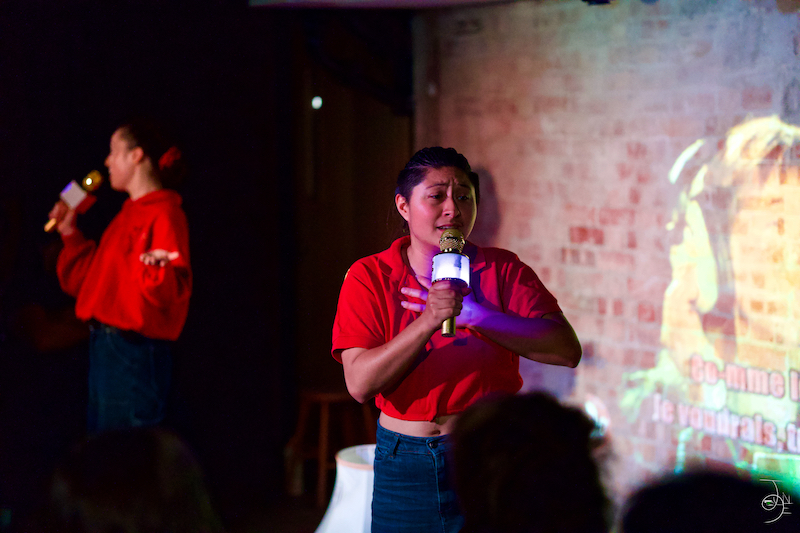
Mille Zhong and Alissia Pervozvanski-Dangles are wonderfully friendly performers, but their show, Le Grand Soir, based on their relationships with their fathers, is a little too insular, ultimately distancing the audience they have worked so hard to welcome. While both hailing from Communist states, Zhong from China and Pervozvanski-Dangles from Russia, their show explores the ever-fraught connections between fathers and their queer kids.
Taking the form of a cabaret night, there are games and songs, even a slice of pickle, washed down, if you like, with a shot of vodka. It begins with introductions where each of the performers hurriedly provides a biography of the other. Take notice, as you may be called on to state as many details as you can remember. Pervozvanski- Dangles works in a ceramic café in Paris; she wants to get married; she wants to bear a child.
They describe how they met at a writing workshop in France. At first, Zhong presumed Alissia was straight, until, that is, they clapped eyes on her. Their friendship – romance? – is represented by a dance. They then breach the subject of fathers, both of whom once had problems accepting that their children are queer. However, both Zhong and Pervozvanski-Dangles have learned how to forgive their fathers, and audience members are given the chance to forgive their own fathers, too. This moment is perhaps the best in the show.
The rest of Le Grand Soir is less successful. We hear their fathers’ voices, speaking in Mandarin and Russian, and the performers read out letters that they may or may not have sent. Some of these passages are then translated into English, but not all of them, which results in isolating anyone who doesn’t speak Mandarin, Russian or French. These excerpts make the play drag in places.
Of course, their show acts as a kind of therapy for the performers, but for the audience, these scenes come close to solipsism. Zhong and Pervozvanski-Dangles need to find ways in which their experiences with their fathers engage and involve the audience. Take the ending, for instance. They have a great time singing along to a French song, but with its meaning and relevance not explained, the audience can only watch bemused rather than amused.
There are some good ideas in Le Grand Soir, and the two talented performers should take note of what works and what doesn’t if there are to be big nights in the future.
Runs until 9 November 2025
