

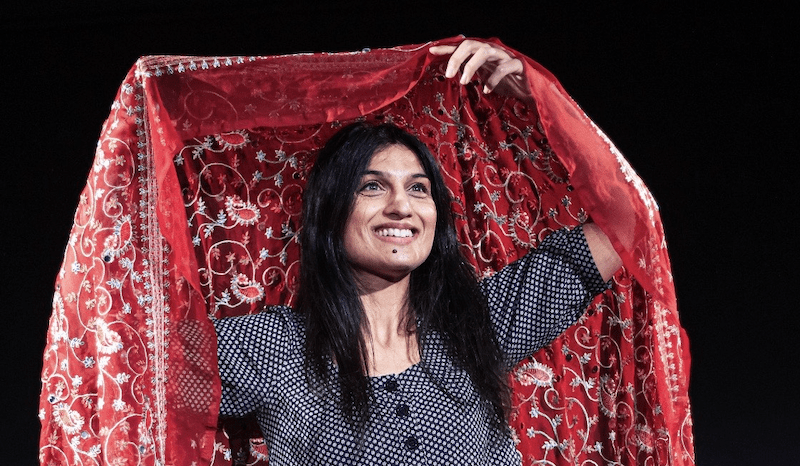
Writer: Tahira Dar
Unpopular Culture begins with a question posed by Tahira Dar’s child: What did you want to be when you were little? From here, the show embarks on a journey through Dar’s influences, spanning American teen dramas and Australian soap operas, and explores how a lack of representation in popular culture shaped her aspirations. Growing up as a South Asian woman in Salford, England, Dar recounts experiences of shocking racism and reflects all too often on the witty comebacks she wished she had delivered at the moment. Over the course of this hour-long performance, it becomes clear that Dar is no longer auditioning to perform on stage but is, instead, auditioning for the greatest role of all: being human.
The narrative unfolds through a series of vignettes, each reflective of Dar’s influences and attempts at self-discovery. However, the fragmented structure lacks a cohesive throughline, leaving the performance feeling disjointed. While the meta-theatrical elements work well at times, particularly when Dar reveals what inspired the show, they falter in moments like an out-of-context thank-you to the tech team, which feels unanchored to the narrative. Despite its humour and relatability, the writing often skims the surface of its themes, offering more substance in the montage of voiceovers and video clips than in the live text. The story, which sets up much promise to embark on the topic of motherhood, is barely explored, leaving significant potential untapped.
Dar’s ability to embody various accents and characters adds vibrancy to her performance, and her natural levity keeps the audience engaged. However, her tendency to gloss over the gravity of certain moments prevents the show from achieving its full emotional profundity.
The set design cleverly integrates a domestic living room with theatrical red curtains, serving as a simple yet effective metaphor for Dar straddling the personal within the performative and vice versa.
Unpopular Culture entertains with its exploration of cultural influences and dreams left unfulfilled but doesn’t delve deeply enough into its most compelling questions.
Runs until 27 November 2024
