

Adaptor: Carmen Nasr (after the film by Babak Anvari)
Director: Nadia Latif
As war enters the domestic space in Carmen Nasr’s Under the Shadow, rationality and scientific reason are replaced by superstition and fear, a commentary on the loss of control felt by civilians who start to seek and believe in higher powers guiding them. And when those forces are perceived to be sinister, they become the embodiment of the enemy-other, replicating the real war and refracting it through the eyes of women and children. Adapted from Babak Anvari’s film and performed at the Almeida Theatre, Nadia Latif’s production doesn’t have a single purpose or commentary but builds an unsettling suspense as the options for Iran and protagonist Shideh start to narrow.
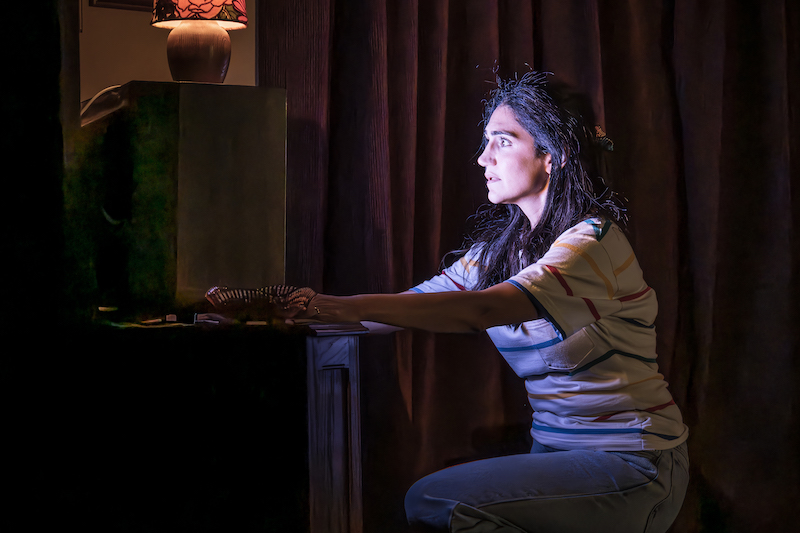
Forced to give up her medical studies due to political activism and unable to continue her training as a doctor, Shideh is frustrated by the quiet life she is expected to live at home in Tehran, tending to the house and caring for her daughter while her husband practices as a doctor. When he is conscripted to the front line in the war between Iran and Iraq, Shideh refuses to flee north and decides to wait out the bombardments with her neighbours. But mysterious goings on in the building start to unnerve all of the nearby women.
Under the Shadow has a number of perspectives; it is a war story that examines the impact on civilians living in big cities, it is a political reflection on the position of women forced to comply with a regime that disbars them from public life if they step out of line and, eventually, it has a strand of horror as fantastical activities start to occur with curses, evil spirits known as Djinns and forms of possession that prove a frightening context for Shideh’s story. The plot itself is rather limited: a few weeks in the life of this mother and her daughter Dorsa as their friends decide whether to leave the city, isolating this small family.
The growing disconnection between Shideh’s reasoned stability and calm, and the unexplained goings on in her home are well managed by Latif, who builds a slow sense of disconcertion across a long first act before the 40-minute second part of the play offers up a few more jump scares (provoking more laughter than terror perhaps). Donarto Wharton’s sound and Scott Penrose’s illusion consultation offer up plenty of Blithe Spirit-like action, striking the right balance between day-to-day life and the heightened tension that feeds Shideh’s terror. And this notion that intuitive and spiritual sense induce psychological fears is an interesting proposition that sits under the final section of the story.
Leila Farzad is excellent as Shideh, a woman trapped in her home in lots of ways, limited by a society that won’t let her fulfil her potential, a country that she must hide herself and her Americanised aerobics videos from, and a home life full of pressures to have more children and be a perfect cake-baking mother. Erin Jemmotte as sulky pre-teen Dorsa is first to sense something amiss, while Mona Goodwin and Nadia Albina provide excellent support as neighbours also struggling to reconcile the strain of war on their doorstep.
What Under the Shadow ultimately says about women’s rights in Iran, about the invasive effects of conflict and how traditional mythologies are evoked in times of stress is a little thinner than it might be, but the theatrical management of suspense is chilling.
Runs until 4 July 2026
