

Writers: Khoroldorj Choijoovanchig, Kate Kennelly, Tessa Louise-Salomé and Chantal Perrin
Director: Khoroldorj Choijoovanchig
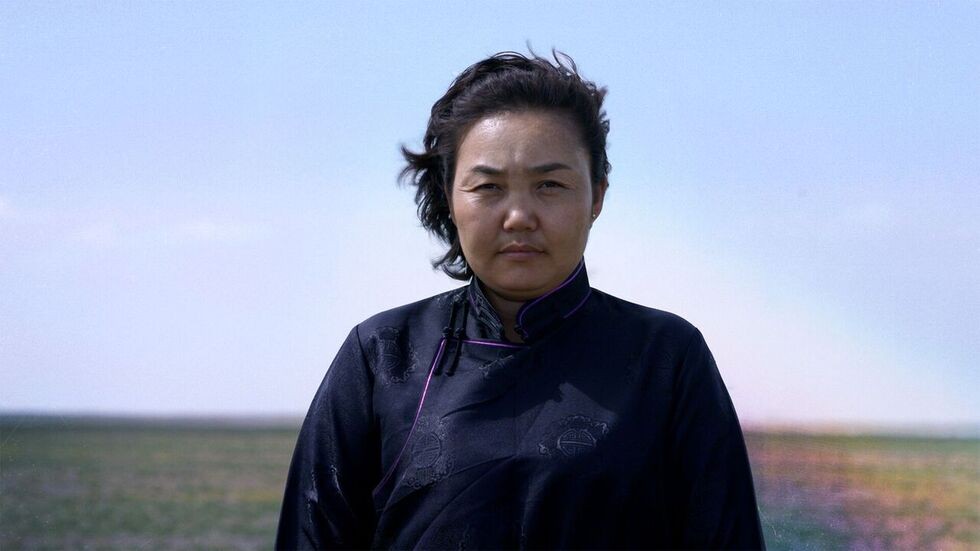
Nomadic life in Mongolia’s Gobi Desert has almost vanished, but in its stead, a new tribe of nomads now journeys the empty landscape; trucks full of coal slowly make their way from the desert to the Chinese border. Drivers are on the road for months, sometimes stuck in a long line of lorries for days at a time as they wait for the border to open. Khoroldorj Choijoovanchig’s bleak documentary focuses on one of the only female drivers who patiently but heartbreakingly waits in the queue of trucks that snakes its way to the horizon.
Maikhuu Sengee needs to work to look after her children and pay her outstanding debts. When she’s working, her sister looks after the kids. Maikhuu misses her daughter’s birthday and instead FaceTimes her from her cab while eating a meal that she has also prepared in her cab. She’s nostalgic for her childhood days when she and her family drove livestock through the Gobi. Now she drives a truck.
The work is dangerous. Choijoovanchig’s camera picks out the overturned lorries that litter the roadsides, often with their cabs at an angle like broken necks. An unofficial union rep wants to fight for more safety for the drivers, but during the five or so years this documentary charts, there is no sign of any improvement for their welfare. The roads are badly made, and often trucks will cut off one another in the race to get to the border and be paid.
Most of the other drivers we meet in Colors of White Rock – named after the town in which the coal quarry is located – appear supportive of Maikhuu, although she recounts stories of incidents involving sexual harassment from other drivers, an issue that is returned to when she briefly works as a taxi driver in Ulaanbaatar. But being on the road is mainly a solitary existence.
The best shots are those from drones that show the expansive emptiness of the desert or the polluted air of Mongolia’s capital. There is little cheer in these images, and Gael Rakotondrabe’s ominous score always hints that something worse is going to happen. The documentary often moves like a slow-burning arthouse thriller.
Coal dust gets everywhere. The drivers’ faces are smeared in the stuff, and the shot of a besmirched bar of white soap speaks volumes about the drivers’ lives. And there is no escape in Ulaanbaatar, where stray dogs and cows search for food amidst the rubbish that seems to be piled up everywhere. Only at night and from up high does the city look beautiful.
Even though Colors of White Rock covers the effect of the Covid epidemic on the drivers’ livelihoods and a further tragedy in Maikhuu’s life, the film lacks a propelling narrative. That may be the point to show the lack of agency that these forgotten new nomads have, but it makes for depressing viewing, seeing that nothing changes. So intent is Mongolia in exporting minerals to the rest of the world, its own people have been neglected.
Colours of White Rock is screening at the Tribeca Film Festival and Sheffield Doc Fest.
