

Writer: Stephen Mallatratt
Director: Robin Herford
Susan Hill’s The Woman in Black has had an enviable life, originally a 1983 Gothic novella, followed four years later by a stage play, a BBC TV movie adaptation in 1989, then a 2012 film starring Daniel Radcliffe.
The stage incarnation started life at the Stephen Joseph Theatre in Scarborough. Created to fill a scheduling and funding hole at Christmas. Artistic director Robin Herford charged writer in residence Stephen Mallatratt with creating a work that employed a maximum of four actors and with a set and costumes costing no more than £1000. Mallatratt took Hill’s spine-chiller with its more than a dozen characters, turned it into a two-hander and utilising the play within a play device, created one of the most successful productions in theatrical history.
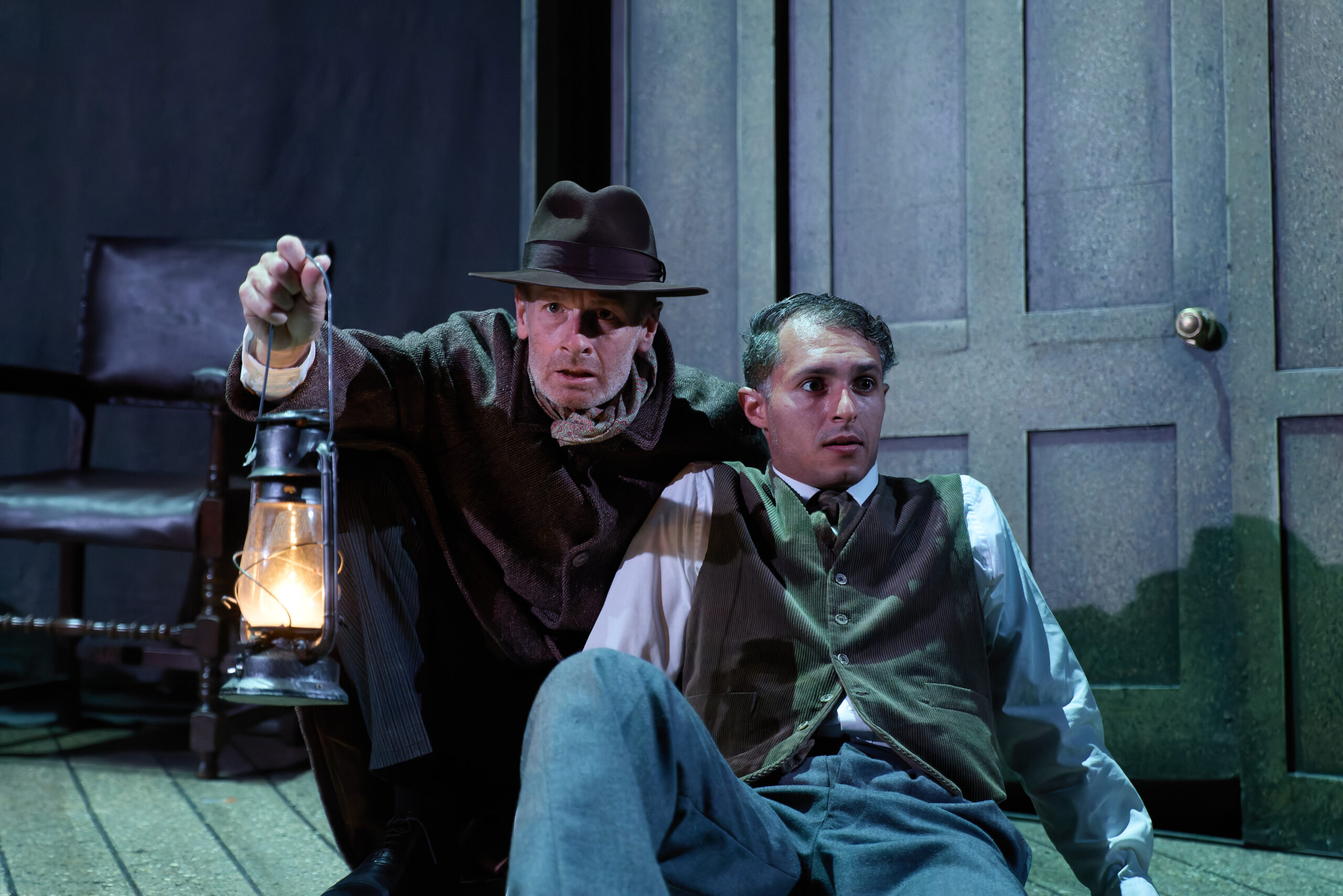
As an exercise in catharsis, a now elderly Arthur Kipps relates an experience that happened to him 30 years earlier to a young actor he’s employed in preparation for a staging of the story for family and friends. The young Kipps, then a fledgeling solicitor, is sent to the remote town of Crythin Gifford to tie up the affairs of the recently deceased Alice Drablow, owner of the isolated Eel Marsh House. While there, a series of nerve-shredding events occur that change Kipps’ life forever.
The quality of the storytelling is key here, it plays out with minimal props on a spare, yet atmospheric set. The sheer skill of the storytellers and the stagecraft ensures that the material still has the power to scare the bejeezus out of an audience nearly forty years on. In the auditorium, on this cold January night, the creeping chill is both real and imagined, and under the crisp direction of Robin Herford the quality remains high.
Central to the production’s success, is the chemistry between the two leads. John MacKay (Kipps) and Daniel Burke (The Actor) work together like a well-oiled machine. Getting through the shher volume of dialogue is impressive enough, but through the quality of their performances, they stealthily build the insidious tension and sustain the creeping menace throughout to terrifying effect.
This is exemplary storytelling, and the continuing success of this production proves that there’s still an appetite for an old-fashioned, spine-tingling tale, brilliantly told.
Runs until 21 January 2026 | Image: Mark Douet
