

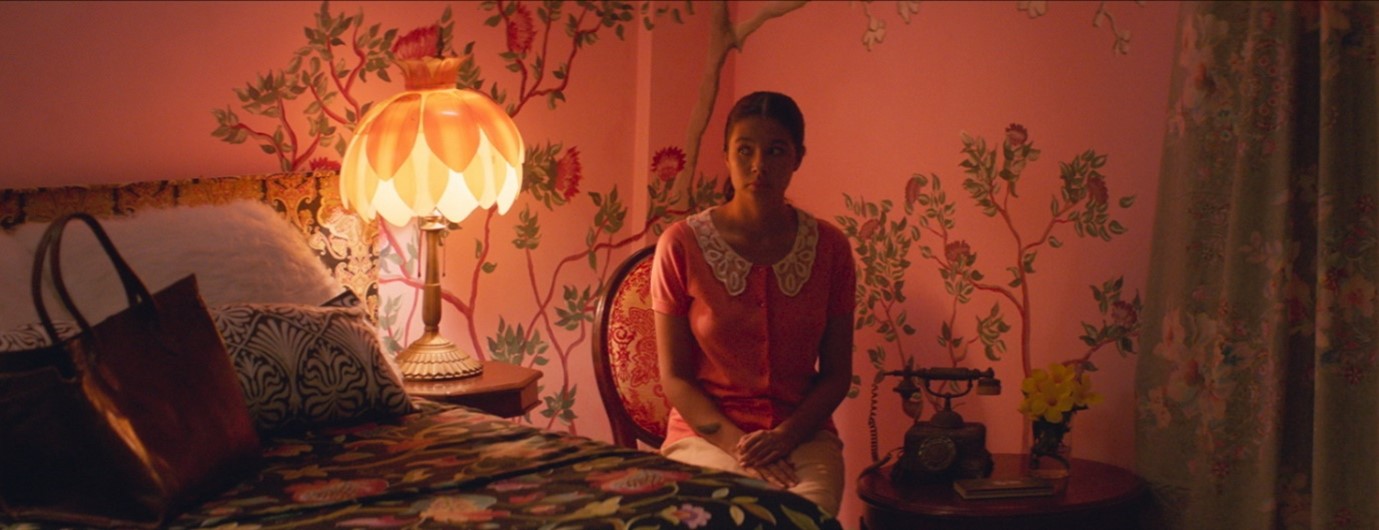
Lord knows I enjoy a cup of coffee. However, the current obsession with discrete flavours and fancy designs sculpted on froth prompts one to play devil’s advocate and point out coffee is just a drink not a religious experience. Alfonso Quijada, writer/ director of The Whisper of Silence might not agree.
The Whisper of Silence is a fragmented movie. The first third sets the scene for a domestic drama in the Latin American coffee plantations. Orphans Josefina Moreno (Laura Osma) and her teenage brother Alfredo (William Castillo) reside with their godmother. Josefina is traumatised by a brutal rape but has an unusual means of recovering-finding a vocation using her highly sensitive sense of smell. Alfredo on the other hand falls into bad company, drops out of school and plots to rob the home of wealthy Don Gilberto (Fernando Gaviria) who is, by incredible co-incidence, the rapist (although it is unclear if Alfredo is aware of this fact). When the robbery goes wrong the consequences extend beyond the family as Josefina’s unexpected talent has potential benefits for the wider community.
The title and opening of the film suggest the theme is the need to break the conspiracy of silence surrounding violence against women. Actually, apart from Josefina experiencing brief flashbacks and being cautioned by her godmother not to speak of the assault and a closing montage of women’s unspeaking faces, the theme of sexual violence barely arises.
The bulk of the film is a gentle feelgood /wish fulfilment fantasy. Josefina, it tuns out, has an extraordinary sense of smell and can identify different ingredients in coffee at record speed. As a result, she gains a sense of pride and achievement -representing the products of her employer at competitions and promoting her coffee-growing community in the wider world.
Quijada builds the sense of someone finding peace at being able to use, and get recognition for, their talents rather than just reaping financial benefits. The scenes in the plantation are warm and sensual. The joy of tasting fine coffee equates to a passion for life. There is even an erotic aspect with Josefina performing coffee tastings while blindfolded.
The intention may be to demonstrate violence occurs even in a fairy tale setting but the shock value is undermined as Josefina’s injuries are shown before the shots of the lush coffee plantation. Possibly to shock viewers out of complacency, Quijada ends the film on an incident of violence which is so over the top and out of place with what has gone before, it appears contrived.
The integration of the gentle and brutal aspects of the film is far from smooth. Josefina claims her senses are so acute she can tell the emotions a person is experiencing by their scent. This raises the question of why she did not detect Don Gilberto’s violent nature. Actually, you would not need a supernatural sense of smell to realise he is dangerous. Fernando Gaviria plays the non-speaking role in an exaggerated state of permanent rage. Don Gilberto is, therefore, such an aggressive character no-one with any sense, let alone someone as sweet-natured as Josefina, would go anywhere near him.
The Whisper of Silence treats sexual violence as the serpent in paradise showing the dark underbelly of an apparently idyllic setting. Yet the fragmented presentation and the excessive conclusion make for a disappointing film.
Bulldog Film Distribution presents The Whisper of Silence on digital HD 27 March.
