

Writer and Director: Alan Ayckbourn
Sir Alan Ayckbourn’s 92nd play sees him back in the realm of futuristic science fiction. The Trial of Romeo Oscar makes the point that, whatever advances in science we make, such works as the plays of Shakespeare and the music of Tchaikovsky will still find a response in the human soul – or the android soul, if such a thing exists – for the other main point is to develop the android characters towards humanity.
Sir Ayckbourn is, to tell the truth, not wholly consistent: how is it that Hermione Quinque, waitress and aspiring actress, gets to act in Oscar Wilde and Jacobean tragedy if the old-style arts have all but disappeared? No matter: androids Hermione and Assistant Arbiter Octavius develop the early hints of a relationship and RSDO 83, the Romeo Oscar of the title, is similarly assailed by feelings – a very human characteristic!
Late in the 22nd century RSDO 83 is to stand trial for murder, the first time an android has been tried in a human court and a step forward in recognising the “human” qualities of androids. In the major war that has just taken place, humans were ferried by space ship to outlying planets. One crashed on a remote moon of Uranus. A young couple survived the crash and soon a little girl was born, tended after the death of her parents by a robot nanny who was stored with all the accompaniments of childhood, from nursery rhymes to works of fiction and great drama.
Romeo Oscar, a decorated war hero, arrived, disabled the nanny and then, apparently, 13 years later, killed the little girl. At the beginning of the play Devaney Dyer, chief engineer of the manufacturers, Firebrand Corporation, is tasked with reconstituting Romeo Oscar’s systems which have been damaged by a liquid he drank. She is assisted by Octavius and the defence counsel Allistra Clay from Titan where many of the old ways persist. By the end of Act 1 it becomes clear that the little girl was named Juliet after the moon she was born on and that the play Romeo and Juliet was an influential part of Romeo Oscar and Juliet’s life: did she commit suicide? Act 2 brings the trial.
Ayckbourn is full of ideas, but in The Trial of Romeo Oscar they seem somewhat undigested. What about the Citrus company, owners of just about everything, including the complex where all this takes place (on the 27th floor below ground)? Ayckbourn tells us that they have appointed both lawyers, but their influence remains shady. Then there is the war, with false propaganda spreading to Titan – again undeveloped. On the other hand
Ayckbourn indulges himself in chunks of the Balcony and Tomb scenes from Romeo and Juliet at the trial.
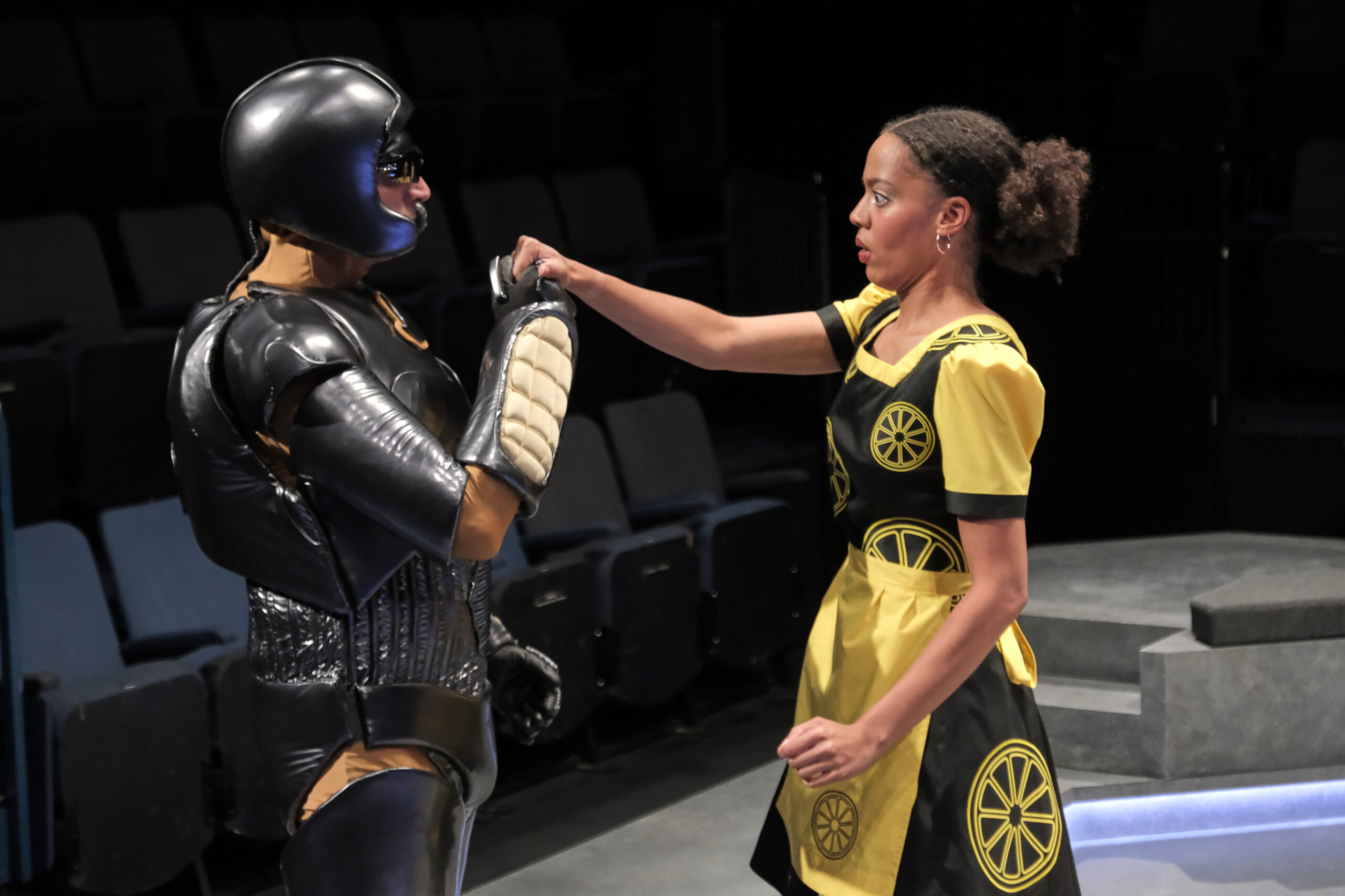
The play is long and wordy, with moments of Ayckbournian wit to enliven the proceedings. The cast, given all sorts of challenges, respond admirably, none more so than Leigh Symonds whose Assistant Arbiter is, ironically, the most human character on stage, building up his store of human phrases by leaping with glee on every cliché he hears to modify the excessive formality of his speech. Olivia Woolhouse is full of android vivacity and the stirrings of a social conscience as Hermione. Once his systems are in working order, Richard Stacey is stiffly heroic as RSDO.
On the human front, Frances Marshall (Allistra), having found her way gingerly through the odd ways of Earth, is splendidly combative at the trial, as is Hayden Wood as the prosecutor. Elizabeth Boag has fun as the rough-and-ready Devaney and Russell Richardson presides unobtrusively at the trial except when he is stirred by Shakespeare or Tchaikovsky.
Runs until 3 October 2026
The Reviews Hub Star Rating
-
6
