

Writer: John Le Carré
Adaptor: David Eldridge
Director: Jeremy Herrin
In many ways, it is surprising that it has taken this long for a John Le Carré novel to be adapted for the stage. He is known for having created memorable characters and engaging plots that should, in the right hands, be very effective as stage plays. With capable and experienced creators such as director Jeremy Herrin and writer David Eldridge at the helm, one would imagine that we would be set for success. It is therefore regrettable to report that this is not a satisfying piece of theatre on a number of levels.
The script is over reliant on direct to audience exposition. This is often the case with novel adaptations where the need to convey a lot of information can make it difficult without the use of such techniques. The end result is that the first half feels very heavy in terms of dramatic pacing. Whilst this does improve in the second half where most of the action is placed, it is a script that lacks momentum and suffers from a lack of ongoing tension.
Another aspect of the script that does not fully succeed is the conversations that take place only in the mind of the central character, Alec Leamas. These are a device used to integrate the shadowy George Smiley (Tony Turner) more directly into the narrative. An understandable choice but one that is overused and feels somewhat forced.
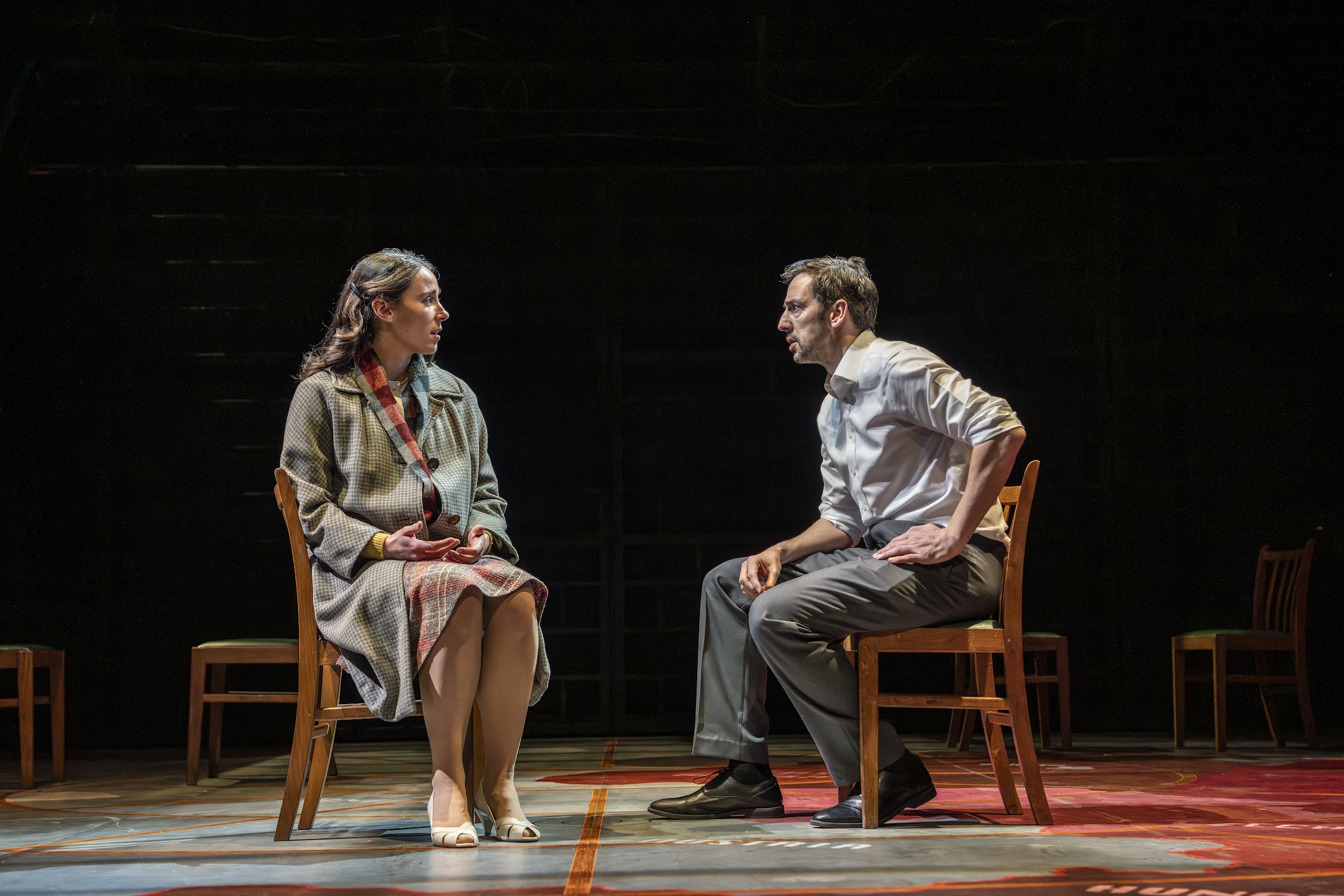
Herrin’s direction is also lacking in tension. It feels very dated in terms of stage craft. There is a over reliance on the use of the ensemble to move furniture around which could have been re-imagined in a more creative way thus reducing the slowing down in pacing that this brings. There are moments of real threat – particularly in the interrogation scene – but this is not sustained throughout.
Visually, Max Jones does bring the necessary austerity to the production design. The needs for touring have clearly made some compromises necessary compared to the previous interations of the production but on the whole the design provides a suitable backdrop for the action.
Azusa Ono’s lighting design is strong throughout. It brings atmosphere and drama to the stage at all the right moments making great use of both light and shadow to bring the design to life.
There should be a greater sense of claustrophobia to the piece as a whole. Much of the action appears to take place in small rooms but having everything play out on a wide, open stage means that this is never fully captured. Some of this is down to the transition from the thrust stage of the Minerva Theatre in Chichester to the proscenium arch theatres of the tour. But the whole thing would be stronger if the use of space could be made more varied.
Central to the play is the portrayal of Alec Leamas, most famously depicted on screen by Richard Burton. It is a huge role with very little off-stage time for the actor. Ralf Little is secure in his lines and delivers them with commitment and some necessary humour. However at no point does he fully inhabit the crumpled, damaged man that is Leamas. It does feel as if he has been miscast.
Gráinne Dromgoole stands out from the very solid ensemble cast with her forthright and emotional depiction of Liz Gold. Sincere in her desires and ultimately manipulated by those around her, Dromgoole is watchable and engaging throughout.
Fans of Le Carré will be pleased to see one of his most popular novels presented in a new way. But this is not a persuasive enough production for audiences to expect more adaptations in the future. Perhaps the stage is not the right place for the world of George Smiley and his colleagues.
Runs until 18 July 2026 and on tour
The Reviews Hub Star Rating
-
5
