

Writer: Joe Bravaco
Director: Richard Avery
The One Good Thing has an unusual history. Written by an American in New Jersey, it is set firmly on the Irish coast. An entry in last year’s PlayLab competition, it came to the attention of East Riding Theatre in Beverley, far off from Ireland and New Jersey, who are now presenting it in a world premiere production.
Joe Bravaco explains the link between his home base by saying, “I have always been a huge fan of Brian Friel’s work and Martin McDonagh’s.” It’s good that he’s so honest; it saves the reviewer from making the obvious connection for this is one of the myriad Irish plays that followed on Friel’s success – and, if it’s by no means the best of the Sons of Friel, it’s a workmanlike piece cloaking serious points about human life in a blanket of whimsy.

Emily Clay’s set again works miracles with the limited wing-less space at Beverley. Stage right is an apparently sturdy outer wall, stage left an attractive approximation to a cottage exterior, with front door leading on to a front area with seat, whilst behind the gap is filled by a conventional interior, with the first couple of steps leading upstairs.
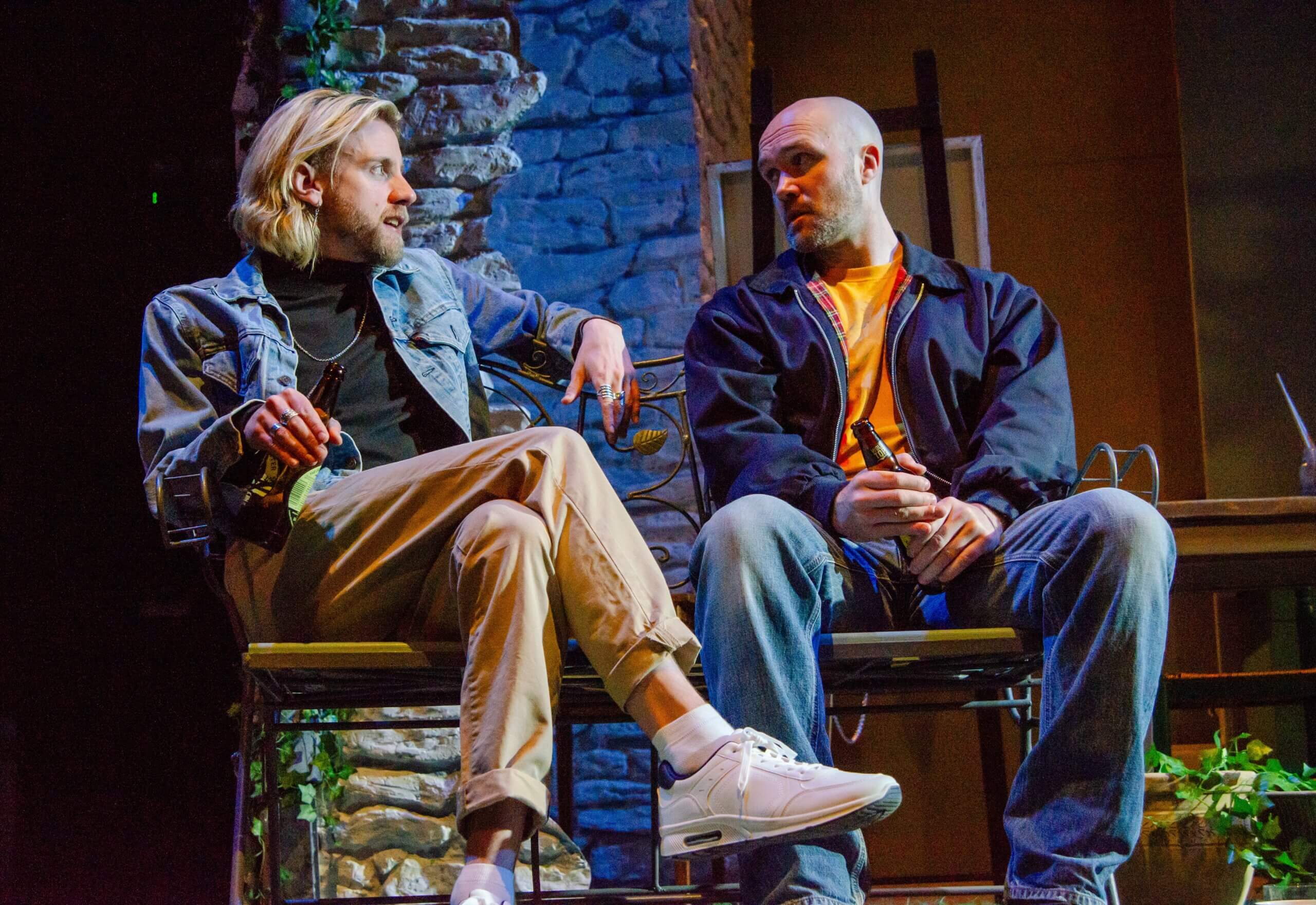
At the beginning of the play Tommy (Declan Sammon) is breakfasting and calling upstairs to his brother Jamie (Gabriel Winter). When he finally appears, refusing all food, he breaks into Tommy’s sunny morning mood by insisting that he, Declan, is dead, an “almost ghost”. In between Tommy’s attempts to get him to see a doctor, the conversation ranges far and wide, taking in their mother’s preference for Jamie and Tommy’s stalled career as an artist, among other things. At the very end of the act Tommy sees a body on the headland and Jamie refuses to join him in an attempt at rescue.
The second act is divided into shorter scenes at some distance apart in time. Tommy becomes a father (those blissful early mornings ruined and an extra drain on his emotions) and is successful as a painter of portraits and, as for Jamie, he now reappears only when Tommy needs him. The action, such as it is, centres on Tommy’s increasing sense of guilt (over his neglect of his mother, for instance) and his need to seal Jamie’s forgiveness with a hug, finally given in a telling twist at the end.
Richard Avery maintains a sense of realism in the actions and attitudes of the two brothers, though the decision to suggest Jamie’s otherworldliness by an affected gait is unfortunate. Declan Sammon manages to convince in a whole gamut of characters from the contented idler to the tormented seeker for forgiveness. The different facets of Gabriel Winter’s character – the brother reminiscing, the “almost ghost” confident of how things will turn out – operate side by side, not in sequence, but he is equally convincing.
Runs until 10th May 2025
