

Writer: David Drake
Director: Adam Zane
When David Drake starred in the premier of his play The Night Larry Kramer Kissed Me in 1992, it would have been a shockingly honest and relevant piece of theatre. Now, over thirty years on, the play has a somewhat different impact. Given these are subjects that have since been much explored in theatre, and culture more widely, it’s interesting to look back at what’s almost a period piece, and see what it delivers in the 2020s.
At the beginning of the 90s the 1969 Stonewall Riots, considered to be the earliest demonstration of modern gay activism, were still relatively fresh in people’s minds, the AIDS crisis was still a very real threat to the gay community, and people were still fighting for gay rights to be recognised. The play opens in small town 60s America where there’s little tolerance of anything that defies conservative expectations, and ends on the eve of the new millennium, looking to a hoped-for future where single sex relationships are not only accepted, but celebrated. While we haven’t come as far as we’d like (recognising that Pride events are still argued against by a vocal minority), The Night Larry Kramer Kissed Me, while showing its age, is a stark and upbeat reminder of how far we have come.
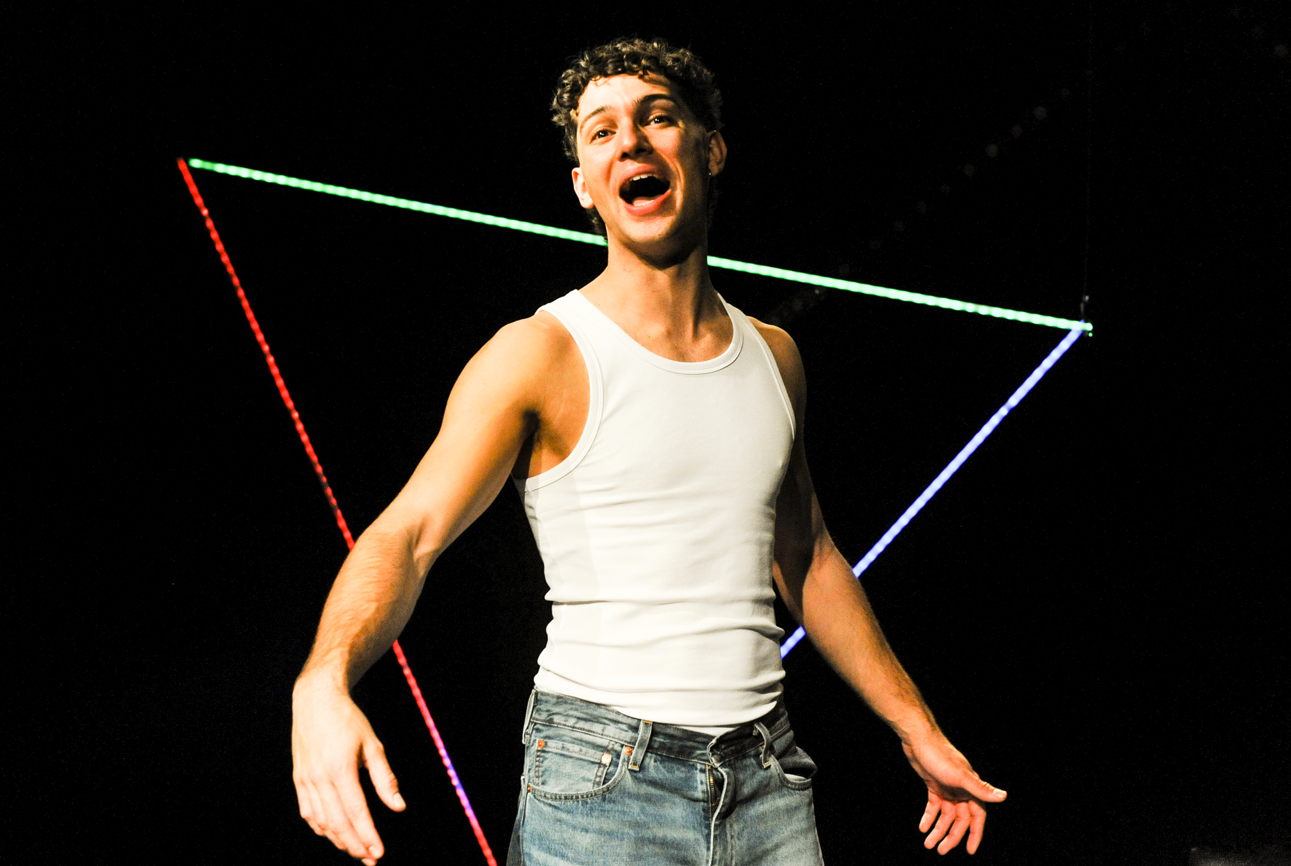
The play sees a single performer (Gabriel Clark) deliver a series of set pieces that make up a semi-autobiographical story of coming out, finding your tribe, sex, love and loss. Much of the play has a poetic quality, performed to an upbeat soundtrack. The (nameless) central character takes us in to the gym; sweating and steaming bodies in motion, onto the dancefloor; cruising predators and willing quarry, and into the hospital ward where friends are slipping away. While there’s not a lot of comedy, there’s laughs in the slightly uncomfortable recognition of past times and places.
The simplicity of a single performer is echoed in paired back stage design (Dick Longdin) with a few stage blocks and some simple but effective lighting (David Clare). Sound – from pumping disco beats to sparsely used and atmospheric sound effects (Hannah Bracegirdle) creates an immersive feel, especially in the intimacy of Hope Mill’s auditorium. While it all demonstrates Hope Mill’s usual high quality productio0n values, though, it’s all just a backdrop to Gabriel Clark’s brilliantly compelling performance as he keeps up a frantic pace and seamlessly delivers seventy-five minutes of unbroken dialogue.
There’s much here about the need in the 90s, and perhaps still, to escape small-minded rural and small town communities for the big city, and while it’s New York in the play, it’s a testament to our own city that Drake brought the play to Manchester’s Library Theatre thirty years ago, which was where Director Adam Zane first experienced it. In the thirty years he says it’s taken him to feel ready to direct it, it’s become something of a memoir for a generation, and a celebration of the battles that have been won, those that helped win them, and those that came through it all.
Runs until 14th February 2026
