

Writer and Director: Warwick Thornton
Faith is at the heart of Warwick Thornton’s audacious yet beautiful film about a young Aboriginal boy brought up in a Catholic orphanage in Australia during the Second World War. Bravely and respectfully, Thornton does not mock either culture’s doctrines but shows how one is full of magic and the other full of pain. We really do reap what we sow.
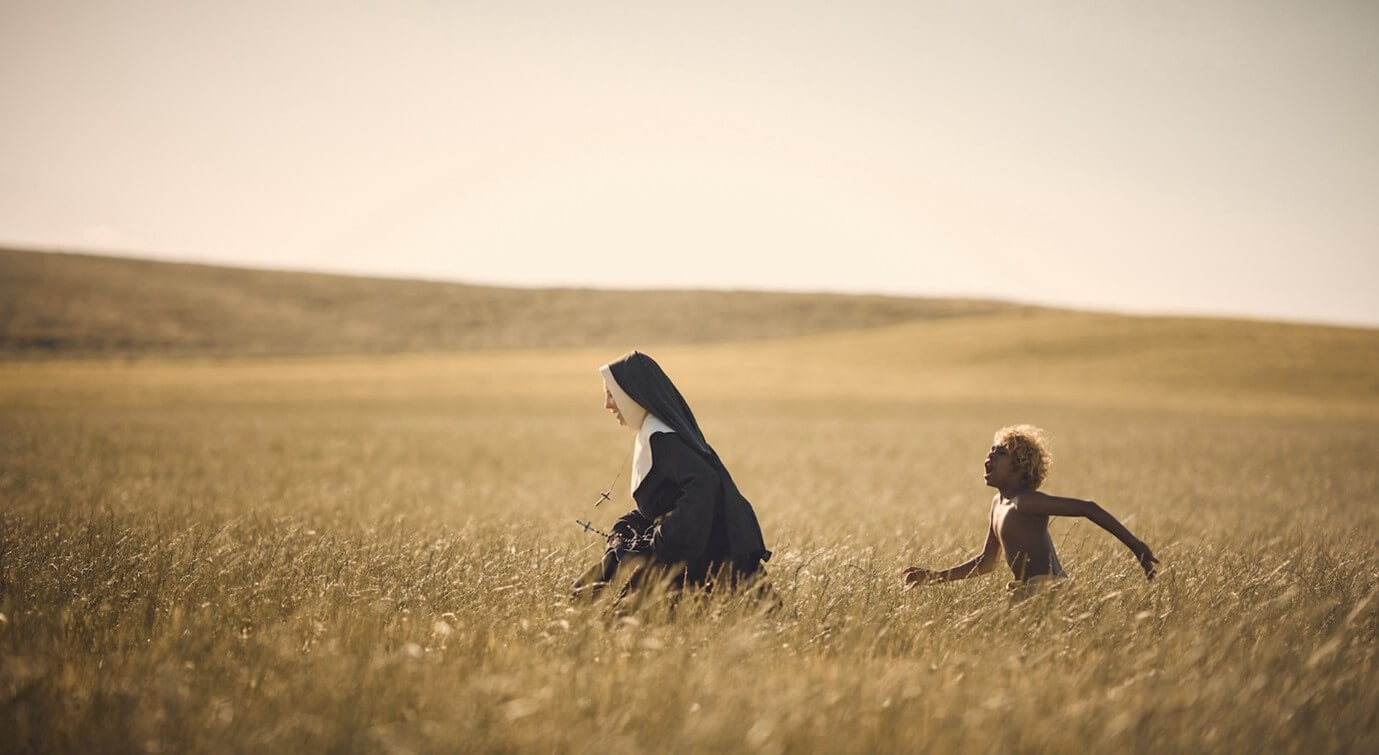
Cate Blanchett is Sister Eileen in a remote Catholic outpost stranded in the cornfields somewhere in Australia’s interior. She and her colleague, Sister Mum (Deborah Mailman), run an orphanage for boys. There seems little emphasis on reading or writing; instead, the boys help with the harvests, shaking down the olives from the olive trees or bundling the corn together to throw in the primitive combine harvester. One day a new boy arrives in a sack; a quiet boy who has no name other than the New Boy.
However, this is no Dickensian orphanage where boys are beaten to an inch of their lives. Sister Eileen is a generous, patient woman who doesn’t force Christianity onto this new arrival. She doesn’t insist that he follow the Western traditions; he’s allowed to go bare-chested when the other boys all wear shirts; he’s not encouraged to use a spoon when he scoops up his meals with his fingers. Sister Eileen trusts that he will pick up these customs in time. Indeed, he watches the other boys intently but can’t quite master cutlery.
The two nuns shouldn’t be running the orphanage alone. There should be a priest in charge, but it’s not clear what has happened to the Father. The only male adult around is Wayne Blair’s George, who is their handyman and their farmer. He’s less tolerant than the Sisters, his racism apparent by the way he treats the New Boy, making kissing sounds as if he’s trying to entice a joey. But he’s not cruel.
However, one day another new boy arrives: a sacred effigy of Christ on a cross. The original New Boy is rapt with the newcomer. What follows is a swooning dream of Catholic iconography: stigmata, corn, lambs and red wine. Thornton’s vision is fertile and serious. The miracles shown on screen are never in doubt.
Sister Eileen becomes increasingly desperate and Blanchett is mesmerising. Never once do we question her faith and her belief that she is doing good, getting boys ready for the outside world. Of course, her fervour puts one in mind of the nuns in Black Narcissus but her madness is not the result of suppressed sexual desire for either George or Sister Mum who spends most of her time in the kitchen bottling jam. Instead, Sister Eileen’s zeal is a religious one. However, at times the orphanage’s silhouetted Virgin Mary shot at dusk echoes the convent built atop a mountain in Powell and Pressburger’s 1947 classic. And like the nuns in Black Narcissus, Sister Eileen and her charges are an isolated vulnerable community.
Aswan Reid is exceptional as the New Boy, confident and wide-eyed in awe in equal measures. His dealings with the wooden Jesus are sensitively captured and his interactions with the other orphans are considerately played. Mute for most of the film, only the little chuckles he makes when he creates sparks with his fingers seem out of place. Strangely, this laughter jars; it sounds too 21st century.
With music by Nick Cave and Warren Ellis, The New Boy is nothing short of a masterpiece. Perhaps too overblown and sumptuous for some, Warwick Thornton’s elegy for Aboriginal beliefs (and for Catholic ones, too) is an elegant study of what has been lost in the feverish project of British colonialisation.
The New Boy is screening at the BFI London Film Festival 2023. Signature Entertainment will present The New Boy only in cinemas early 2024
