

Composer: Wolfgang Amadeus Mozart
Libretto: Lorenzo da Ponte, translated by Orlando Jopling and Danielle de Niese
Conductor: Orlando Jopling
Director: Danielle de Niese
Mozart’s The Marriage of Figaro, the iconic sequel to The Barber of Seville, is one of the best-known works in the operatic canon. Set over a single day, it follows Figaro and Susanna as they prepare for their wedding while navigating the schemes and infidelities of Count Almaviva and his household.
Traditionally performed in Italian, Figaro can feel intimidating to those less familiar with opera. Wild Arts removes that barrier by performing the work in English. It is an interesting choice, making the comedy and characterisation more immediate, particularly in the fast-paced exchanges and recitative. However, something is inevitably lost in translation. Mozart’s score was conceived for the Italian text, and the natural lyricism and rhythmic flow of the original language are difficult to replicate.
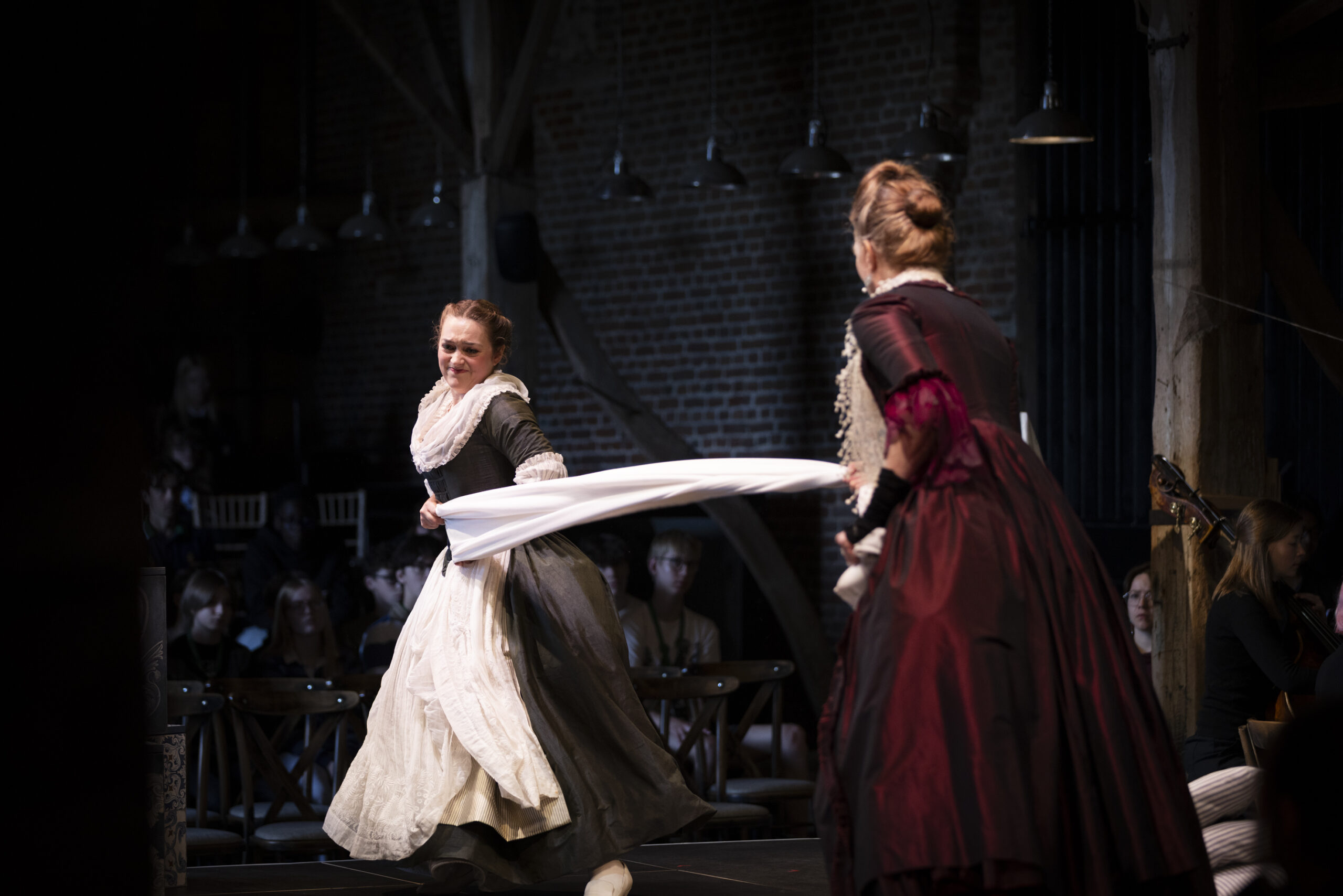
The high point of this English version was in the cast’s ability to exploit the comedic possibilities of the text. In particular, Ellie Neate as Susanna combined assured singing with an excellent comic presence. Her timing, physicality and delivery gave the character a real warmth and energy, making her consistently one of the most engaging performers on stage. Her vocal line also retained much of the lightness and agility that the role demands. The ensemble is similarly energetic, although vocal projection is at times inconsistent. While the upper register is generally secure, some lower passages become more spoken than sung, disrupting the vocal line.
The staging of this production makes the interesting choice of having the orchestra on stage rather than in the pit, creating an intriguing relationship between musicians and performers. Acoustically, however, it is less successful. The orchestral texture occasionally overwhelms the voices, making both diction and individual vocal lines difficult to follow.
There is plenty to admire in Wild Arts’ accessible and energetic approach, particularly its comic direction. Ultimately, though, the English translation and orchestral balance come at a musical cost. This is an approachable Figaro, but not always an entirely convincing one.
Runs Until: 8 September 2026
