

Writer: Paul Hendy
I approached this show with some apprehension, having once attended a tribute to Morecambe and Wise in which the performers had absolutely no stage presence. There was just a chance, I hoped, that these actors could conjure some of the magic of TV legends Eric Morecambe, Tommy Cooper and Bob Monkhouse. I was not disappointed. In fact, I was delighted.
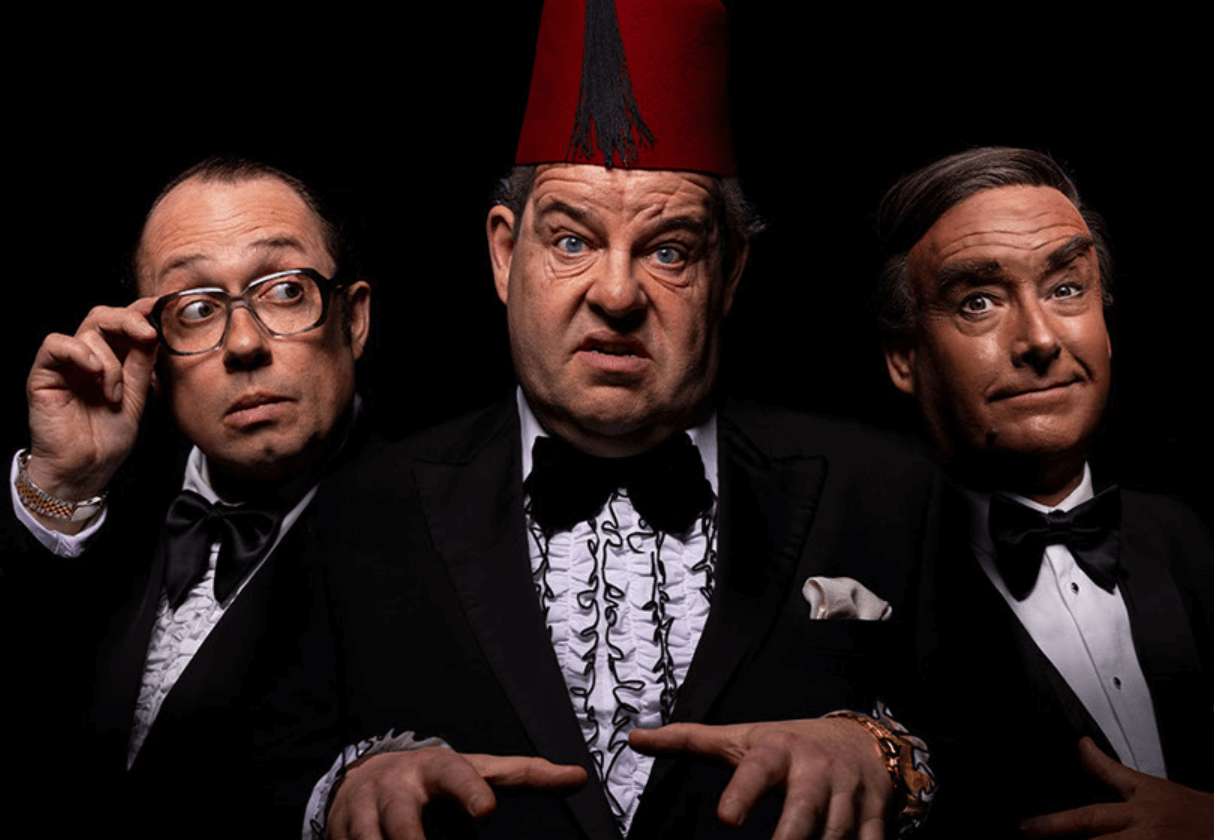
From the moment Tommy Cooper (Damian Williams) appears in his undies, wearing his trademark fez and enormous chicken feet, it’s clear that this show is something very special. The play has been written by Paul Hendy, based on his award-winning short film of the same name. There are gags galore from the off, many originally written by Bob Monkhouse (Simon Cartwright), as he is keen to inform us when he appears, looking overly bronzed and dressed in whimsical pastel colours.
The sharply analytical and rather maudlin Monkhouse becomes the unlikely linchpin of the piece, which imagines the comedy greats coming together in a slightly mystical dressing room. Here, they compete with each other for laughs and reflect on life in the business – not just the highs and lows, the anxieties that fame might not last – but also the question of what makes something truly “funny funny”.
With Morecambe (Bob Golding) completing the trio, dressed in appropriately restrained tie and cardigan, the richness of the interactions builds even more. Each performer gives an excellent rendition of their subject, an achievement that goes beyond impersonation, as they really capture something about what makes these people tick. They spark off each other and build a strong, warm sense of occasion. Notably, each of the actors previously played their subject in other plays. They go large, leaning into the charisma of these legends, even in this ‘offstage’ setting. There are no worries here about stage presence. It’s so good, the cast creates a story that’s hugely touching. It was a great privilege to witness this performance.
I could nitpick a little by suggesting that the early interactions, in which Tommy declines to be drawn into discussion about his art, are a little more credible than when he eventually engages. He is, after all, a natural clown, something that Monkhouse struggles to pin down in his analytical reflections. There are a few lines that appear to be shoehorned in to explain the history of British comedy to a new generation, which is understandable, given that this year marks the 40th anniversaries of Tommy Cooper and Eric Morecambe’s untimely deaths.
If you lived through the golden age of TV comedy, or if you want to understand more about it, go and see this wonderful show. I’ll give the last word to Bob Monkhouse, who is portrayed as knowing that he’s not adored by the public as the other two are, but who is shown as sensitive, thoughtful and hardworking.
Runs until 25 August 2024 | Image:
