

Writers: Madeleine Hunt-Ehrlich and Marina Magloire
Director: Madeleine Hunt-Ehrlich
Looking at the life of writer and activist Suzanne Césaire even in the briefest details, it seems incredible that she has not been the subject of a biopic before. Born in Martinique, but travelling to Paris as an undergraduate, Césaire immersed herself in the literary world, rubbing shoulders with Andre Gide and Colette. After marrying her husband, Aime, they moved back to Martinique at the start of World War Two. The French-colonised Martinique spent most of the war under Vichy government rule, with censorship, corruption and food shortages a regular occurrence.
In a response to this oppression, Suzanne and Aime started a journal, Tropiques. Césaire wrote seven essays: intersecting surrealism, feminism and anti-colonialism. This not only rubbed the authorities up the wrong way, it got Césaire noticed. A vibrant, dissident voice, Césaire stopped writing in 1945. Her silence relegated her to a shadowy presence in the history of mid-century political writing. The Ballad of Suzanne Césaire is the directorial debut of visual artist, Madeleine Hunt-Ehrlich, and it not only attempts to reacquaint us with Césaire’s name, but to question how effective a biopic can be, especially when its subject had no desire to be remembered.
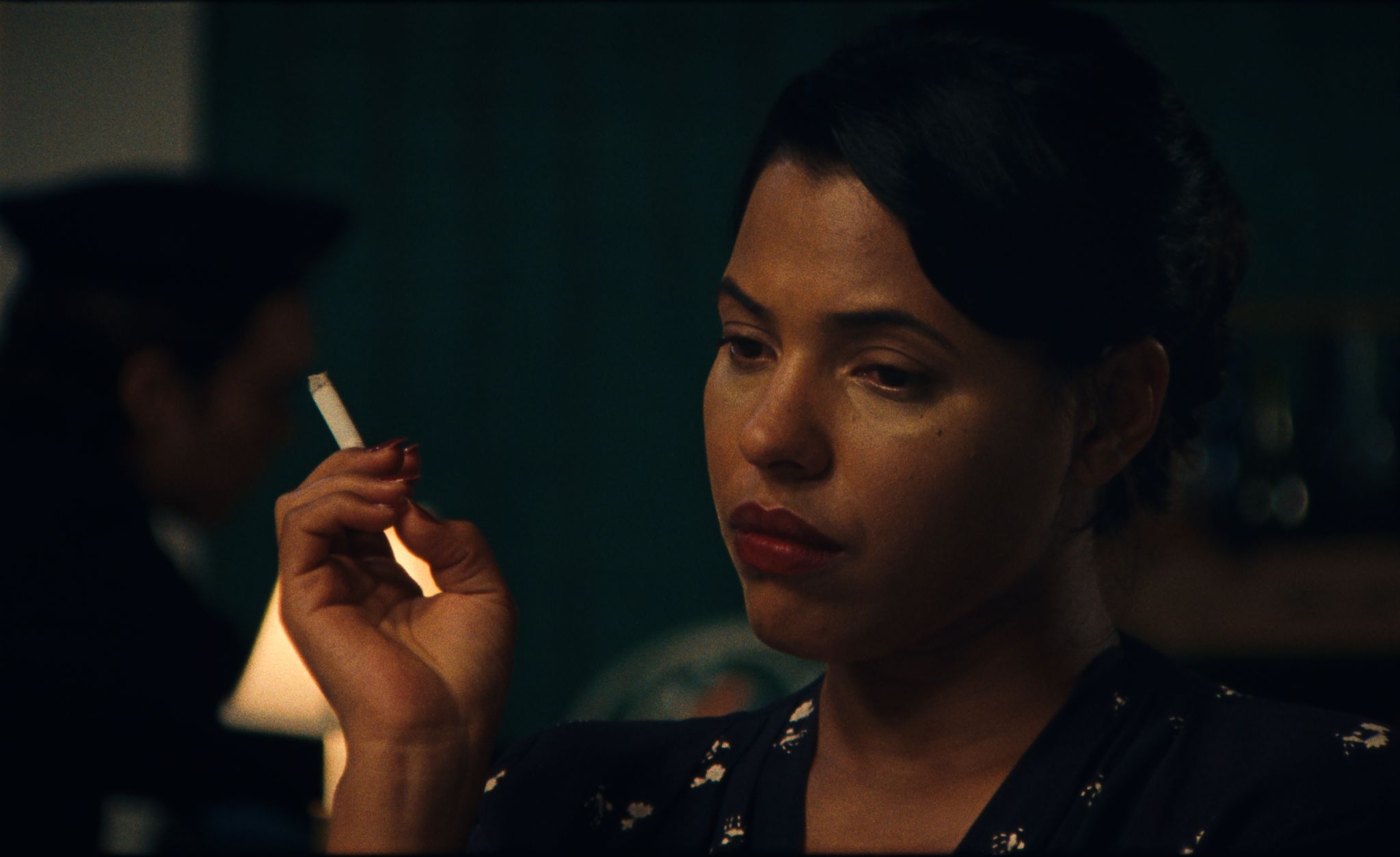
Hunt-Ehrlich, along with co-screen writer Marina Magloire, crafts an unconventional take on the traditional, cradle-to-grave biopic. This film, just over an hour long, adopts the style of a memoir, mirroring the period where Césaire was most creatively active, as she meets Andre Breton, who visited Martinique in 1941. Césaire called surrealism the “tightrope of our hope”; an ideological response to the stultifying cultural impact of colonialism. She saw surrealism; otherworldly, ethereal, as the way to reconnect with indigenous cultures and traditions. Hunt-Ehrlich also reminds us that Césaire achieved this while giving birth to six children. She contemplates the privileges enjoyed by Proust and Flaubert, noting In Search of Lost Time could only have been the product of a leisured mind. A baby’s cry pulls her away from this reverie. The film reflects the intensity of the relationship between Césaire (superbly played by Zita Hanrot) and Breton (Josue Gutierrez). Césaire is the interrogator, putting surrealism under the microscope, Breton defends it as best he can.
The Ballad of Suzanne Csaire moves from scripted scenes to candid shots of the film-making process. In other segments, crew down tools and cast break character to read excerpts of Césaire’s astonishing prose. It is an inspired touch. While Hunt-Ehrlich’s camera soaks up the gentle colours and rhythms of Martinique, Césaire’s writing leans out of the screen, insisting that we hear it. While this can be termed a deconstructed biopic, The Ballad of Suzanne Césaire really pushes that fragmentary boundary. We are left to connect dots, plug narrative gaps. Hunt-Ehrlich wants us to realise just how much of Césaire’s story has been shaped by the famous men around her. Far from being a frustrating exercise, the film will send you to online archives, articles and Césaire’s extraordinary essays themselves. The voice is centered. It is hard to imagine a better tribute.
The Ballad of Suzanne Césaire is in UK-wide and Irish cinema from 18 July.
