

Writer: Colm Maher
Director: Iseult Golden
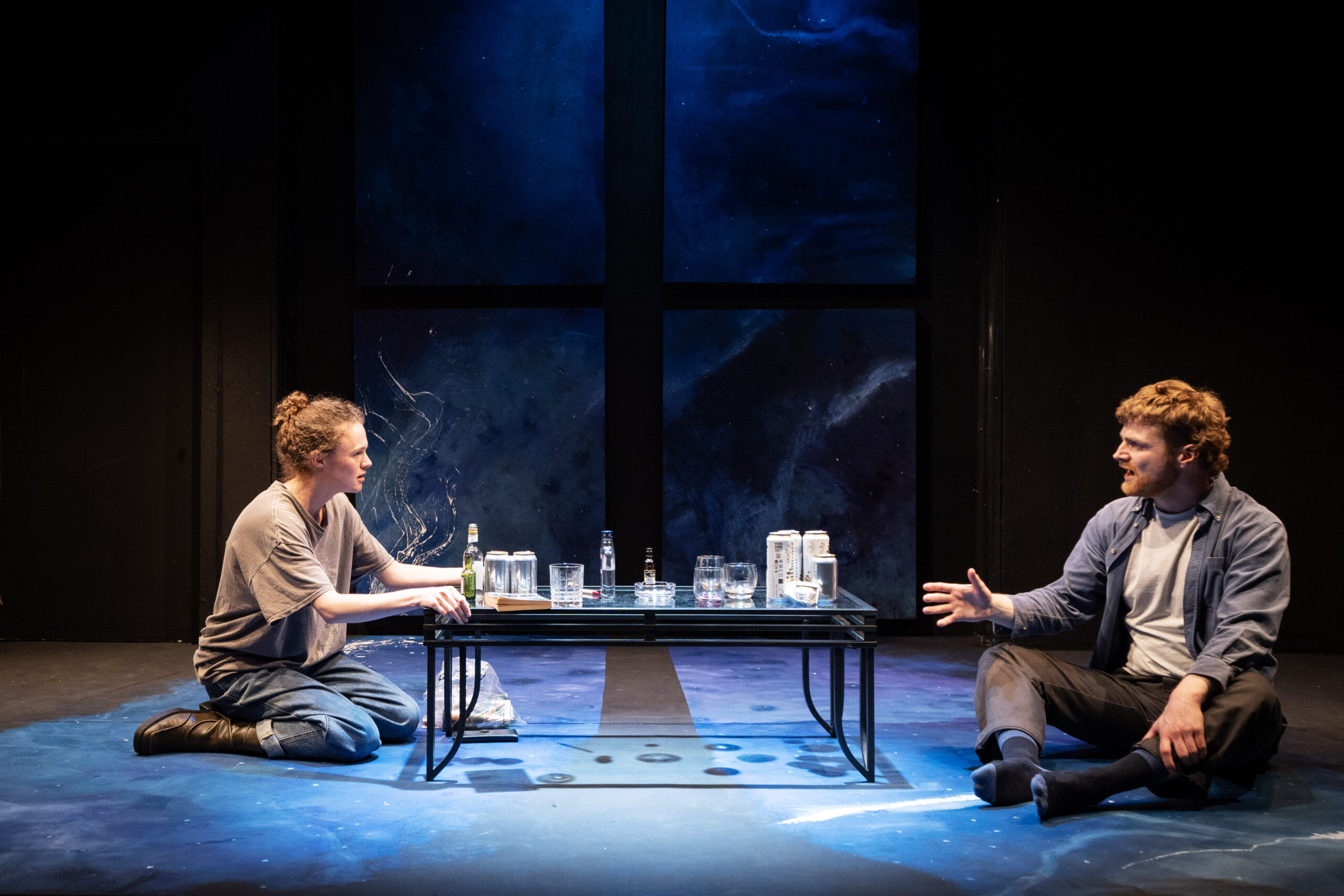
What would you do if your ex of 10 years showed up at your doorstep after 7 weeks of no-contact? Get drunk and express everything you disliked about your relationship as an attempt to change the course of your future? This was the case for Bishop (Gemma Allen) and Rhys (Darren Mone) in Colm Maher’s The Argument of Us as Bishop comes back to their flat to find it completely cleaned out except for a messy drinks table. For a situation this extreme the stakes didn’t seem very high as Bishop stood coolly with a half finished can in hand.
The initial dialogue centres around a grasp for closure, the search for a profound reason for their break up that’s left their relationship mute for over a month. When they realise they’re unable to speak honestly, they ransack a bag of nips curated from various holidays and embark on a drunken experiment to find the deep, never before explored, truth. Bishop and Rhys roam, repelled through these self-imposed parameters for over an hour, gushing about the others flaws, faults and patterns. In an attempt to break their toxic habits they disclose …more toxicity.
Iseult Golden’s directing captures the scientific force controlling these two worlds by playing with distance and physical contact. Allen and Mone commit wholly to their characters, each fitting in well with characteristic quirks and vocabulary. Their energy and pace remained impressively consistent with an evident reliance and creative trust towards one another. The weakness in performance lay in the performative and sameness tone that carried throughout, while the stakes set in the beginning didn’t seem great enough, it then left Allen and Mone with nowhere to land. Their characters are young, while financially shaky both have supportive jobs and look to be very well off. For grand gestures of “beacons of light along the shore” and profound scientific declarations, the stakes never seem very high. As more and more nips are drunk one would expect stumbling or flailing about or quivers in speech, but the drink had little to no effect.
The scenic design at first glance is mesmerising, with connection between background and flooring through use of galactic and stellar artwork, which matches the costumes of the characters. However an over cohesion in design leads to the blending of elements leaving nothing to catch or alert the eye. Exploration with lighting or sound design could’ve bettered the situation in awakening the senses.
Where the piece holds value is within the characters themselves. As spectators, we know these people, we’ve heard of these people or we’ve even been these people. The likeliness of this dark comedy occurring in our lives is almost comical in itself. Audience members were naturally in tune with the performance, visibly agreeing or disagreeing with certain statements and confessions.
The Argument of Us presents us with relatable characters who delve deep into their internal flaws. But is this an example of a modern theatre piece which places relatability over dramatic tension and plot progression. The piece raises the question of if theatre nowadays needs a greater societal reflection or more exciting portrayal of the natural at its core to be worthwhile.
Runs Until 30th May 2026.
